Tuna tartare is a sophisticated appetizer that lets premium sashimi-grade tuna shine with minimal fuss. This elegant raw fish dish combines buttery tuna, bright citrus, and savory accents for a restaurant-quality starter that takes just 15 minutes to prepare.
Whether you’re hosting a dinner party or impressing guests with your culinary skills, this recipe delivers impressive results without hours in the kitchen. Let’s explore how to select the right tuna, assemble it perfectly, and troubleshoot common pitfalls so your tartare tastes restaurant-perfect every single time.
Why You’ll Love This Recipe
Tuna tartare feels fancy but demands almost no cooking talent, making it perfect for entertaining or a quick gourmet dinner at home. The bright, clean flavors come together in minutes and showcase the quality of your ingredients.
- Requires sashimi-grade tuna and a sharp knife, nothing more complex.
- Takes 15 minutes from fridge to plate, ideal for last-minute guests.
- Naturally gluten-free, keto-friendly, and pairs beautifully with wine.
- Impresses dinner guests with minimal effort and maximum flavor impact.
- Endlessly customizable with different citrus, aromatics, and finishing touches.
My Experience Making This Recipe
The first time I made tuna tartare at home, I was terrified I’d ruin expensive fish by cutting it wrong. Once I got a chef’s knife sharp enough and diced the tuna into uniform cubes, the whole process clicked into place.
My dinner guests went silent after the first bite, then immediately asked for the recipe. That reaction told me everything: simple, quality ingredients handled with care create magic on the plate.
I’ve since made this dozens of times, experimenting with everything from wasabi to pomegranate seeds. Each version surprised me with how a single ingredient swap completely transformed the dish without overshadowing the tuna itself.
Recipe Overview
- Recipe Name: Tuna Tartare
- Servings: 4
- Prep Time: 15 minutes
- Cook Time: 0 minutes
- Total Time: 15 minutes
- Course: Appetizer
- Cuisine: Fusion (Japanese-inspired)
- Calories per Serving: 95
Equipment You Will Need
- Sharp chef’s knife (8 inches, very sharp)
- Cutting board (preferably wood or plastic, not glass)
- Small mixing bowl
- Measuring spoons and cups
- Small offset spatula or palette knife
- Serving spoons or small ice cream scoops
- Zester or microplane grater
- Plate or serving board
Ingredients for Tuna Tartare
- Sashimi-grade ahi tuna, 12 ounces, cut into 1/4-inch cubes
- Extra-virgin olive oil, 3 tablespoons
- Fresh lemon juice, 2 tablespoons
- Fresh lime juice, 1 tablespoon
- Soy sauce, 1 tablespoon
- Sesame oil, 1/2 teaspoon
- Shallot, 1 small, minced very fine
- Kosher salt, to taste (start with 1/4 teaspoon)
- Black pepper, to taste
- Sriracha or chili paste, 1/4 teaspoon (optional)
- Fresh chives, 1 tablespoon, chopped
- Sesame seeds, 1 teaspoon, toasted
- Microgreens or fresh cilantro, for garnish
Ingredient Notes and Substitutions
- Sashimi-grade ahi tuna: The foundation of this dish, so buy from a reputable fishmonger and ask specifically for sashimi-grade (frozen and thawed is fine). Bluefin or yellowfin tuna work beautifully too if ahi is unavailable.
- Extra-virgin olive oil: This carries the richness that balances the delicate tuna. A neutral oil like grapeseed works if you prefer less herbaceous flavor, though it loses some sophistication.
- Fresh citrus: Lemon and lime brighten the fish and prevent oxidation that dulls color. Yuzu juice or orange juice can replace lime for different flavor profiles.
- Soy sauce: Adds umami depth without overpowering the delicate fish. Tamari works as a gluten-free swap with the same savory punch.
- Sesame oil: Just a touch adds toasted aroma and prevents the tartare from tasting flat. Avoid using too much, or it overwhelms the tuna.
- Shallot: Provides gentle onion flavor without harsh bite. Red onion or finely minced white onion works, though shallot is milder and more elegant.
How to Make Tuna Tartare
Step 1: Select and Inspect Your Tuna
Buy your sashimi-grade tuna from a fishmonger you trust, and inspect it immediately upon arriving home. The flesh should be bright red or deep pink with no brown spots, slime, or off-smells; if anything seems off, don’t use it.
Step 2: Chill Your Cutting Board and Knife
Place your cutting board and chef’s knife in the freezer for 10 minutes before you start. Cold equipment keeps the tuna cold and prevents the oils from separating, which damages both texture and appearance.
Step 3: Cut the Tuna into Cubes
Remove the tuna from the fridge and place it on the chilled cutting board. Using one smooth, confident motion for each cut, dice the tuna into 1/4-inch cubes, wiping your knife clean between cuts to prevent cells from crushing and releasing their juices.
Step 4: Prepare the Dressing Components
In a small bowl, combine the olive oil, lemon juice, lime juice, soy sauce, and sesame oil. Whisk them together gently so the acids and oils emulsify slightly, creating a silky dressing that coats each piece of tuna evenly.
Step 5: Combine the Tuna and Dressing
Add the diced tuna to the bowl with your dressing along with the minced shallot and optional sriracha. Fold gently with a spoon to coat every piece without crushing or mangling the delicate cubes, which should take about 10 to 15 gentle folds.
Step 6: Season to Taste
Taste a small piece and season with kosher salt and black pepper, starting conservatively because you can always add more. Remember that soy sauce already brings salt, so add in small increments to avoid over-seasoning.
Step 7: Let the Tartare Rest Briefly
Cover the bowl and refrigerate for 5 to 10 minutes while you prepare your serving vessel and garnishes. This short rest allows the flavors to marry and the tuna to absorb the dressing without becoming mushy.
Step 8: Plate and Garnish
Using a small offset spatula or ice cream scoop, carefully portion the tartare onto chilled plates or a serving board. Top each portion with toasted sesame seeds, fresh chives, microgreens, and a small squeeze of fresh lime juice just before serving.
Pro Tip: Keep everything cold from start to finish, and never let the tartare sit at room temperature for more than 15 minutes after plating, since raw fish deteriorates quickly when warm.
Tips for the Best Tuna Tartare
- Buy tuna the day you plan to serve it, and ask your fishmonger to clarify whether it’s been previously frozen (which is actually safer for raw fish than fresh-never-frozen).
- Freeze your cutting board and knife for 10 minutes before cutting to keep the tuna at the perfect cold temperature and preserve its silky texture.
- Cut with confidence using one smooth motion per cube rather than sawing back and forth, which crushes cells and releases excess moisture.
- Taste as you season, since soy sauce already brings salt and it’s easy to oversalt a delicate dish like this.
- Serve immediately after plating or keep the tuna covered in the fridge and plate just before guests arrive to prevent the fish from oxidizing and browning.
- Chill your serving plates in the freezer for 5 minutes before plating to keep everything as cold as possible.
Common Mistakes to Avoid
- Using non-sashimi-grade tuna or buying from an untrusted source invites food poisoning and ruins the delicate flavor you’re after.
- Letting the tuna sit at room temperature breaks down its structure and allows bacteria to proliferate faster than with other proteins.
- Overdressing the tartare makes it mushy and overpowering, drowning out the subtle sweetness of quality tuna.
- Cutting the tuna into chunks instead of uniform cubes causes uneven marinating and an unprofessional appearance on the plate.
- Forgetting to season conservatively leads to an overly salty dish that masks the delicate fish flavors you’ve worked to showcase.
Serving Suggestions
Tuna tartare shines as a standalone appetizer but reaches new heights when paired thoughtfully with crisp accompaniments and cold beverages. These pairings let the fish remain the star while adding texture and flavor contrast.
- Serve atop crispy wonton crisps or thin rice crackers for a satisfying textural contrast.
- Present on endive spears or cucumber rounds for a light, vegetable-forward option.
- Pair with chilled sauvignon blanc, crisp albariño, or a dry champagne that cuts through the richness of the olive oil.
- Accompany with avocado mousse on the side for a creamy complement to the delicate tartare.
- Serve alongside a small bowl of edible flowers or microgreens to elevate the visual presentation.
Variations to Try
- Spicy Sriracha Tartare: Increase sriracha to 1 teaspoon and add a pinch of cayenne pepper for a fiery kick that excites the palate without masking the tuna.
- Asian-Inspired: Replace lemon juice with yuzu juice, add a touch of wasabi, and garnish with nori strips and pickled ginger for an authentic Japanese twist.
- Mediterranean: Swap the sesame oil for a touch of Dijon mustard, add capers and fresh dill, and serve with whole grain crackers for a completely different flavor story.
- Citrus Medley: Use grapefruit, lemon, and lime juices instead of just lemon and lime, then add pomegranate seeds and fresh mint for brightness and a pop of color.
- Avocado Tartare: Fold in small cubes of ripe avocado just before serving, which adds creaminess and pairs beautifully with the tuna and citrus.
Dietary Adaptations
- Gluten-free: Use tamari or coconut aminos instead of regular soy sauce, which contains wheat and isn’t safe for celiac diets.
- Dairy-free: This recipe is naturally dairy-free as written, so no adaptations needed unless your chosen crackers contain dairy.
- Vegan/Vegetarian: Sadly, tartare loses its soul without the tuna, but you could try a beet tartare using finely diced roasted and chilled beets as a color and umami substitute.
- Low-carb/Keto: This is already keto-friendly, but skip crackers and serve it on cucumber rounds or lettuce cups for zero-carb carriers.
Storage and Reheating
Refrigerator
Store the cubed tuna separately from the dressing in an airtight container for up to one day. The dressing can be made up to two days ahead, which saves prep time on serving day.
- Combine the tuna and dressing no more than 30 minutes before serving to prevent mushiness.
- Keep everything covered to prevent oxidation and browning of the raw tuna.
Freezer
Raw tartare should never be frozen, as the ice crystals rupture cell walls and destroy the silky texture entirely. You can freeze the dressing separately for future use.
- Freeze the dressing in ice cube trays for convenient single portions.
- Thaw frozen dressing in the refrigerator overnight before using with fresh tuna.
Reheating
Do not reheat tuna tartare under any circumstances, since it’s meant to be served cold and raw. If you somehow have leftover tartare (rare, since it’s so good), discard it after 4 hours of refrigeration.
- Serve immediately after plating for the best texture and food safety.
- Do not leave tartare at room temperature for more than 15 minutes before eating.
Nutrition Information
| Nutrient | Amount |
|---|---|
| Calories | 95 |
| Total Fat | 5 g |
| Saturated Fat | 1 g |
| Carbohydrates | 1 g |
| Fiber | 0 g |
| Sugar | 0 g |
| Protein | 16 g |
| Sodium | 280 mg |
| Cholesterol | 42 mg |
These values are estimates based on a 4-serving portion and will vary depending on exact ingredients and portion sizes used. Always consult a nutritionist if you need precise macronutrient information for specific dietary needs.
Frequently Asked Questions
Is it safe to eat raw tuna at home?
Yes, as long as you purchase sashimi-grade tuna from a reputable fishmonger who sources from suppliers following strict food safety protocols. Always ask your fishmonger about the tuna’s origin and whether it has been frozen, which actually makes it safer for raw consumption by killing parasites.
Can I make tuna tartare ahead of time?
You can prepare the dressing up to two days ahead and store the cubed tuna separately for one day, but combine them no more than 30 minutes before serving. Tartare becomes mushy and loses its delicate texture if it sits in dressing too long.
What if I can’t find sashimi-grade tuna?
Ask your fishmonger to recommend the freshest ahi or bluefin tuna available and whether it has been previously frozen. If the fishmonger cannot confirm sashimi-grade quality, skip the recipe and try it another time rather than risking food safety.
Why does my tartare look brown instead of bright red?
Browning happens when tuna oxidizes after exposure to air, which means it’s been sitting too long or wasn’t kept cold enough. Always keep your cutting board, knife, and serving plates chilled, and combine the tartare with dressing only 30 minutes before serving.
Can I use canned or frozen tuna?
No, canned and frozen tuna are processed differently and lack the delicate, buttery texture that makes tartare special. Always use fresh, sashimi-grade tuna for this recipe.
What should I serve with tuna tartare?
Crispy rice crackers, wonton crisps, endive spears, and cucumber rounds all pair beautifully and add welcome texture. A chilled glass of sauvignon blanc or champagne complements the dish perfectly without overwhelming the delicate fish.
Final Thoughts
Tuna tartare proves that simplicity and quality ingredients create the most memorable dishes. With just 15 minutes and confidence in your knife skills, you can impress anyone with restaurant-level elegance in your own kitchen.
Buy the best tuna you can find, keep everything cold, and trust the ingredients to speak for themselves. Your next dinner party is about to reach a whole new level of sophistication.
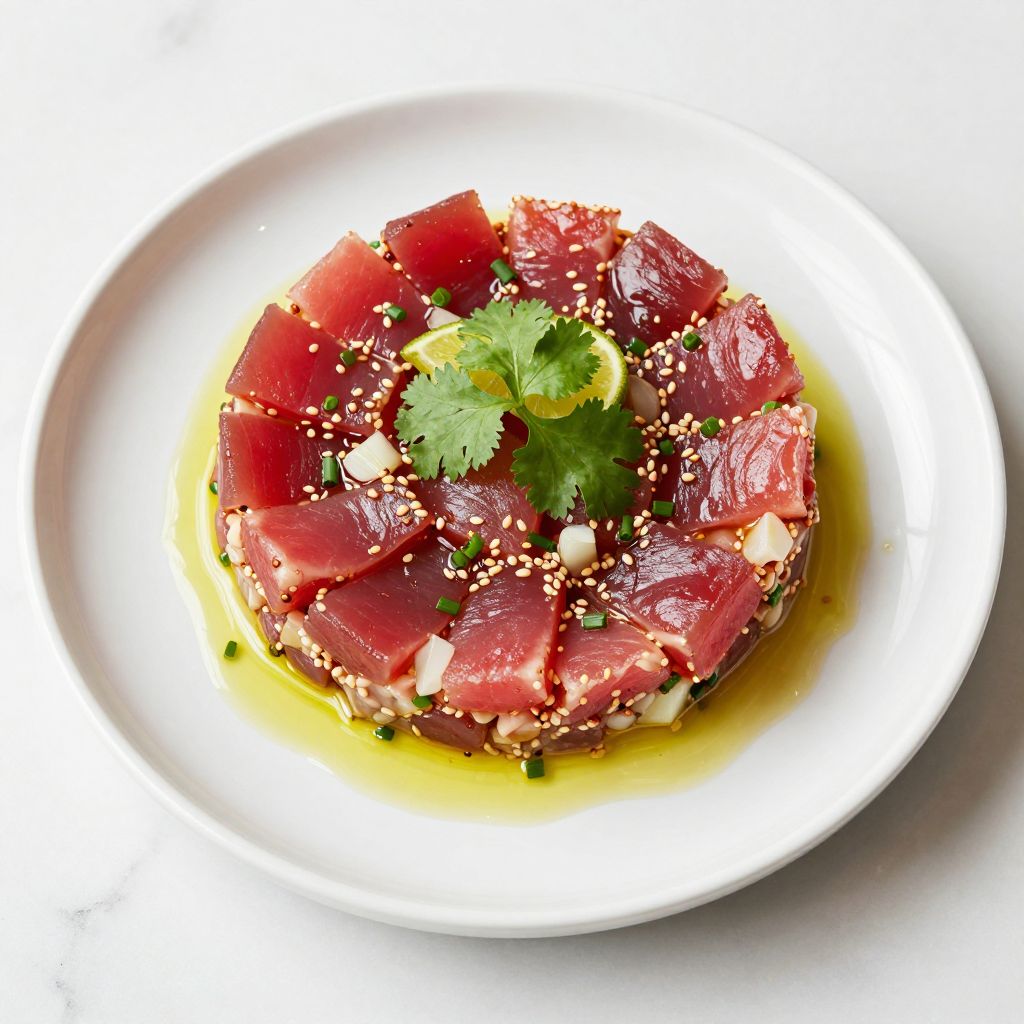
Tuna Tartare
Ingredients
Equipment
Method
- Place your cutting board and chef's knife in the freezer for 10 minutes to chill.
- Inspect the sashimi-grade tuna for freshness, then pat dry and keep refrigerated until ready to cut.
- Using the chilled knife, dice the tuna into 1/4-inch cubes in one clean motion per cut, wiping the blade between slices.
- In a small mixing bowl whisk together olive oil, lemon juice, lime juice, soy sauce, and sesame oil to form a light dressing (about 30 seconds).
- Add diced tuna, minced shallot, and optional sriracha to the bowl and fold gently 10–15 times until every cube is lightly coated.
- Season with kosher salt and black pepper a pinch at a time, tasting after each addition until balanced.
- Cover and refrigerate the tartare for 5–10 minutes to let flavors meld while you chill serving plates.
- Portion the tartare onto chilled plates with an ice cream scoop, then garnish with toasted sesame seeds, chopped chives, and microgreens immediately before serving.