Poultry Seasoning Recipe is a homemade spice blend that transforms your chicken, turkey, and stuffing from ordinary to unforgettable. Skip the store-bought packets loaded with salt and fillers, and mix your own in five minutes using dried herbs you probably already have.
This versatile blend works beautifully on roasted birds, in gravies, and sprinkled over vegetables. Let’s build your perfect batch.
Why You’ll Love This Recipe
Making your own poultry seasoning gives you complete control over flavor intensity and ingredient quality. You’ll save money, reduce sodium, and customize it to your taste.
- Ready in under 5 minutes with zero cooking required
- Costs less than half the price of branded versions
- No artificial additives or excess salt
- Works brilliantly on chicken, turkey, pork, and vegetables
- Stores for months in your spice cabinet
My Experience Making This Recipe
I stopped buying pre-made poultry seasoning after my first batch revealed how much better homemade tastes. The fresh-dried herbs create this bright, herbaceous punch that bottled blends simply cannot match.
My family noticed immediately when I switched to this blend for Thanksgiving stuffing. The flavor was cleaner, more nuanced, and nobody could identify the “secret ingredient” because there wasn’t one, just real herbs working in harmony.
Now I make a double batch every fall and give small jars as gifts. People are genuinely surprised when I tell them it takes five minutes to make.
Recipe Overview
- Recipe Name: Poultry Seasoning Recipe
- Servings: Makes about 1/3 cup (enough for 3-4 whole chickens)
- Prep Time: 5 minutes
- Cook Time: 0 minutes
- Total Time: 5 minutes
- Course: Seasoning Blend
- Cuisine: American
- Calories per Serving: Negligible (used as seasoning, not eaten by the spoonful)
Equipment You Will Need
- Small mixing bowl
- Measuring spoons
- Whisk or fork
- Airtight glass jar or container
- Label (optional but helpful)
Ingredients for Poultry Seasoning Recipe
- 2 tablespoons dried sage
- 1 tablespoon dried thyme
- 1 tablespoon dried marjoram
- 1 teaspoon dried rosemary
- 1 teaspoon dried oregano
- 1/2 teaspoon ground black pepper
- 1/4 teaspoon dried rubbed sage (optional, for extra depth)
Ingredient Notes and Substitutions
- Dried sage is the backbone of poultry seasoning, delivering that warm, earthy flavor that screams Thanksgiving. If you only have fresh sage, use triple the amount but use the blend within a week since fresh herbs don’t store as long.
- Dried thyme adds subtle sweetness and complexity to the blend. If unavailable, increase the marjoram by half a teaspoon.
- Marjoram provides a gentle, slightly sweet herbal note that softens the stronger herbs. You can swap it one-to-one with oregano for a slightly spicier result.
- Rosemary contributes a pine-like, slightly sharp quality that prevents the blend from tasting flat. Use it sparingly; ground rosemary can overpower quickly, so stick to the full teaspoon.
- Oregano rounds out the Mediterranean influence and adds complexity. Increase it by a half teaspoon if you prefer a more robust Italian-style seasoning.
- Black pepper provides warmth and bite that brings all the other flavors into focus. Freshly ground pepper tastes noticeably better than pre-ground, so grind it yourself if possible.
How to Make Poultry Seasoning Recipe
Step 1: Measure Your Sage
Pour 2 tablespoons of dried sage into your mixing bowl. Sage is the dominant flavor here, so don’t skimp on this ingredient.
Step 2: Add the Thyme and Marjoram
Add 1 tablespoon of dried thyme and 1 tablespoon of dried marjoram to the bowl. These two herbs create a gentle sweetness that balances sage’s earthiness.
Step 3: Include the Rosemary
Measure out 1 teaspoon of dried rosemary and add it carefully. Rosemary is potent, so resist the urge to pile it on; you can always add more next time if you want.
Step 4: Add Oregano
Stir in 1 teaspoon of dried oregano. This herb adds just enough Mediterranean influence to make the blend interesting without overpowering the poultry-centric flavors.
Step 5: Incorporate Black Pepper
Add 1/2 teaspoon of ground black pepper to the mixture. Pepper activates the other flavors and prevents the blend from tasting one-dimensional.
Step 6: Whisk Everything Together
Use a whisk or fork to combine all the dried herbs thoroughly for about 30 seconds. This distributes the spices evenly so each pinch tastes consistent.
Step 7: Optional Depth Boost
If you want extra sage depth, stir in 1/4 teaspoon more rubbed sage. This is entirely optional but gives the blend that professional, well-developed flavor.
Step 8: Transfer to Storage
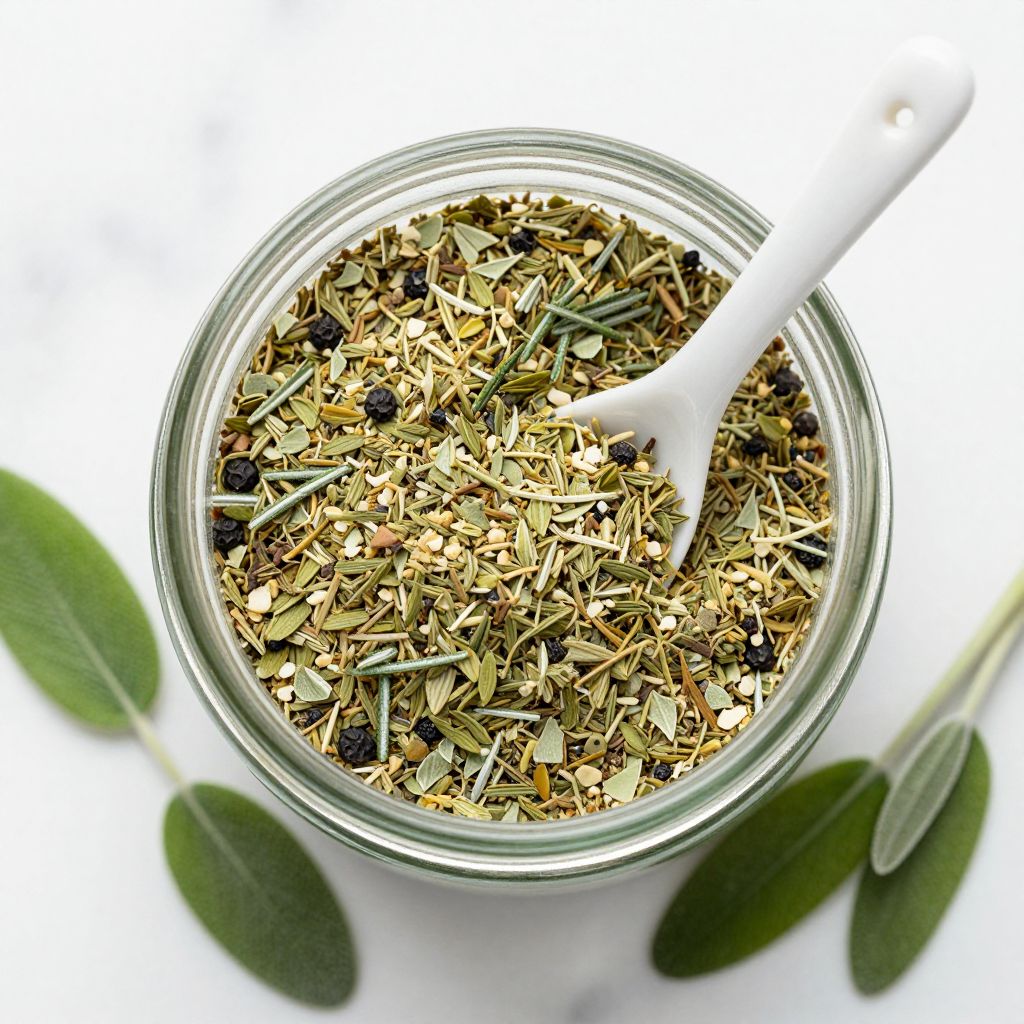
Pour your finished poultry seasoning into a clean, airtight glass jar. Store it away from direct sunlight and heat for maximum freshness and flavor retention.
Pro Tip: Toast your dried herbs gently in a dry skillet over low heat for 20 seconds before blending to wake up their essential oils and intensify the flavor.
Tips for the Best Poultry Seasoning Recipe
- Buy dried herbs from the bulk section of your grocery store rather than pre-packaged spice jars. Bulk herbs cost less and you can inspect them for color and aroma before purchasing.
- Use herbs that are no older than six months for the brightest flavor. Old dried herbs lose potency quickly, so replace your spice cabinet annually.
- Rub the dried herbs between your palms before measuring to release their aromatic oils. This small step noticeably improves the final blend’s fragrance and flavor.
- Taste a tiny pinch on your finger before using on your bird to make sure the balance suits your preferences. Every person’s palate differs, so adjust seasonings freely.
- Double or triple this recipe and give jars as gifts to friends and family. Label them with the date and blend name for a homemade touch that costs almost nothing.
- Avoid grinding dried herbs into powder unless you plan to use the blend immediately. Whole dried herbs retain flavor longer than ground versions.
Common Mistakes to Avoid
- Using fresh herbs instead of dried will make the blend clump, spoil quickly, and taste muddy rather than bright. Dried herbs are essential for this recipe’s shelf stability and clean flavor.
- Measuring by eye instead of using spoons throws off the flavor balance and makes batches inconsistent. Accurate measurements take 20 seconds and guarantee you’ll love it every time.
- Storing the blend in clear glass under kitchen lights causes the herbs to fade and lose flavor faster. Keep it in a dark cabinet or opaque container away from heat and moisture.
- Over-mixing can crush delicate herb leaves into fine particles, which oxidize and lose flavor more quickly. Mix just until everything is evenly distributed, then stop.
- Forgetting to label your jar leads to confusion months later when you can’t remember if it’s poultry seasoning or Italian seasoning. A quick label saves frustration and prevents kitchen disasters.
Serving Suggestions
Sprinkle this poultry seasoning on roasted chicken, turkey, Cornish game hens, and even pork chops. It also seasons vegetable sides beautifully and transforms simple pan gravies into restaurant-quality sauces.
- Rub the inside and outside of a whole chicken before roasting for incredibly flavorful poultry
- Stir into buttered breadcrumbs for homemade stuffing that tastes infinitely better than mixes
- Sprinkle over roasted root vegetables like carrots, parsnips, and sweet potatoes
- Add to cream sauces and gravies alongside a splash of white wine for elegant side dishes
- Mix into softened butter with lemon zest for a compound butter to top steamed vegetables
Variations to Try
- Garlic Poultry Seasoning: Add 1/2 teaspoon of garlic powder and 1/4 teaspoon of onion powder for a more savory, complex blend that works especially well on pork and beef.
- Citrus Poultry Seasoning: Include 1/2 teaspoon of dried lemon zest or orange zest for a bright, Mediterranean twist that pairs beautifully with lighter poultry preparations.
- Spicy Poultry Seasoning: Increase black pepper to 1 teaspoon and add 1/4 teaspoon of cayenne pepper for heat that livens up roasted game birds and darker poultry meats.
- Smoky Poultry Seasoning: Add 1/4 teaspoon of smoked paprika for a subtle smokiness that evokes outdoor grilling and adds depth to any poultry dish.
- Italian Herb Poultry Seasoning: Reduce sage to 1 tablespoon, increase oregano to 2 teaspoons, and add 1/2 teaspoon of dried basil for an herbaceous blend that suits Mediterranean-style preparation methods.
Dietary Adaptations
- Gluten-Free: This recipe is naturally gluten-free as long as you purchase pure dried herbs with no additives or fillers. Always check labels to confirm.
- Dairy-Free: The blend contains no dairy ingredients, so it works perfectly for dairy-free cooking without any modifications needed.
- Vegan and Vegetarian: This seasoning blend is entirely plant-based and works beautifully on roasted vegetables, tofu, and meat alternatives requiring no changes.
- Low-Carb and Keto: Poultry seasoning has negligible carbohydrates and fits any low-carb lifestyle with zero modifications or trade-offs.
Storage and Reheating
Refrigerator
Store your poultry seasoning blend in an airtight container in a cool, dark cupboard rather than the refrigerator. Moisture in the fridge will clump the herbs and reduce shelf life.
- Shelf life: up to 6 months with full flavor
- Check periodically for moisture or clumping
- If clumping occurs, spread on a paper towel and let air-dry completely
Freezer
Freezing is unnecessary and can actually damage the delicate essential oils in dried herbs. A cool, dark cabinet works far better for long-term storage.
- Freezing is not recommended for dried herb blends
- Moisture from thawing causes clumping and flavor loss
- Room temperature storage maintains quality longer
Reheating
Since this is a dry seasoning blend, no reheating is necessary. Simply use it directly from the jar whenever you cook poultry or vegetables.
- Use directly from the jar without reheating
- No preparation time needed before using
- Works best when rubbed onto meat or stirred into hot liquids
Nutrition Information
| Nutrient | Amount |
|---|---|
| Calories | Negligible |
| Total Fat | Negligible |
| Saturated Fat | 0g |
| Carbohydrates | Negligible |
| Fiber | Negligible |
| Sugar | 0g |
| Protein | Negligible |
| Sodium | Negligible |
| Cholesterol | 0mg |
These values are approximate since poultry seasoning is used in tiny quantities as a flavoring agent rather than a food itself. The nutritional impact on any dish is minimal.
Frequently Asked Questions
Can I use fresh herbs instead of dried?
Fresh herbs contain much more water content and will spoil quickly when stored together. You can use fresh herbs in a pinch by tripling the amount, but use the blend within three days and refrigerate it.
How much poultry seasoning should I use on a whole chicken?
For a 4-5 pound chicken, use about 1 to 2 teaspoons of the blend mixed into softened butter, then rub it under and over the skin. Adjust based on your salt preferences and how strongly you like seasoned poultry.
Can I make this blend in a spice grinder for finer texture?
Yes, but only do this right before using the blend. Grinding herbs into powder releases their essential oils and causes faster flavor loss during storage.
What if my poultry seasoning tastes too strong or too mild?
If it tastes too strong, reduce the amount used on your next bird or add more of the milder herbs like thyme and marjoram. If too mild, ensure your dried herbs are fresh and consider adding a quarter teaspoon more sage or rosemary.
Does this work on turkey just as well as chicken?
Absolutely, and turkey is actually the traditional use for this blend. Use 1 teaspoon per pound of turkey weight mixed into butter for rubbing under the skin, adjusting your salt separately since the blend contains none.
Can I substitute dried basil for any of these herbs?
Basil changes the flavor profile significantly, shifting it toward Italian rather than traditional American poultry seasoning. Use it only if you’re specifically making the Italian variation mentioned in the variations section.
Final Thoughts
Making your own poultry seasoning is one of those small kitchen wins that feels indulgent but takes almost no time. You’ll save money, reduce sodium, and create something genuinely better than anything you can buy.
The next time you roast a bird or prepare stuffing, reach for your homemade jar and notice the difference. Once you taste poultry seasoning made with real, fresh dried herbs, you’ll never go back to the store-bought version.
Poultry Seasoning Recipe
Ingredients
Equipment
Method
- Add 2 tablespoons dried sage to a small mixing bowl.
- Stir in 1 tablespoon dried thyme and 1 tablespoon dried marjoram until evenly combined.
- Measure and add 1 teaspoon dried rosemary, making sure to break up any large pieces with your fingers.
- Add 1 teaspoon dried oregano to the bowl.
- Sprinkle in 1/2 teaspoon ground black pepper.
- Whisk the herbs together for about 30 seconds, ensuring a uniform blend.
- If desired, mix in 1/4 teaspoon dried rubbed sage for extra depth.
- Transfer the seasoning to an airtight jar, label, and store in a cool, dark cabinet for up to 6 months.