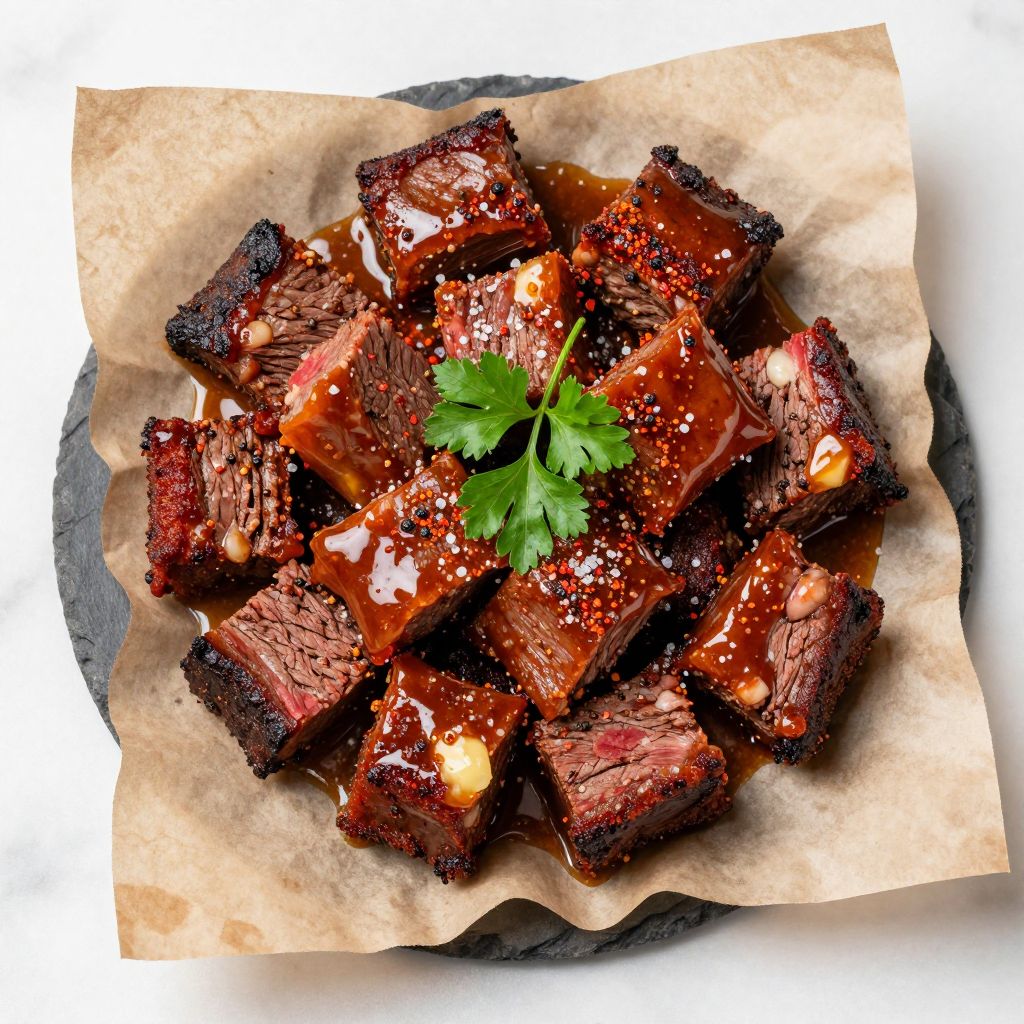
Ingredients
Equipment
Method
- Fire up your smoker to 250 degrees Fahrenheit about 30 to 45 minutes before cooking. Add your choice of wood chips or chunks to the firebox. Hickory or oak provides clean smoke, while mesquite delivers bolder flavor.
- Remove the brisket point from cooler and pat dry with paper towels. Mix brown sugar, paprika, salt, pepper, garlic powder, onion powder, and cayenne in a small bowl. Rub the entire surface generously, working seasoning into all crevices.
- Place the brisket point fat-side up on smoker grate, as far from heat source as possible. Insert meat thermometer into thickest part. Let smoke undisturbed for 4 to 5 hours at 250 degrees until internal temperature reaches 185 to 190 degrees.
- After first 2 hours, optionally spritz brisket with apple juice or water every hour to help develop bark. Use tongs to avoid puncturing meat surface. If smoker temperature dips below 240 degrees, add more charcoal or wood.
- Once brisket reaches 185 to 190 degrees internally, remove from smoker and place on cutting board. Let rest for 10 to 15 minutes so juices redistribute and meat firms up slightly for cutting.
- Using sharp butcher knife, trim away thick layer of fat on outside of brisket point. Cut meat into roughly 1-inch cubes, leaving thin cap of fat on each piece. Aim for pieces between three-quarters inch and 1.25 inches across.
- In small bowl, combine barbecue sauce, honey, butter, and apple cider vinegar. Whisk together until butter melts and everything blends smoothly. Layer brisket cubes into aluminum foil pan cut-side down. Pour glaze over top and fold cubes gently to coat.
- Return pan to smoker at 250 degrees and cook uncovered for 1 to 2 hours. After 45 minutes, give pan gentle stir with tongs to redistribute glaze. Check around 90 minutes; burnt ends are done when glaze has darkened and thickened and cubes are tender.
- Pull pan from smoker and let burnt ends sit for 5 minutes so glaze sets slightly. If glaze is still too runny, return pan to smoker for another 15 to 20 minutes until thick and sticky coating clings to each piece.
Notes
The true secret to burnt ends is not rushing the second phase. Choose a brisket point with visible marbling and fat cap at least a quarter-inch thick. Maintain steady smoker temperature between 240 and 260 degrees. Don't open smoker unnecessarily during first phase. Serve hot and sticky on butcher paper with coleslaw, cornbread, baked beans, pickles, or mac and cheese.