Stuffed grape leaves are a beloved Mediterranean delicacy that combines tender leaves with a savory filling of rice, herbs, and spices. This classic dish delivers incredible flavor in every bite and works perfectly as an appetizer, side dish, or light meal. If you’ve ever wondered how to recreate those restaurant-quality rolls at home, you’re about to discover it’s easier than you think.
These little bundles taste impressive but require just basic kitchen skills and readily available ingredients. Whether you’re cooking for a crowd or meal-prepping for the week, this recipe delivers consistent, delicious results every single time.
Why You’ll Love This Recipe
Stuffed grape leaves offer a perfect balance of tender texture, aromatic filling, and bright Mediterranean flavors that feel both comforting and sophisticated.
- Naturally vegetarian and works easily for vegan diets with simple swaps
- Makes an impressive appetizer that tastes restaurant-quality
- Keeps well in the refrigerator for days, perfect for meal prep
- Budget-friendly when you use canned grape leaves
- Requires minimal cooking equipment and basic technique skills
My Experience Making This Recipe
The first time I made stuffed grape leaves, I was nervous about rolling them properly. After a few wobbly attempts, I realized the leaves are forgiving and the rolling motion becomes second nature within minutes.
What surprised me most was how aromatic the filling became once the rolls simmered. The kitchen smelled like a Greek taverna, and my guests were genuinely impressed when I served them warm with a dollop of yogurt on the side.
I now make these regularly because they’re actually less fussy than they appear. The rolls hold up beautifully through storage and reheating, making them an ideal dish for entertaining or batch cooking.
Recipe Overview
- Recipe Name: Stuffed Grape Leaves
- Servings: 24 rolls (4 to 6 servings as appetizer)
- Prep Time: 30 minutes
- Cook Time: 45 minutes
- Total Time: 75 minutes
- Course: Appetizer or Side Dish
- Cuisine: Mediterranean
- Calories per Serving: 85
Equipment You Will Need
- Large mixing bowl
- Small cutting board
- Chef’s knife
- Medium saucepan with lid
- Measuring cups and spoons
- Colander or fine-mesh strainer
- Paper towels
- Wooden spoon for stirring
Ingredients for Stuffed Grape Leaves
For the Grape Leaves and Filling
- 1 jar (16 ounces) grape leaves, drained and rinsed
- 1 cup long-grain white rice, uncooked
- 1/2 cup fresh parsley, finely chopped
- 1/4 cup fresh mint, finely chopped
- 1/4 cup fresh dill, finely chopped
- 1 small yellow onion, minced very finely
- 3 tablespoons olive oil, divided
- 1 teaspoon salt
- 1/2 teaspoon black pepper
- 1/2 teaspoon ground cumin
- 1/4 teaspoon cayenne pepper
- 1 1/2 cups vegetable broth or water
- Juice of 1 lemon
Ingredient Notes and Substitutions
- Grape leaves: These provide the tender wrapping and slight tang that defines the dish. If unavailable, large cabbage leaves work as a substitute, though they’ll require blanching first and will taste less authentic.
- Long-grain white rice: This type cooks evenly and stays separate rather than clumping during cooking. Short-grain rice will create a mushy texture, and you’d need to reduce the cooking liquid slightly.
- Fresh herbs: The combination of parsley, mint, and dill creates the signature Mediterranean flavor profile. Dried herbs can replace fresh, but use only one-third the amount since they’re more concentrated.
- Olive oil: This adds richness and authentic flavor to both the filling and cooking liquid. Any neutral oil works in a pinch, but it won’t deliver the same depth of taste.
- Lemon juice: The acidity brightens all the flavors and keeps the rice from tasting flat. Lime juice works as a substitute if you prefer a slightly different citrus note.
How to Make Stuffed Grape Leaves
Step 1: Prepare the Grape Leaves
Drain the jarred grape leaves and rinse them gently under cool water to remove excess salt and brine. Pat them dry with paper towels and lay them flat on a clean surface, keeping the glossy side down so they’re easier to work with when rolling.
Step 2: Mix the Filling
Combine uncooked rice, chopped parsley, mint, dill, minced onion, 2 tablespoons olive oil, salt, pepper, cumin, and cayenne in a large mixing bowl. Stir everything together until the herbs are evenly distributed throughout the rice, which ensures consistent flavor in every roll.
Step 3: Assess Your Grape Leaf Size
Larger grape leaves can hold more filling, while smaller ones are better used two together or for practice rolling. Separate them roughly by size so you can work with similar-sized leaves in each batch, which makes the rolling process faster and more consistent.
Step 4: Roll the First Grape Leaf
Place one grape leaf shiny side down on a cutting board with the stem end pointing toward you. Place about 1 tablespoon of filling near the stem end, leaving roughly half an inch of space on either side, then fold the sides in and roll tightly away from you, similar to rolling a burrito.
Step 5: Roll the Remaining Leaves
Continue rolling each grape leaf with consistent technique until all filling is used. You should produce roughly 24 rolls depending on leaf size, though this number will vary slightly based on your grape leaves and how firmly you pack each roll.
Step 6: Arrange in the Saucepan
Drizzle the remaining 1 tablespoon of olive oil on the bottom of a medium saucepan and arrange the rolled grape leaves seam side down in concentric circles. Slightly overlapping them prevents them from unrolling during cooking and creates a tighter, more stable arrangement.
Step 7: Add the Cooking Liquid
Pour the vegetable broth and lemon juice over the rolled leaves, which should mostly cover them. The liquid will cook the rice inside the leaves and infuse them with bright flavor, plus it prevents them from drying out.
Step 8: Simmer Until Cooked
Cover the saucepan, bring it to a boil over medium-high heat, then reduce heat to low and simmer gently for 45 minutes. The rice inside should be tender and the leaves should be soft enough to cut easily with a fork.
Pro Tip: Let the rolls cool in the cooking liquid for at least 10 minutes before serving, which lets the flavors meld and makes them easier to remove from the pan without tearing.
Tips for the Best Stuffed Grape Leaves
- Rinse your grape leaves thoroughly to remove excess brine, which can make the finished dish taste overly salty.
- Don’t overfill each leaf with rice; about 1 tablespoon per roll is plenty and prevents them from bursting during cooking.
- Roll the leaves snugly but not so tightly that you tear them; practice on a couple before rolling the whole batch.
- Use even heat and keep the simmer gentle to prevent the rolls from popping open and leaking filling into the cooking liquid.
- Taste the cooking liquid before serving and add more lemon juice if it seems flat or needs brightness.
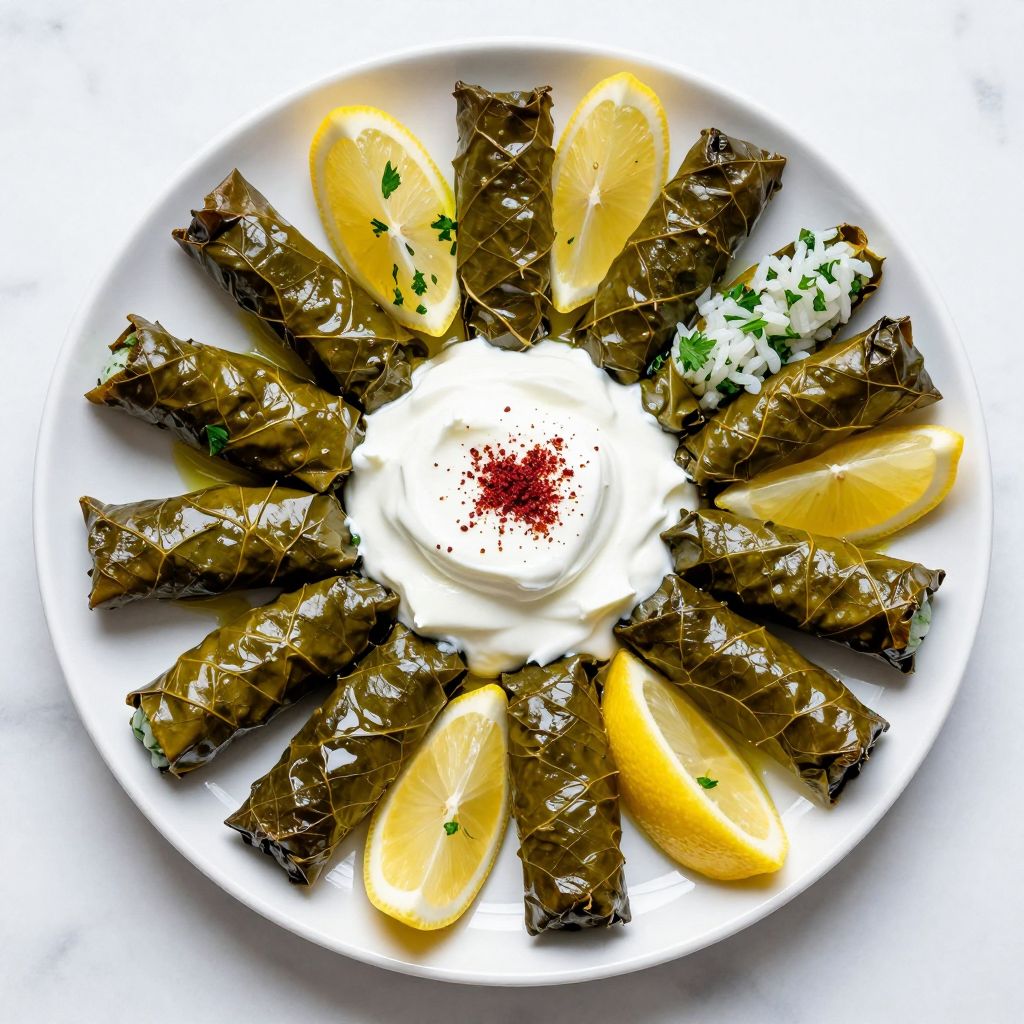
- Serve them warm or at room temperature with Greek yogurt and a squeeze of fresh lemon on the side.
Common Mistakes to Avoid
- Overcooking the rice before rolling: Uncooked rice will cook perfectly in the simmering liquid, so starting with raw rice is key to proper texture.
- Using too much filling: Overstuffed rolls burst during cooking and create a messy, unappealing dish, so resist the urge to pack them tightly.
- Skipping the brine rinse: Extra salt from the jar will throw off the flavor balance and make the whole dish taste briny rather than herbaceous.
- Boiling too vigorously: High heat causes the delicate leaves to tear and the rice to cook unevenly, so maintain a gentle simmer throughout.
- Not covering the pan: Uncovered cooking allows the leaves to dry out and toughen, so keep the lid on for the full 45 minutes.
Serving Suggestions
Stuffed grape leaves shine as an appetizer or light meal, especially when served with cool dairy or citrus accompaniments. They work beautifully alongside other Mediterranean flavors and are wonderful at room temperature, making them perfect for entertaining.
- Serve warm with dollops of Greek yogurt and fresh lemon wedges for squeezing
- Pair with crispy pita bread and hummus for a simple meal
- Arrange on a mezze platter alongside olives, feta cheese, and fresh vegetables
- Drizzle with extra virgin olive oil and sprinkle with sumac for added tanginess
- Serve at room temperature as part of a cold appetizer spread or picnic menu
Variations to Try
- Meat-filled version: Brown 1/2 pound ground lamb or beef with the onions, then mix it into the filling before rolling for a heartier, more protein-rich dish.
- Pine nut and currant filling: Add 1/4 cup toasted pine nuts and 1/4 cup dried currants to the rice mixture for sweetness and crunch.
- Tomato-braised style: Replace the vegetable broth with a mixture of tomato sauce and water, which creates a richer, tangier flavor profile.
- Spiced version: Increase the cumin to 1 teaspoon and add 1/2 teaspoon cinnamon for warm, slightly sweet undertones.
- Vegetable-stuffed: Mix finely diced zucchini, carrots, and bell peppers into the rice filling for added texture and nutrition.
Dietary Adaptations
- Gluten-free: This recipe is naturally gluten-free as written, though check your vegetable broth label to confirm it’s certified gluten-free.
- Dairy-free: Skip the yogurt topping or use coconut yogurt, though the dish is already dairy-free in its base form.
- Vegan: The recipe is already vegan as written, using only rice, herbs, and olive oil in the filling with no animal products.
- Low-carb or keto: Replace the white rice with cauliflower rice and reduce the cooking time to 20 minutes, though the texture will be firmer and less traditional.
Storage and Reheating
Refrigerator
Store cooked stuffed grape leaves in an airtight container with some of the cooking liquid, which keeps them moist and flavorful for up to 5 days.
- Keep them submerged in liquid if possible to prevent drying out
- They taste excellent cold or gently reheated, so serve as preferred
Freezer
Freeze stuffed grape leaves in a freezer-safe container for up to 3 months, ideally with some cooking liquid included to prevent freezer burn.
- Thaw overnight in the refrigerator before reheating
- They freeze and thaw beautifully without texture degradation
Reheating
Reheat gently on the stovetop over low heat with a splash of water or broth, which restores moisture and warmth without toughening the leaves.
- Microwave reheating is quick but may dry them out slightly
- Bring them to room temperature first if reheating from frozen for more even warmth
Nutrition Information
| Nutrient | Amount |
|---|---|
| Calories | 85 |
| Total Fat | 3.5g |
| Saturated Fat | 0.5g |
| Carbohydrates | 12g |
| Fiber | 1g |
| Sugar | 0.5g |
| Protein | 2g |
| Sodium | 340mg |
| Cholesterol | 0mg |
These values are approximate and based on standard USDA ingredient data, assuming 24 rolls per batch and serving 4 to 6 people.
Frequently Asked Questions
Can I use fresh grape leaves instead of jarred ones?
Yes, fresh grape leaves work beautifully but require blanching first to soften them before rolling. Boil them for 2 to 3 minutes until pliable, then proceed with rolling and cooking as directed.
How do I keep the rolls from unrolling during cooking?
Arrange them seam side down and pack them snugly in the saucepan, which keeps them from moving around as the liquid simmers. You can also place a heat-safe plate on top of them as they cook to keep them submerged and stable.
Can I make these ahead and refrigerate before cooking?
Yes, roll them up to 24 hours ahead, cover them tightly with plastic wrap, and refrigerate until you’re ready to cook. They’ll cook perfectly from cold, though you may need to add 5 to 10 minutes to the cooking time.
Why is my cooking liquid cloudy or the rolls falling apart?
This usually means the heat was too high during cooking, causing the delicate leaves to tear or the rice to release excess starch. Simmer gently on low heat and avoid lifting the lid frequently, which disturbs the cooking process.
What’s the difference between serving them warm versus cold?
Warm rolls feel more comforting and the flavors meld beautifully, while cold rolls work better for picnics and appetizer spreads. Both are delicious, so choose based on your menu and the season.
Final Thoughts
Stuffed grape leaves are far simpler to make than their restaurant appearance suggests, and once you master the rolling technique, you’ll find yourself making them regularly. This recipe delivers authentic Mediterranean flavor and pairs beautifully with almost any meal or entertaining scenario.
Give this recipe a try and discover how rewarding it feels to create these beautiful, herbaceous bundles in your own kitchen. Your guests will be impressed, and you’ll have a new favorite dish to rotate into regular dinner rotation.
Stuffed Grape Leaves
Ingredients
Equipment
Method
- Drain the grape leaves, rinse under cool water, and pat dry with paper towels.
- In a large bowl, combine uncooked rice, parsley, mint, dill, minced onion, 2 tablespoons olive oil, salt, pepper, cumin, and cayenne; mix until evenly distributed.
- Place a grape leaf shiny side down on a board with the stem end toward you. Add 1 tablespoon of filling near the stem, fold sides over, and roll tightly away from you to form a cylinder.
- Repeat with remaining leaves and filling, making about 24 rolls.
- Coat the bottom of a medium saucepan with the remaining 1 tablespoon olive oil. Arrange rolls seam side down in tight concentric layers.
- Pour vegetable broth and lemon juice over the rolls; liquid should nearly cover them.
- Cover, bring to a boil over medium-high heat, then reduce to low and simmer gently for 45 minutes until rice is tender.
- Remove from heat and let rest, covered, for 10 minutes before serving warm or at room temperature.