A spiral ham recipe transforms a simple holiday centerpiece into the star of your table with minimal effort and maximum flavor. This glazed ham with its beautiful spiral-cut presentation practically cooks itself in the oven while filling your kitchen with an irresistible aroma.
Whether you’re hosting Thanksgiving, Easter, or a casual family dinner, this recipe delivers tender, juicy meat that guests absolutely devour. Let’s walk through everything you need to know to nail this classic dish.
Why You’ll Love This Recipe
Spiral ham is the kind of dish that looks fancy but requires almost no fussing around in the kitchen. The pre-cut spiral slices mean zero carving stress, and the glaze creates a caramelized crust that tastes incredible.
- Minimal prep time with maximum visual impact on your table
- The spiral cuts mean juicier meat that cooks evenly throughout
- Glazing happens right in the oven, no stovetop needed
- Leftovers become amazing sandwiches, soups, and fried rice
- Feeds a crowd without tying you to the kitchen all day
My Experience Making This Recipe
The first time I made spiral ham, I was honestly nervous about whether I could pull off something that looked so elegant. Turns out, the ham does most of the heavy lifting for you, which is exactly why it’s perfect for busy hosts.
What struck me most was how forgiving the recipe actually is. I’ve slightly overcooked it, undercooked it, and everything in between, and it still turned out moist and delicious because of how the spiral cuts work.
My family went wild for the glaze, especially when the edges caramelized into sticky, savory-sweet bits. Now I make it at least twice a year because it’s become our unofficial family tradition.
Recipe Overview
- Recipe Name: Glazed Spiral Ham
- Servings: 12 to 16
- Prep Time: 15 minutes
- Cook Time: 2 to 2.5 hours
- Total Time: 2 hours 15 minutes to 2 hours 45 minutes
- Course: Main Course
- Cuisine: American
- Calories per Serving: 285
Equipment You Will Need
- Large roasting pan with a rack
- Aluminum foil or roasting pan cover
- Sharp carving knife
- Meat thermometer
- Small saucepan for glaze
- Basting brush
- Measuring cups and spoons
- Cutting board
Ingredients for Spiral Ham Recipe
For the Ham
- One 7 to 8 pound spiral-cut ham, bone-in or boneless
- 1/2 cup water
- 2 tablespoons brown sugar
- 1 tablespoon Dijon mustard
For the Glaze
- 1/2 cup brown sugar, packed
- 1/4 cup honey
- 2 tablespoons Dijon mustard
- 2 tablespoons apple cider vinegar
- 1 tablespoon butter
- 1/2 teaspoon ground cloves
- 1/4 teaspoon black pepper
- 1 tablespoon pineapple juice or orange juice
Ingredient Notes and Substitutions
- Brown sugar: This caramelizes beautifully and adds depth to the glaze. White sugar works fine if needed, but brown sugar gives better color and a molasses undertone.
- Honey: It keeps the glaze smooth and glossy while adding natural sweetness. Maple syrup creates a earthier flavor profile if you prefer that direction.
- Dijon mustard: The tang balances the sweetness and adds complexity without overpowering the ham. Yellow mustard or spicy brown mustard are decent swaps, though the flavor changes slightly.
- Apple cider vinegar: It brightens the glaze and prevents it from tasting one-dimensional. White vinegar or rice vinegar work, but reduce the amount slightly since they’re more acidic.
- Ground cloves: This spice is the secret weapon that makes ham taste like ham instead of just sweet meat. Nutmeg can substitute, but use half the amount since it’s stronger.
How to Make Spiral Ham Recipe
Step 1: Prep Your Oven and Pan
Preheat your oven to 325 degrees Fahrenheit. This lower temperature ensures the ham heats through gently without drying out the exterior while the interior stays moist and tender.
Place the oven rack in the lower-middle position so your ham has plenty of clearance from the top heating element.
Step 2: Remove Ham From Packaging
Take your spiral ham out of the refrigerator about 30 minutes before cooking. This allows it to come closer to room temperature, which means more even cooking throughout.
Pat the surface dry with paper towels, which helps the glaze stick better and promotes browning.
Step 3: Prepare the Roasting Pan
Line your roasting pan with aluminum foil for easy cleanup. Place the ham cut-side down on the rack with the scored skin side up.
Score the top surface in a crosshatch pattern with shallow cuts about 1/4 inch deep and spaced 1 inch apart. These cuts let the glaze penetrate the meat and create those beautiful caramelized edges.
Step 4: Add Water and Initial Seasoning
Pour the 1/2 cup water into the bottom of the roasting pan around the ham. This creates steam that keeps the meat incredibly moist during cooking.
Sprinkle the ham with 2 tablespoons of brown sugar and rub 1 tablespoon of Dijon mustard across the top. These ingredients start building flavor while the ham roasts.
Step 5: Cover and Roast
Cover the pan tightly with aluminum foil or a roasting lid. The ham needs to roast covered for the first 1.5 to 1 hour 45 minutes to trap steam and prevent the exterior from cooking too fast.
Plan on roasting about 15 minutes per pound at 325 degrees. For a 7-pound ham, expect roughly 1 hour 45 minutes total time.
Step 6: Prepare the Glaze
While the ham roasts, combine 1/2 cup brown sugar, 1/4 cup honey, 2 tablespoons Dijon mustard, 2 tablespoons apple cider vinegar, 1 tablespoon butter, 1/2 teaspoon ground cloves, 1/4 teaspoon black pepper, and 1 tablespoon fruit juice in a small saucepan. Whisk everything together over low heat until the butter melts and the mixture becomes smooth and glossy.
Let the glaze cool for a few minutes so it’s warm but not hot when you apply it. This prevents the glaze from running off the ham immediately.
Step 7: Uncover and Apply Glaze
After 1 hour 45 minutes, carefully remove the foil from the ham. Using a basting brush, paint the entire exposed surface with your glaze, working it into the scored lines.
Return the ham to the oven uncovered and continue roasting for 20 to 30 minutes, basting with glaze every 10 minutes. Each basting layer builds up that incredible caramelized crust.
Step 8: Check Temperature and Rest
Insert a meat thermometer into the thickest part of the ham, avoiding the bone. The ham is perfectly done when it reaches 140 degrees Fahrenheit for pre-cooked ham.
Remove the ham from the oven and let it rest for 10 to 15 minutes before serving. This allows the juices to redistribute throughout the meat, keeping every slice tender and moist.
Pro Tip: Save that pan dripping with all the caramelized glaze and ham flavoring to make an incredible sauce or gravy by whisking it with a little cornstarch and broth.
Tips for the Best Spiral Ham Recipe
- Buy your spiral ham from the butcher counter if possible rather than the refrigerated section. They often have fresher, better-quality options and can answer questions about the specific cut.
- Don’t skip the scoring step, even though it seems fussy. Those grooves are where the magic happens, trapping glaze and creating texture.
- Keep a spray bottle of water nearby while the ham roasts uncovered. If the glaze starts burning or darkening too much, a light misting helps without washing off the flavor.
- Make your glaze the night before and store it in the refrigerator. You can reheat it gently right before basting, and this saves you stress on cooking day.
- If your ham is particularly large, tent it loosely with foil after the last basting to prevent the glaze from burning while the interior finishes cooking.
- Invest in an instant-read meat thermometer. Guessing whether the ham is done leads to either overdrying or serving it too cool.
Common Mistakes to Avoid
- Roasting at too high a temperature causes the exterior to brown too fast while the interior stays cold. Stick with 325 degrees, even though 350 is tempting.
- Skipping the water in the bottom of the pan results in dried-out meat that nobody wants to eat. That steam is your secret weapon for keeping everything juicy.
- Applying the glaze too early burns it before the ham finishes cooking. Wait until the final 30 minutes to brush it on.
- Not letting the ham rest after cooking means all those delicious juices spill onto your cutting board instead of staying in the meat where they belong.
- Using a ham that’s been frozen and not fully thawed leads to uneven cooking and cold spots in the middle. Thaw it completely in the refrigerator beforehand.
Serving Suggestions
Spiral ham is the kind of main course that shines alongside classic sides that don’t fight for attention. The meat is rich and flavorful, so pair it with bright, fresh, or creamy accompaniments.
- Serve alongside mashed sweet potatoes and roasted Brussels sprouts for a holiday classic combination
- Pair with a tangy coleslaw to cut through the richness of the meat and glaze
- Add buttered dinner rolls for soaking up every bit of glaze and drippings
- Serve with green beans almondine or roasted asparagus for a fresh vegetable element
- Offer creamy potato salad or au gratin potatoes as hearty, indulgent sides
Variations to Try
- Pineapple and Brown Sugar Ham: Replace the fruit juice with 1/4 cup pineapple juice and add 1/2 cup crushed pineapple to your glaze. This creates a sweeter, more tropical flavor that feels summery and fun.
- Maple and Bourbon Ham: Swap the honey for pure maple syrup and add 2 tablespoons bourbon to the glaze. The bourbon adds smokiness and depth that elevates the whole dish.
- Spicy Ginger Ham: Add 1 tablespoon fresh grated ginger and 1/2 teaspoon cayenne pepper to the glaze for heat and complexity. This version appeals to anyone who loves bold flavors.
- Coffee and Brown Sugar Ham: Replace the fruit juice with strong brewed coffee for unexpected depth and richness. The coffee doesn’t taste like coffee, but rather enhances the savory elements and makes the glaze more sophisticated.
- Honey and Herb Ham: Add 1 teaspoon fresh thyme and 1/2 teaspoon rosemary to your glaze for herby, earthy notes. This works beautifully if you’re serving ham with Mediterranean sides.
Dietary Adaptations
- Gluten-Free: This recipe is naturally gluten-free as written. Just verify your Dijon mustard and brown sugar contain no hidden gluten additives.
- Dairy-Free: Replace the butter in the glaze with olive oil or coconut oil in equal amounts. The flavor shifts slightly, but the glaze still caramelizes beautifully.
- Vegan or Vegetarian: This recipe cannot be adapted for vegan or vegetarian diets since ham is a meat product. Consider making a cauliflower or portobello mushroom version with the same glaze instead.
- Low-Carb or Keto: Use a sugar substitute like erythritol or monk fruit in place of the brown sugar and honey, using about 1/4 cup total. The glaze will be less caramelized but still flavorful, and the carb count drops dramatically.
Storage and Reheating
Refrigerator
Slice your leftover ham and store it in an airtight container in the refrigerator for up to 4 days. The spiral cuts actually make storage easier since the meat is already portioned.
- Store glaze separately in a small container to prevent it from soaking into the meat
- Layer paper towels between ham slices to prevent sticking
- Keep the bone separate if you removed it, as it makes great broth
Freezer
Wrapped properly, ham keeps in the freezer for up to 3 months. Slice the ham, separate it with parchment paper, and wrap everything tightly in plastic wrap before placing it in a freezer bag.
- Flatten the package in the freezer to save space and thaw faster
- Label with the date so you know how long it’s been frozen
- Freeze glaze separately in an ice cube tray for easy portioning
Reheating
The easiest method is to reheat ham slices in a skillet over medium heat for 2 to 3 minutes per side. This warms them through without drying them out and gives edges a slight caramelization.
- Add a splash of broth or water to a covered baking dish at 325 degrees for 15 minutes to reheat larger portions
- Microwave individual slices on a damp paper towel for 30 to 45 seconds if you’re in a hurry
- Brush reheated ham with reserved glaze for flavor and moisture
Nutrition Information
| Nutrient | Amount |
|---|---|
| Calories | 285 |
| Total Fat | 12g |
| Saturated Fat | 4g |
| Carbohydrates | 18g |
| Fiber | 0g |
| Sugar | 15g |
| Protein | 28g |
| Sodium | 1,240mg |
| Cholesterol | 68mg |
These values are approximate and based on a 14-serving ham. Actual nutrition varies depending on the specific ham brand and whether you include skin in your portions.
Frequently Asked Questions
Can I make spiral ham the day before serving?
Absolutely, and honestly, it’s one of the best ways to reduce stress on your actual serving day. Cook it completely, let it cool, wrap it tightly, and refrigerate overnight, then reheat it gently in a 325-degree oven for about 20 minutes.
Why does my ham turn out dry no matter what I do?
The most common culprit is roasting at too high a temperature or too long without water in the pan. Make sure you have that water steaming away underneath and stick strictly to the 325-degree temperature.
Should I buy bone-in or boneless spiral ham?
Bone-in ham has more flavor and tends to stay juicier during cooking because the bone conducts heat evenly. Boneless ham is easier to serve and slice, so choose based on what matters most to you.
Can I use a different glaze flavor instead of the one in this recipe?
Yes, spiraled ham is incredibly flexible with glazes. The key is combining something sweet, something tangy, and something savory or spiced, then basting every 10 minutes in the final stage.
How do I know when the ham is actually done cooking?
Use a meat thermometer and aim for 140 degrees in the thickest part away from the bone. Pre-cooked spiral ham doesn’t need to go higher because it’s already safe to eat; it just needs heating through.
What if I have a smaller or larger ham than seven pounds?
For every additional pound above seven, add about 15 minutes to the covered roasting time. For hams smaller than seven pounds, reduce time proportionally, checking the internal temperature frequently to avoid overcooking.
Final Thoughts
Spiral ham might seem intimidating if you’ve never roasted one before, but this recipe walks you through every single step so there’s really nothing to stress about. The combination of careful temperature control, patient basting, and a killer glaze transforms simple ham into something guests remember and ask for by name.
Next time you need a showstopping main course that lets you actually enjoy time with your family instead of being stuck in the kitchen, give this spiral ham recipe a try. You’ll wonder why you ever ordered ham from
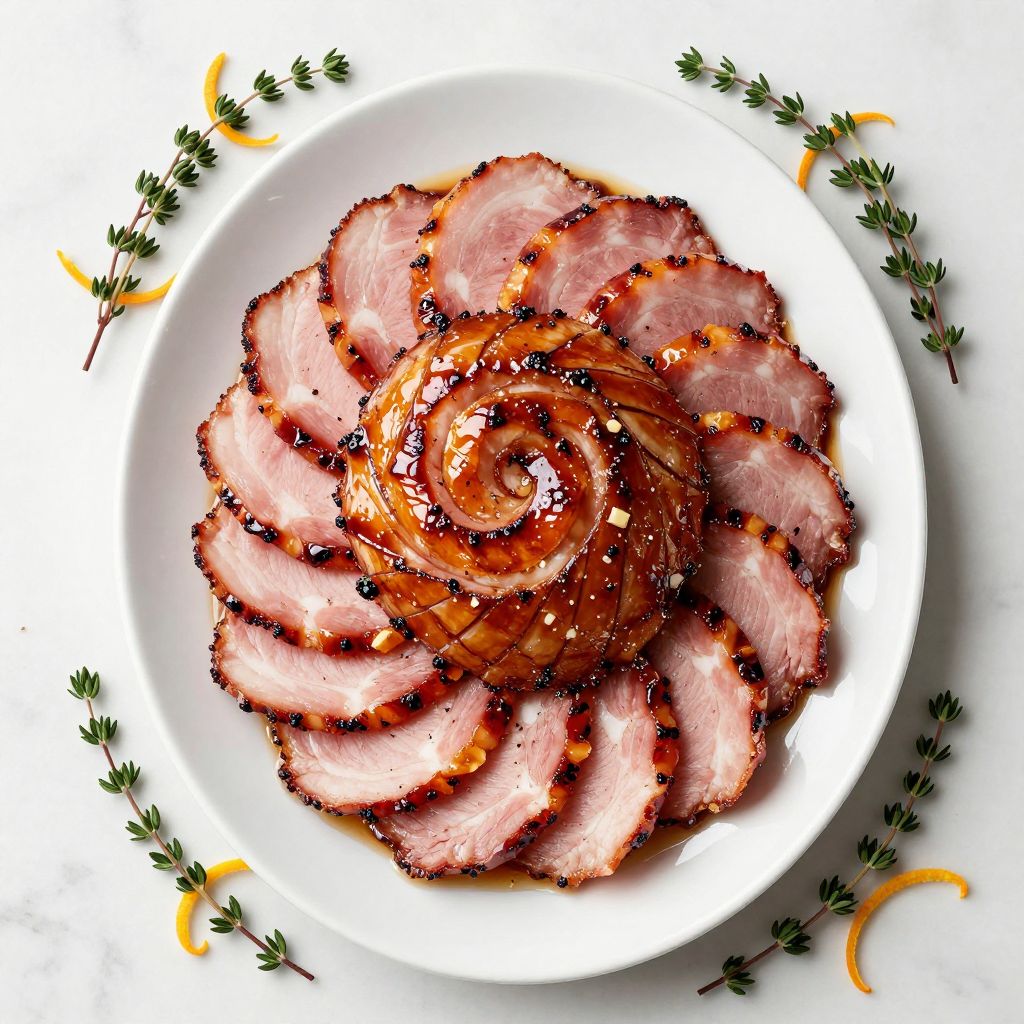
Glazed Spiral Ham
Ingredients
Equipment
Method
- Preheat the oven to 325°F (163°C) and position the rack in the lower-middle of the oven.
- Remove the ham from the refrigerator 30 minutes before cooking and pat it dry with paper towels.
- Line a large roasting pan with aluminum foil, place the rack inside, and set the ham cut-side down on the rack. Score the surface in a 1-inch crosshatch pattern about 1/4 inch deep.
- Pour 1/2 cup water into the bottom of the pan. Rub the top of the ham with 2 tablespoons brown sugar and 1 tablespoon Dijon mustard.
- Cover the pan tightly with foil and roast for about 15 minutes per pound, approximately 1 hour 45 minutes for a 7–8 lb ham.
- While the ham roasts, combine all glaze ingredients in a small saucepan over low heat, whisking until the butter melts and the mixture is smooth. Remove from heat to cool slightly.
- After the initial roasting time, remove the foil and brush the ham liberally with the glaze. Return to the oven uncovered for 20–30 minutes, basting with additional glaze every 10 minutes.
- Continue roasting until the internal temperature reaches 140°F (60°C) when measured in the thickest part, avoiding the bone.
- Transfer the ham to a cutting board, tent loosely with foil, and rest for 10–15 minutes before slicing and serving.