Pesto recipe without pine nuts is a game-changing alternative that delivers the same vibrant, herbaceous punch you crave without the hefty price tag or potential allergens. Pine nuts are expensive and can overpower the delicate basil flavor, so swapping them for sunflower seeds, walnuts, or almonds gives you a fresher, more versatile sauce.
Whether you’re making this for pasta, spreading it on sandwiches, or using it as a dip, you’ll find this recipe comes together in minutes with ingredients you likely have in your pantry right now. Let’s explore how to create a pesto that tastes just as incredible and costs a fraction of what you’d pay in a jar.
Why You’ll Love This Recipe
This pesto strips away the pretension and cost while keeping all the flavor that makes pesto such a kitchen staple. You get restaurant-quality results in your own kitchen, and your wallet stays happy.
- Budget-friendly: uses affordable nut alternatives instead of pricey pine nuts
- Allergen-friendly: easily swap nuts to accommodate dietary restrictions
- Quick and simple: ready in under 10 minutes with minimal equipment
- Versatile: works on pasta, bread, vegetables, chicken, fish, and more
- Fresh and bright: the basil stays vibrant without heavy, oily nuts
My Experience Making This Recipe
I first made pesto without pine nuts out of pure necessity when I couldn’t justify spending $15 on a small container of them for a weeknight dinner. I grabbed a handful of sunflower seeds from my pantry and was genuinely shocked by how good it turned out.
The sauce came together in about five minutes, and the flavor was clean and herbaceous without any bitter aftertaste I sometimes got from pine nuts. My family devoured it on fresh pasta, and nobody missed the traditional version one bit.
Since then, I’ve experimented with walnuts, almonds, and even pumpkin seeds, and each variation brings its own character to the table. The walnut version has a slightly earthy depth, while the sunflower seed version stays bright and almost nutty-sweet.
Recipe Overview
- Recipe Name: Pesto Recipe Without Pine Nuts
- Servings: Makes about 1 cup (enough for 1 pound of pasta)
- Prep Time: 5 minutes
- Cook Time: 0 minutes
- Total Time: 5 minutes
- Course: Sauce
- Cuisine: Italian-inspired
- Calories per Serving: 180 (per 2-tablespoon serving)
Equipment You Will Need
- Food processor or blender
- Measuring cups and spoons
- Rubber spatula
- Cutting board and chef’s knife
- Storage jar with a lid
Ingredients for Pesto Recipe Without Pine Nuts
- 2 cups fresh basil leaves, lightly packed
- 1/2 cup sunflower seeds, walnuts, or almonds (raw or roasted)
- 3 cloves garlic, minced
- 1/2 cup freshly grated Parmesan cheese
- 1/3 cup extra-virgin olive oil
- 2 tablespoons fresh lemon juice
- 1/2 teaspoon sea salt
- 1/4 teaspoon black pepper
- Pinch of red pepper flakes (optional, for a subtle kick)
Ingredient Notes and Substitutions
- Basil: Fresh basil is the star here, providing the signature herbaceous flavor and vibrant green color. If fresh basil isn’t available, use 1/2 cup of frozen basil or substitute with fresh spinach and a handful of fresh mint for a different but equally delicious flavor profile.
- Nuts or seeds: Sunflower seeds are budget-friendly and mild, while walnuts add earthy depth and almonds bring a slightly sweet, buttery note. You can also use pumpkin seeds, cashews, or even hemp seeds if you prefer.
- Garlic: Fresh garlic gives a sharp, vibrant bite that mellows slightly as pesto sits. Use 1 to 2 cloves if you prefer milder garlic, or up to 4 if you love a garlicky punch.
- Parmesan cheese: This adds a sharp, salty umami layer that balances the fresh basil. Substitute with Pecorino Romano for a sharper flavor, or use nutritional yeast for a vegan version.
- Olive oil: Extra-virgin olive oil provides fruity, peppery undertones that complement basil beautifully. Use a milder oil if you prefer a cleaner taste, but avoid cooking oils that lack character.
- Lemon juice: Fresh lemon juice brightens the pesto and prevents it from tasting heavy or one-dimensional. Lime juice or red wine vinegar work as substitutes if needed.
How to Make Pesto Recipe Without Pine Nuts
Step 1: Prepare Your Basil
Rinse your fresh basil leaves under cool water and pat them completely dry with paper towels. Wet basil will dilute your pesto and cause it to brown faster, so drying this step is non-negotiable.
Step 2: Toast Your Nuts or Seeds
If using raw sunflower seeds, walnuts, or almonds, spread them in a dry skillet over medium heat for 3 to 4 minutes, stirring occasionally until they smell fragrant and turn slightly golden. Toasting brings out their natural oils and deepens their flavor, making your pesto richer and more complex.
Step 3: Add Nuts and Garlic to Food Processor
Add your toasted nuts or seeds and minced garlic to a food processor. Pulse 3 to 4 times until the mixture is roughly chopped but not yet a fine powder.
Step 4: Add the Basil
Add your dried basil leaves to the food processor in a single layer or two handfuls at a time. Pulse the mixture 5 to 6 times, scraping down the sides with a rubber spatula between pulses to ensure everything combines evenly.
Step 5: Incorporate the Cheese
Sprinkle in the grated Parmesan cheese and pulse 2 to 3 more times to combine. The cheese adds saltiness and umami, so fold it in gently to keep the pesto bright and avoid over-processing.
Step 6: Add the Olive Oil Slowly
With the food processor running on low, drizzle in the extra-virgin olive oil in a thin stream over about 30 seconds. This gradual incorporation emulsifies the mixture and creates a smooth, cohesive sauce rather than a greasy, separated one.
Step 7: Season and Adjust
Add the fresh lemon juice, sea salt, and black pepper, then pulse once or twice to blend. Taste your pesto and add more salt, lemon juice, or garlic as needed to suit your preference.
Step 8: Final Texture Check
Give your pesto a final pulse or two until it reaches your desired consistency. Some prefer it chunky and rustic, while others like it smooth and spoonable; there’s no wrong way to do this, so go with what appeals to you.
Pro Tip: Don’t over-process your pesto in the food processor, or the basil will heat up and turn brown or bitter. Pulse gently and stop as soon as everything combines.
Tips for the Best Pesto Recipe Without Pine Nuts
- Use fresh basil at peak season when it’s bright green and aromatic. Older basil with dark spots or wilted leaves will make bitter pesto.
- Keep your pesto vibrant by blanching basil for 10 seconds in boiling water, then shocking it in ice water before drying and processing. This preserves the bright green color for longer.
- If your pesto looks too thick, thin it with a splash of extra-virgin olive oil or pasta water, not regular water, which will dilute the flavor.
- Make pesto in smaller batches rather than filling your food processor to capacity. More space means better blending and faster processing.
- Stir pesto into warm pasta off the heat, never directly in a hot pot, to prevent the basil from browning and the cheese from clumping.
- Add a handful of toasted breadcrumbs to your pesto for extra texture and to help it cling to pasta more effectively.
Common Mistakes to Avoid
- Using wilted or old basil will give you a dull, bitter pesto instead of a bright, fresh one. Always use the youngest, greenest leaves you can find.
- Forgetting to dry your basil thoroughly means your pesto will be watery and oxidize (brown) faster in storage.
- Over-processing your nuts turns them into nut butter instead of small chunks, creating a dense, pasty texture that coats your mouth instead of enhancing your pasta.
- Skipping the lemon juice leaves your pesto tasting flat and one-dimensional without that bright, acidic lift that balances the richness.
- Adding the olive oil too quickly creates a greasy, separated sauce that won’t emulsify properly, so patience in this step pays dividends.
Serving Suggestions
Pesto shines on pasta, but it deserves a spot on your table in a dozen other ways. Think beyond noodles and explore how this sauce can transform your everyday meals.
- Toss with hot pasta, a splash of pasta water, and roasted vegetables for a complete meal
- Spread on crusty bread or crostini as an appetizer or part of a charcuterie board
- Dollop on grilled chicken, fish, or vegetables as a finishing sauce
- Stir into soups like minestrone or tomato bisque for added depth and herbaceous flavor
- Mix with cream cheese or ricotta for a dip, or swirl into Greek yogurt for a lighter dip option
Variations to Try
- Walnut Pesto: Swap sunflower seeds for walnuts for a deeper, earthier flavor with slightly bitter undertones that pair beautifully with roasted root vegetables.
- Almond Pesto: Use blanched almonds for a sweeter, more delicate pesto that works especially well with lighter pasta shapes and mild proteins.
- Arugula Pesto: Replace half the basil with peppery arugula for a sharper, more sophisticated version that’s excellent on beef or rich cheeses.
- Sun-Dried Tomato Pesto: Add 1/2 cup chopped sun-dried tomatoes for a Sicilian twist that pairs wonderfully with goat cheese and olives.
- Herb Garden Pesto: Mix basil with parsley, cilantro, mint, or dill to create a custom blend that reflects what’s growing in your garden or what you have on hand.
Dietary Adaptations
- Gluten-free: This recipe is naturally gluten-free, but always verify your Parmesan cheese is certified gluten-free if you need to avoid gluten.
- Dairy-free: Omit the Parmesan or replace it with nutritional yeast for a cheesy flavor without any dairy products.
- Vegan: Skip the Parmesan entirely or use nutritional yeast, and ensure your olive oil is vegan (most are, but some specialty brands use animal-derived processing aids).
- Low-carb and keto: This recipe is already very low in carbs and fits perfectly into a keto lifestyle without any modifications.
- Nut-free: Replace the nuts or seeds with 1/2 cup roasted chickpeas or white beans, blended until chunky, for a creamy texture with plant-based protein.
Storage and Reheating
Refrigerator
Store your pesto in an airtight container, pressing a piece of plastic wrap directly onto the surface to minimize air exposure. Properly stored pesto keeps for up to one week in the refrigerator.
- Use a glass jar or container rather than plastic, which can absorb odors and stains
- Press plastic wrap directly on top of the pesto to create an air-tight seal and prevent browning
- Top with a thin layer of olive oil as an additional protective barrier
Freezer
Pesto freezes beautifully for up to three months, making it perfect for batch cooking. Freeze it in ice cube trays for convenient single-serving portions.
- Pour pesto into ice cube trays and freeze until solid, then pop out and store in a freezer bag
- Label your container with the date so you know when it was made
- Thaw overnight in the refrigerator before using, never on the counter
Reheating
Pesto doesn’t need reheating since it’s a raw sauce, but if you’ve frozen it, thaw it in the refrigerator overnight. Stir it into warm pasta or other dishes, never heat it directly or it will lose its bright flavor and vibrant color.
- Add thawed pesto to warm pasta off the heat for the best results
- If your pesto has oxidized slightly during storage, stir in a squeeze of fresh lemon juice and a pinch of sea salt to brighten it
Nutrition Information
| Nutrient | Amount |
|---|---|
| Calories | 180 |
| Total Fat | 17 g |
| Saturated Fat | 3 g |
| Carbohydrates | 5 g |
| Fiber | 1 g |
| Sugar | 0 g |
| Protein | 7 g |
| Sodium | 240 mg |
| Cholesterol | 4 mg |
Nutrition values are calculated per 2-tablespoon serving and are estimates based on standard ingredients. Actual values may vary depending on the specific brands and products you use, so adjust accordingly if you have specific dietary needs.
Frequently Asked Questions
Can I make pesto without a food processor?
Yes, use a blender instead, working in small batches to avoid overheating the basil. You can also use a mortar and pestle for a more traditional approach, though it takes longer.
How long does homemade pesto last in the refrigerator?
Properly stored in an airtight container with plastic wrap pressed directly on the surface, your pesto keeps for up to one week. The lemon juice and olive oil help preserve it by preventing oxidation.
Can I freeze pesto, and if so, how?
Absolutely, freeze it in ice cube trays for up to three months, then pop out and store in a freezer bag. Thaw overnight in the refrigerator before using, and stir in a pinch of salt and fresh lemon juice if needed to brighten the flavor.
Why does my pesto turn brown or dark during storage?
Basil oxidizes when exposed to air and light, so always press plastic wrap directly onto the surface and store in a glass container away from direct sunlight. Blanching the basil before processing also helps preserve its vibrant green color.
What’s the difference between using sunflower seeds, walnuts, and almonds in pesto?
Sunflower seeds keep the pesto bright and mild, walnuts add earthy depth and slight bitterness, and almonds bring sweetness and buttery richness. Choose based on what flavor profile complements your meal.
Can I make pesto without Parmesan cheese?
Yes, substitute with Pecorino Romano for sharper flavor, nutritional yeast for a vegan option, or simply omit it and add a pinch more salt. Your pesto will taste lighter and less sharp without the cheese.
Final Thoughts
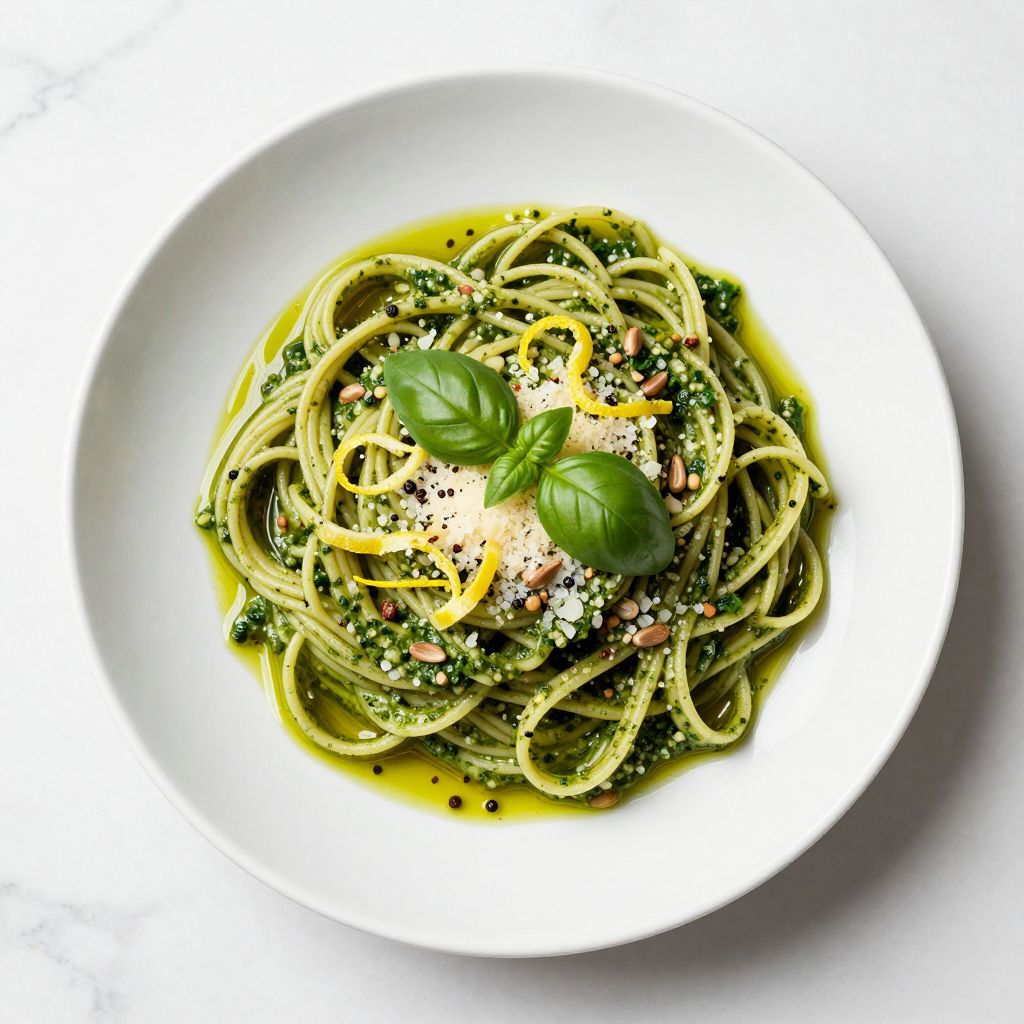
Making pesto recipe without pine nuts proves you don’t need expensive ingredients to create something truly delicious and restaurant-worthy. This simple sauce transforms ordinary pasta into something special in under ten minutes, and it costs a fraction of what you’d pay for jarred versions or pine nut-based recipes.
Grab your basil, pick your favorite nut or seed, and make a batch this week. You’ll wonder why you ever paid premium prices for pine nuts when this vibrant, flavorful pesto has been waiting for you in your pantry all along.
Pesto Recipe Without Pine Nuts
Ingredients
Equipment
Method
- Rinse the basil leaves under cool water and pat completely dry with paper towels.
- If using raw nuts or seeds, toast them in a dry skillet over medium heat for 3–4 minutes until fragrant and lightly golden; cool slightly.
- Add toasted nuts or seeds and minced garlic to the food processor and pulse 3–4 times until roughly chopped.
- Add the dried basil leaves and pulse 5–6 times, scraping down the sides as needed, until the mixture is coarsely combined.
- Sprinkle in the grated Parmesan and pulse 2–3 times to incorporate.
- With the processor running on low, slowly drizzle in the olive oil over about 30 seconds until the pesto is emulsified and smooth.
- Add lemon juice, sea salt, black pepper, and red pepper flakes (if using); pulse once or twice, then taste and adjust seasoning.
- Use immediately or transfer to a jar, press plastic wrap directly onto the surface, top with a thin layer of olive oil, seal, and refrigerate for up to 1 week.