Great Northern Beans are a pantry staple that transforms into something truly special with the right preparation and flavoring.
These creamy, mild white beans cook up tender and absorb flavors beautifully, making them perfect for soups, salads, side dishes, and more. Whether you’re starting from dried beans or using canned, this recipe delivers comfort food that satisfies without breaking the bank.
Why You’ll Love This Recipe
Great Northern beans are affordable, nutritious, and incredibly versatile in the kitchen.
- Budget-friendly protein source that feeds a crowd
- Naturally creamy texture without dairy
- Packed with fiber, plant-based protein, and essential minerals
- Works in hundreds of dishes from soups to dips
- Freezes beautifully for meal prep throughout the month
My Experience Making This Recipe
I grew up watching my grandmother soak dried beans overnight, then simmer them low and slow until they became silky and tender. The aroma alone made the kitchen feel like home.
The first time I added aromatics like garlic, onion, and herbs to the cooking liquid, the beans transformed from bland to genuinely delicious. My skeptical teenage son actually asked for seconds, which told me everything about how proper seasoning makes all the difference.
Now I make a big batch every Sunday and use them throughout the week in everything from quick weeknight soups to creamy side dishes. Friends always ask why my beans taste restaurant-quality, and it’s simply because I respect the cooking process and don’t rush it.
Recipe Overview
- Recipe Name: Great Northern Beans
- Servings: 6 to 8
- Prep Time: 10 minutes (plus 8 hours soaking)
- Cook Time: 1 hour 30 minutes
- Total Time: 9 hours 40 minutes
- Course: Side Dish
- Cuisine: American
- Calories per Serving: 180
Equipment You Will Need
- Large pot (6 to 8 quarts)
- Colander or strainer
- Wooden spoon for stirring
- Measuring cups and spoons
- Sharp knife for chopping vegetables
- Cutting board
- Optional: slow cooker for hands-off cooking
Ingredients for Great Northern Beans
- 1 pound dried great northern beans (about 2 and 1/2 cups)
- 8 cups water (for cooking)
- 1 medium yellow onion, diced
- 4 cloves garlic, minced
- 2 medium carrots, diced
- 2 teaspoons salt (adjust to taste)
- 1 teaspoon black pepper
- 2 bay leaves
- 1 teaspoon dried thyme
- 1 teaspoon dried oregano
- 2 tablespoons olive oil
- 4 cups chicken or vegetable broth (in addition to water)
Ingredient Notes and Substitutions
- Dried great northern beans provide superior texture and flavor compared to canned, but you can use 6 cans of great northern beans (drained and rinsed) if short on time. Canned beans skip the soaking and cooking steps, reducing total time to about 30 minutes.
- Yellow onion adds sweet depth to the base, but white or red onion works too. White onion brings sharper bite while red onion adds slight sweetness.
- Garlic is non-negotiable for building flavor layers. If you dislike garlic, substitute with 1 teaspoon garlic powder, though the fresh version is noticeably better.
- Chicken broth versus vegetable broth depends on your diet and what dishes you’re using the beans in. Vegetable broth keeps the recipe fully plant-based while chicken broth adds richer savory depth.
- Bay leaves, thyme, and oregano create classic aromatics that balance the beans naturally. Feel free to swap oregano for Italian seasoning or add a pinch of sage for variation.
How to Make Great Northern Beans
Step 1: Sort and Rinse the Beans
Pour the dried beans onto a large plate and look for any pebbles, shriveled beans, or debris mixed in. Discard anything that doesn’t look like a plump bean, then rinse them thoroughly under cold running water in a colander until the water runs clear.
Step 2: Soak the Beans Overnight
Place the rinsed beans in a large pot and cover with 8 cups of cold water, making sure the water level sits about 2 inches above the beans. Cover and let soak at room temperature for 8 to 12 hours, which softens the outer skin and reduces cooking time while making the beans more digestible.
Step 3: Drain and Prepare Aromatics
Drain the soaking liquid from the beans and rinse them again under cold water. While the beans drain, dice the onion and carrots into bite-sized pieces and mince the garlic cloves finely.
Step 4: Heat Oil and Saute Vegetables
Heat the olive oil in your large pot over medium heat for about 1 minute until shimmering. Add the diced onion and carrots, stirring occasionally for 5 minutes until they soften and become fragrant, which builds a flavorful base for the beans.
Step 5: Add Garlic and Spices
Add the minced garlic to the pot and stir constantly for 30 seconds until fragrant, being careful not to let it burn. Add the thyme, oregano, bay leaves, salt, and black pepper, stirring to coat everything evenly.
Step 6: Add Beans and Liquid
Add the drained beans to the pot along with the broth and 4 cups of fresh water. Stir everything together and bring to a boil over medium-high heat, which usually takes 8 to 10 minutes.
Step 7: Simmer Low and Slow
Once boiling, reduce heat to low and let the beans simmer gently without a lid, stirring occasionally, for 1 hour 15 minutes to 1 hour 30 minutes until the beans are completely tender and creamy. Slow simmering prevents the beans from falling apart while allowing them to absorb all the savory flavors.
Taste a bean around the 1 hour mark to check doneness. If the skin tears easily when you blow on it, the beans are ready.
Step 8: Taste and Adjust Seasoning
Once the beans are tender, remove from heat and taste for seasoning. Add more salt, pepper, or herbs as needed based on your preference and what you plan to use the beans for.
Pro Tip: Save the cooking liquid (also called bean liquor) instead of draining it completely, as it adds body and flavor to soups and stews while helping the beans stay moist during storage.
Tips for the Best Great Northern Beans
- Never add salt to the soaking water or during the first 30 minutes of cooking, as it toughens the bean skin and slows cooking time. Add salt only after the beans have begun to soften.
- Keep the beans submerged in liquid throughout cooking by adding water or broth if the level drops below the beans. Exposed beans cook unevenly and can develop a grainy texture.
- Use a slow cooker set to low for 6 to 8 hours if you prefer hands-off cooking that’s impossible to mess up. Simply add soaked beans, vegetables, broth, and spices, then let it work while you handle other tasks.
- Cook a double or triple batch on Sunday and freeze portions in ice cube trays or freezer bags for quick weeknight meals throughout the month. Frozen beans stay fresh for up to 3 months.
- For extra creamy beans, use an immersion blender to partially puree about one-third of the cooked beans right in the pot, which creates a natural cream without any dairy.
- Invest in a quality large pot that distributes heat evenly, as hot spots can cause uneven cooking and some beans to fall apart while others stay firm.
Common Mistakes to Avoid
- Skipping the soak: Unsoaked beans take nearly twice as long to cook and remain tough and grainy no matter how long you simmer them. The 8 hour soak is not optional if you want creamy results.
- Using tap water from hard water areas: Minerals in hard water prevent beans from softening properly. If your tap water is hard, use filtered water instead for noticeably better texture.
- Cooking at a rolling boil: High heat causes beans to split, shed their skins, and fall apart into mush. Low gentle simmering keeps beans intact and creamy with tender insides.
- Forgetting to remove bay leaves: Bay leaves are inedible and unpleasant to bite into, so always fish them out before serving or transferring beans to storage containers.
- Not adding enough liquid: Beans that cook uncovered need extra liquid throughout the process to remain submerged. Check the pot every 20 minutes and add water if needed.
Serving Suggestions
Great Northern beans are wonderfully versatile and pair beautifully with simple preparations or complex dishes.
- Serve warm as a side dish alongside roasted chicken or grilled pork chops with a drizzle of olive oil and fresh parsley
- Stir into minestrone or vegetable soup for a hearty, protein-packed meal
- Toss with roasted vegetables, olive oil, and lemon juice for a Mediterranean-inspired salad
- Puree with garlic, lemon, and olive oil to make a creamy bean dip or spread for crusty bread
- Layer in a cassoulet with duck confit, sausage, and breadcrumbs for a rustic French classic
Variations to Try
- Smoky beans: Add 1 teaspoon smoked paprika and 2 slices of bacon (chopped) to the sauteed vegetables for a deep, woodsy flavor that transforms the dish entirely.
- Italian style: Replace the thyme and oregano with 1 tablespoon fresh basil added at the end, plus diced tomatoes and a parmesan rind simmered in the pot for Mediterranean richness.
- Spicy beans: Add 1 diced jalapeño, 1 teaspoon cumin, and 1/2 teaspoon cayenne pepper to bring heat and warmth to the beans without overwhelming the delicate flavor.
- Creamy herb beans: Stir in 1/2 cup heavy cream or coconut milk at the end of cooking along with 2 tablespoons fresh dill or tarragon for a luxurious side dish.
- Slow cooker version: Layer soaked beans, vegetables, spices, and broth in a slow cooker set to low for 6 to 8 hours, eliminating the need to monitor the pot and reducing active cooking time to 10 minutes.
Dietary Adaptations
- Gluten-free: This recipe is naturally gluten-free as written, but verify that any broth you use is certified gluten-free to avoid hidden gluten from additives.
- Dairy-free and vegan: The recipe is already completely plant-based when made with vegetable broth, making it naturally vegan without any substitutions needed.
- Low-carb and keto: Great Northern beans are relatively high in carbs, so this dish doesn’t fit standard keto macros. Swap with lupini beans for a lower-carb alternative with similar texture and creaminess.
- Paleo: This recipe doesn’t fit paleo guidelines because beans contain lectins. Omit this dish and choose other legume-free protein sources if following strict paleo principles.
Storage and Reheating
Refrigerator
Store cooked beans in an airtight container with their cooking liquid for up to 5 days.
- Keep them submerged in liquid to prevent drying out
- The flavor actually improves over a day or two as spices meld
Freezer
Freeze beans in airtight containers or freezer bags for up to 3 months with no loss of quality.
- Freeze in portions matching your typical use so you thaw only what you need
- Leave 1 inch of headspace in containers to allow for expansion
- Ice cube trays work wonderfully for freezing individual portions in 1/2 cup servings
Reheating
Reheat beans gently on the stovetop over medium-low heat, stirring occasionally and adding a splash of water if they seem dry.
- Stovetop reheating takes 8 to 10 minutes and preserves the creamy texture better than microwaving
- Microwave in a covered container for 3 to 5 minutes if you’re short on time, stirring halfway through
- Avoid boiling reheated beans, which can cause them to fall apart
Nutrition Information
| Nutrient | Amount |
|---|---|
| Calories | 180 |
| Total Fat | 4g |
| Saturated Fat | 0.5g |
| Carbohydrates | 29g |
| Fiber | 8g |
| Sugar | 2g |
| Protein | 13g |
| Sodium | 480mg |
| Cholesterol | 0mg |
These values are estimates based on a standard recipe yield of 8 servings and assume all cooking liquid is consumed with the beans.
Frequently Asked Questions
Can I use canned great northern beans instead of dried?
Yes, absolutely. Use 6 cans of great northern beans (drained and rinsed) in place of 1 pound dried beans, which skips soaking entirely and reduces total time to about 30 minutes. Simply sauté your vegetables and aromatics, add the canned beans with 2 cups broth, then simmer for 15 minutes until flavors meld.
How do I know when the beans are done cooking?
Beans are done when they’re tender enough that you can easily break one between your fingers without resistance, and the skin doesn’t tear when you blow gently on it. Taste one straight from the pot to confirm the texture is creamy inside with no chalky center.
What if my beans are still hard after 2 hours of cooking?
Hard beans after extended cooking usually means old dried beans past their prime, hard tap water, or insufficient soaking time. If this happens, drain them and cook fresh beans instead, which yields better results than continuing to cook older beans that won’t soften.
Can I freeze the beans with the cooking liquid or should I drain them?
Freeze beans with the cooking liquid included, as it keeps them moist and flavorful during months in the freezer. The liquid thaws along with the beans and adds richness to whatever dish you make with them.
Is it normal for the cooking liquid to be foamy?
Yes, foam on top of the beans during cooking is completely normal and caused by starch releasing from the beans. Skim it off with a spoon if you prefer clearer liquid, but it’s harmless to leave in the pot and will eventually settle.
How much cooked beans does 1 pound of dried beans make?
One pound of dried beans yields approximately 6 to 7 cups of cooked beans with liquid included, which serves 6 to 8 people depending on portion size and what else you’re serving.
Final Thoughts
Great Northern beans are one of those humble ingredients that deliver serious comfort and nutrition when treated with respect. This recipe strips away the guesswork and gives you restaurant-quality beans that taste like they’ve simmered all day long.
Make a big batch this weekend and watch how many dishes you can create throughout the week. Your budget and your taste buds will thank you equally.
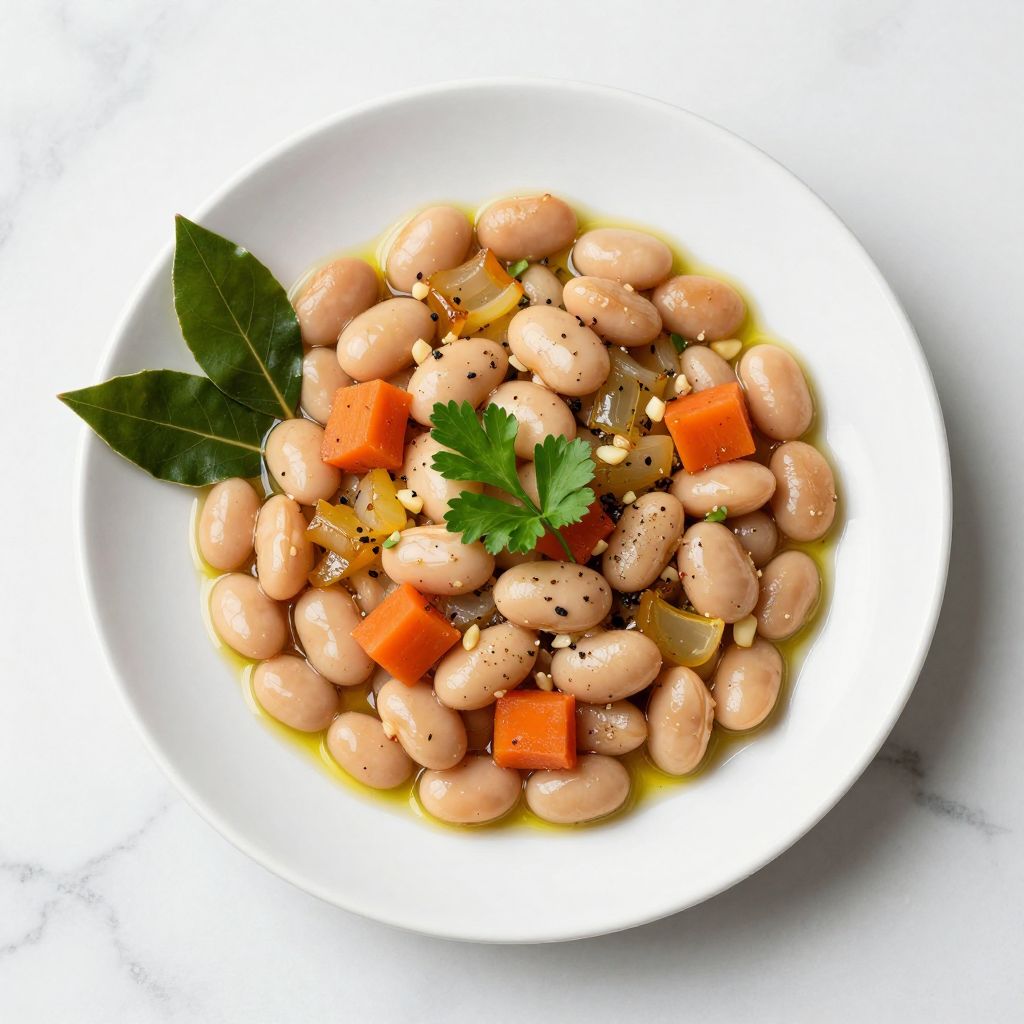
Great Northern Beans
Ingredients
Equipment
Method
- Spread the dried beans on a plate, remove debris, then rinse thoroughly in a colander.
- Place beans in a large pot, cover with 8 cups cold water, cover, and soak at room temperature for 8–12 hours.
- Drain and rinse soaked beans; set aside. Dice onion and carrots and mince garlic.
- Heat olive oil in the large pot over medium heat for 1 minute. Add onion and carrots; sauté for 5 minutes until softened.
- Stir in minced garlic, thyme, oregano, bay leaves, 1 teaspoon salt, and black pepper; cook 30 seconds until fragrant.
- Add drained beans, broth, and 4 cups fresh water. Stir, increase heat to medium-high, and bring to a boil (about 8–10 minutes).
- Reduce heat to low and simmer uncovered for 1 hour 15 minutes to 1 hour 30 minutes, stirring occasionally, until beans are tender.
- Taste, add remaining salt or additional seasoning as needed, remove bay leaves, and serve with some of the cooking liquid for extra creaminess.