Sausage and cabbage is a humble, satisfying dish that brings together savory sausage and tender cabbage in a one-pan meal that tastes way better than its simple ingredient list suggests. This recipe delivers comfort food flavors without the fuss, making it perfect for weeknight dinners when you want something hearty but don’t have hours to spend cooking.
Whether you’re cooking for your family or meal prepping for the week, this dish comes together in about 30 minutes and fills your kitchen with aromas that’ll have everyone asking what’s for dinner. Let’s explore what makes this recipe a kitchen staple worth mastering.
Why You’ll Love This Recipe
This sausage and cabbage recipe checks all the boxes for a weeknight winner.
- Ready in under 30 minutes from start to finish
- Minimal cleanup with everything cooked in one pan
- Budget-friendly ingredients that deliver big flavors
- Naturally keto and low-carb friendly
- Easily customizable to match your pantry and preferences
My Experience Making This Recipe
I first made sausage and cabbage on a random Tuesday when my fridge contained exactly three things: sausage, cabbage, and onions. I wasn’t expecting much, but the result was so good that I’ve made it at least twice a month since.
The first time my partner tasted it, he asked if I was ordering takeout because the depth of flavor felt restaurant-quality. The sausage releases its fat into the pan, which caramelizes the cabbage and onions into something almost sweet and savory at the same time.
Now I make double batches because leftovers reheat beautifully and actually taste better the next day. It’s become one of those recipes I recommend to everyone looking for simple weeknight dinners that taste impressive.
Recipe Overview
- Recipe Name: Sausage and Cabbage
- Servings: 4
- Prep Time: 10 minutes
- Cook Time: 20 minutes
- Total Time: 30 minutes
- Course: Main Course
- Cuisine: American/German
- Calories per Serving: 380
Equipment You Will Need
- Large skillet or cast iron pan
- Cutting board
- Sharp chef’s knife
- Wooden spoon or silicone spatula
- Measuring cups and spoons
- Lid for your skillet (optional but helpful)
Ingredients for Sausage and Cabbage
- 1.5 pounds Italian sausage (bulk or links, casing removed if links)
- 1 medium head of cabbage (about 1.5 pounds), chopped into bite-sized pieces
- 1 large onion, sliced into half-moons
- 4 cloves garlic, minced
- 1 cup chicken broth or beef broth
- 2 tablespoons butter
- 1 teaspoon salt
- 1/2 teaspoon black pepper
- 1/2 teaspoon paprika
- 1/4 teaspoon caraway seeds (optional, adds authentic flavor)
Ingredient Notes and Substitutions
- Italian sausage: This adds rich, seasoned fat and flavor to the dish. You can swap for bratwurst, kielbasa, or chorizo for different flavor profiles, though the cooking time may vary slightly.
- Cabbage: Green cabbage is traditional and affordable, but red cabbage works too and adds a slightly earthier taste. Napa cabbage will cook faster but has a milder flavor.
- Onion: Yellow onions work best here for sweetness. If you only have white onions, use them, though the flavor will be slightly sharper.
- Chicken broth: Vegetable broth works if you prefer a lighter flavor, and beef broth makes it richer and deeper.
- Butter: Olive oil or bacon fat can replace butter if needed, though butter adds a subtle richness that’s hard to beat.
- Caraway seeds: These are optional but add authentic German-style flavor; skip them if you don’t have them on hand.
How to Make Sausage and Cabbage
Step 1: Brown the Sausage
Heat your large skillet over medium-high heat and add the sausage, breaking it into bite-sized pieces as it cooks. Let it cook undisturbed for about 3 minutes so it gets a nice golden crust, then stir and cook for another 3 to 4 minutes until it’s cooked through and browned.
Browning the meat first creates rich, savory flavors that carry through the entire dish. You’re building a flavorful base layer here, so don’t skip this step.
Step 2: Drain Excess Fat
Once the sausage is cooked, use a slotted spoon to transfer it to a clean plate, leaving about 2 tablespoons of fat in the pan. You’re not removing all the fat because that’s liquid gold for flavor, but excess grease makes the final dish feel heavy.
This fat is what will cook your vegetables in the next steps, so you want just enough to coat the pan. If there’s an excessive pool of grease, drain some off, but a little fat keeps everything moist and delicious.
Step 3: Cook the Onions
Add the sliced onions to the same pan with the rendered fat and cook over medium heat for about 4 to 5 minutes, stirring occasionally. The onions should soften and begin to caramelize around the edges, turning golden brown.
Caramelizing the onions brings out their natural sugars and adds sweetness that balances the salty sausage. This step takes patience, but it’s what transforms this from a simple dish into something memorable.
Step 4: Add Garlic
Stir in the minced garlic and cook for about 30 seconds to 1 minute until fragrant. The garlic should soften immediately and release its aroma.
Garlic burns quickly, so don’t walk away after adding it. One minute is all you need to wake up those flavors without burning the garlic, which would make it taste bitter.
Step 5: Add the Cabbage
Add all the chopped cabbage to the pan and stir well to coat it with the fat and aromatics. The cabbage will look like a lot at first, but it wilts dramatically as it cooks.
Stir everything together so the cabbage makes contact with the hot pan. This initial high-heat contact helps the cabbage brown slightly on the edges before it steams through in the next steps.
Step 6: Return Sausage and Season
Add the cooked sausage back to the pan along with the salt, pepper, paprika, and caraway seeds if using. Stir everything together thoroughly.
This is your moment to taste and adjust seasonings. Remember that sausage can be salty depending on the brand, so taste before adding more salt.
Step 7: Add Broth and Simmer
Pour in the chicken broth and stir to combine. Bring the pan to a simmer over medium heat, then reduce the heat to medium-low.
The broth creates steam that finishes cooking the cabbage while adding moisture and flavor. This is where the magic happens as everything melds together.
Step 8: Cover and Cook Until Tender
Cover the skillet with a lid (or even foil if you don’t have a lid) and let it cook for 8 to 10 minutes until the cabbage is tender but still has a slight bite. Stir once halfway through cooking.
You want the cabbage soft but not mushy. Check it at 8 minutes by piercing a piece with a fork; if it feels tender, you’re done.
Step 9: Add Butter for Richness
Remove from heat and stir in the butter, letting it melt into the dish and coat everything with richness. This is an optional step, but the butter rounds out the flavors beautifully.
The butter adds a subtle luxurious mouthfeel that elevates this simple dish. It’s the difference between good and “where has this been all my life?”
Pro Tip: Don’t skip the browning step for the sausage; those browned bits (called fond) stick to the pan and add incredible depth to your finished dish.
Tips for the Best Sausage and Cabbage
- Cut your cabbage into bite-sized pieces rather than thin shreds; they hold their shape better during cooking and feel more substantial.
- Use bulk sausage instead of links when possible because it blends more evenly into the dish and cooks faster.
- If your cabbage isn’t quite tender after 10 minutes, add a splash more broth and cook a few minutes longer rather than cranking up the heat.
- Make this recipe in a cast iron skillet for the best browning and heat retention; the sausage will develop a better crust.
- Taste the dish before serving and adjust salt and pepper as needed; some sausages vary quite a bit in seasoning.
- If you prefer a drier dish with less broth, use only 3/4 cup broth instead of a full cup.
Common Mistakes to Avoid
- Overcrowding the pan: Work in batches if needed to brown the sausage properly rather than steaming it in a crowded pan.
- Skipping the caramelization of onions: Rushing this step robs you of the sweet, deep flavor that makes this dish sing.
- Cooking on too high heat: This causes the cabbage to release water and become mushy instead of tender with some texture.
- Adding too much broth: Extra liquid makes the dish soupy and dilutes the flavors; stick to the recipe amount.
- Not draining enough sausage fat: Too much fat makes the dish greasy and heavy, overwhelming the other flavors.
Serving Suggestions
Sausage and cabbage works beautifully on its own, but pairing it with the right sides makes it feel like a complete meal. You can serve it over rice, with crusty bread, or alongside roasted potatoes.
- Creamy mashed potatoes soaking up the savory juices
- Crusty sourdough or rye bread for dipping
- Cauliflower rice or regular rice for a lighter or heartier option
- Roasted root vegetables like carrots and parsnips
- Simple green salad with vinaigrette to cut through the richness
Variations to Try
- Spicy version: Add 1/4 teaspoon red pepper flakes and use spicy sausage instead of Italian for a kick that wakes up your palate.
- Apple cabbage version: Stir in 1/2 cup diced apple with the cabbage for a slightly sweet and tart flavor that pairs beautifully with sausage.
- Beer braised version: Replace half the broth with pale ale or lager beer for a deeper, more complex flavor profile.
- Asian-inspired version: Swap caraway for ginger, add soy sauce, and use bok choy instead of green cabbage for a completely different vibe.
- Creamy version: Stir in 1/4 cup sour cream or heavy cream at the end for a richer, more indulgent dish.
Dietary Adaptations
- Gluten-free: This recipe is naturally gluten-free as long as your sausage and broth don’t contain gluten; always check labels to be sure.
- Dairy-free: Skip the butter or replace it with olive oil; the dish remains delicious without it.
- Keto: This recipe is perfect for keto as written; cabbage is low-carb, and the sausage fat keeps you satisfied.
- Low-sodium: Use low-sodium broth and unseasoned sausage if available; taste and adjust seasonings at the end.
Storage and Reheating
Refrigerator
Store leftovers in an airtight container for up to 4 days. The flavors actually improve as everything sits together.
- Let the dish cool completely before refrigerating
- Separate into individual portions for easy weeknight reheating
- The cabbage will soften more as it sits, which some people prefer
Freezer
This dish freezes beautifully for up to 3 months. Proper freezing ensures you have a ready-made dinner whenever you need it.
- Cool completely, then transfer to freezer-safe containers or bags
- Flatten in bags to save space and speed up thawing
- Label with the date so you use it within 3 months
Reheating
Reheat gently on the stovetop over medium heat, stirring occasionally, until warmed through. This preserves the texture better than microwaving.
- Add a splash of broth if the dish seems dry after storage
- Microwave works in a pinch; use 50% power in 2-minute intervals
- Never reheat at high temperatures or the cabbage becomes mushy
Nutrition Information
| Nutrient | Amount |
|---|---|
| Calories | 380 |
| Total Fat | 28g |
| Saturated Fat | 11g |
| Carbohydrates | 12g |
| Fiber | 2g |
| Sugar | 6g |
| Protein | 30g |
| Sodium | 780mg |
| Cholesterol | 65mg |
These nutrition values are estimates based on standard ingredients and may vary depending on the specific brands and products you use. Always verify nutrition information if you have dietary restrictions.
Frequently Asked Questions
Can I use turkey sausage instead of pork?
Absolutely, turkey sausage works well and reduces the fat content slightly. Keep in mind that turkey sausage has less fat, so you may want to add an extra tablespoon of oil or butter at the start so the vegetables cook evenly.
Can I make this ahead of time?
Yes, you can brown the sausage and chop the vegetables up to 2 days ahead. Simply cook the dish on the day you want to eat it, which takes just 20 minutes.
What if my cabbage is still tough after cooking?
Add 1/4 cup more broth and cover again for another 5 minutes. If your cabbage was cut into very large pieces, it naturally takes longer to soften.
Is caraway seed really necessary?
It’s not required, but it adds authentic German flavor that many people love. If you don’t have it or dislike the flavor, skip it entirely; the dish is still delicious.
Can I use a slow cooker for this recipe?
You can, but you’ll lose the browning step that builds flavor. Brown the sausage and onions on the stovetop first, then transfer everything to a slow cooker on low for 3 to 4 hours.
Why is my dish watery?
Cabbage releases moisture as it cooks. If your finished dish seems too wet, simmer uncovered for another 5 minutes to evaporate excess liquid, or use less broth next time.
Final Thoughts
Sausage and cabbage is proof that you don’t need fancy ingredients or complicated techniques to create a meal that tastes restaurant-quality and feels deeply satisfying. This dish has earned its place in my regular rotation because it delivers every single time.
Give this recipe a try and make it your own by experimenting with different sausage types or adding vegetables you love. Your weeknight dinners are about to get a whole lot easier and more delicious.
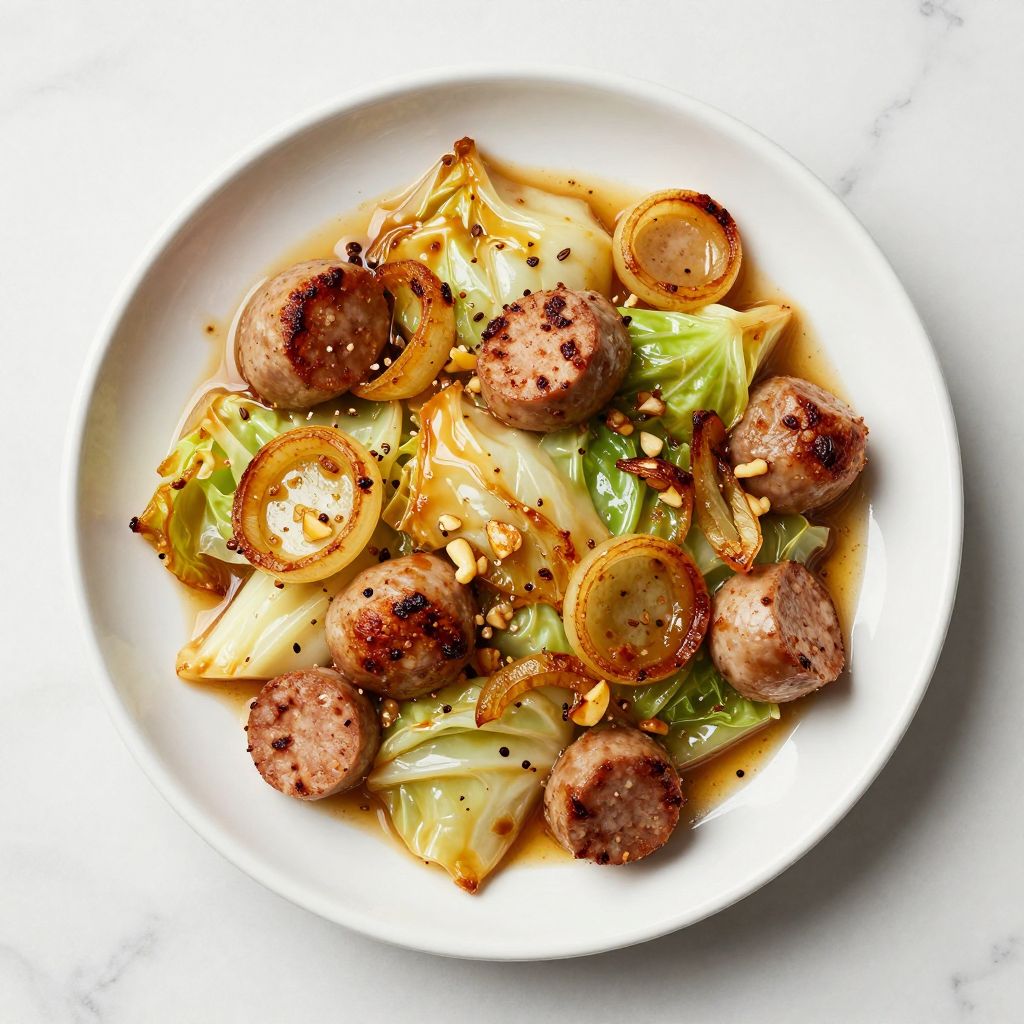
Sausage and Cabbage
Ingredients
Equipment
Method
- Heat a large skillet over medium-high heat; add the sausage and cook 6–7 minutes, breaking it into bite-size pieces, until browned and cooked through.
- Transfer sausage to a plate with a slotted spoon, leaving about 2 tablespoons of fat in the pan; discard any extra grease.
- Reduce heat to medium; add the sliced onion and cook 4–5 minutes, stirring occasionally, until softened and lightly caramelized.
- Stir in the minced garlic and cook 30 seconds until fragrant.
- Add the chopped cabbage, tossing to coat with the fat and aromatics; cook 2 minutes to let the edges begin to brown.
- Return the sausage to the skillet; season with salt, black pepper, paprika, and caraway seeds (if using), stirring well to combine.
- Pour in the chicken broth; bring to a gentle simmer over medium heat, then reduce heat to medium-low.
- Cover and cook 8–10 minutes until the cabbage is tender but still slightly crisp, stirring once halfway through.
- Remove the lid, stir in the butter until melted and incorporated, taste and adjust seasoning, and serve hot.