White Beans Recipe is a humble yet satisfying dish that transforms simple pantry staples into comfort food your whole family will crave.
Whether you’re looking for a budget-friendly weeknight dinner or a protein-packed side that pairs with almost anything, white beans deliver creamy texture and subtle flavor that absorbs seasonings beautifully.
Let me walk you through how to make this classic recipe that tastes like it took hours but comes together in under an hour.
Why You’ll Love This Recipe
This white beans recipe hits all the marks for home cooks seeking reliable, delicious results with minimal fuss.
- Incredibly affordable, using inexpensive canned or dried beans that feed a crowd.
- Ready in 30 to 45 minutes, making it perfect for busy weeknights when you need dinner fast.
- Adaptable to nearly any cuisine: serve it Italian-style with garlic and herbs, or Spanish-style with peppers and spices.
- Naturally vegetarian and packed with fiber and plant-based protein for sustained energy.
- Freezes beautifully for meal prep, so you can make a double batch and eat well all week.
My Experience Making This Recipe
I first made white beans on a rainy Tuesday when I had almost nothing in the fridge except canned beans, garlic, and onions. The aroma alone made me realize I’d stumbled onto something special.
What surprised me most was how the simple combination of sauteed aromatics and beans created something way more satisfying than the sum of its parts. My partner went back for seconds, which rarely happens with vegetable-focused dishes in our kitchen.
I’ve since made this recipe at least twenty times, tweaking it with different herbs and adding vegetables depending on what needs using up. It’s become my go-to when I’m short on time and ideas, and it never fails to impress.
Recipe Overview
- Recipe Name: White Beans Recipe
- Servings: 4 to 6
- Prep Time: 10 minutes
- Cook Time: 35 minutes
- Total Time: 45 minutes
- Course: Main Course or Side Dish
- Cuisine: Mediterranean
- Calories per Serving: 240
Equipment You Will Need
- Large heavy-bottomed pot or Dutch oven
- Wooden spoon for stirring
- Sharp chef’s knife and cutting board
- Measuring cups and spoons
- Can opener (if using canned beans)
- Colander for draining beans
- Optional: immersion blender for creamier texture
Ingredients for White Beans Recipe
- 2 tablespoons olive oil
- 1 medium yellow onion, diced
- 4 cloves garlic, minced
- Two 15-ounce cans white beans (cannellini or great northern), drained and rinsed, or 2 cups cooked dried beans
- 1 teaspoon dried thyme
- 1/2 teaspoon dried rosemary
- 1/4 teaspoon red pepper flakes, or to taste
- 1 cup vegetable broth or chicken broth
- 1 teaspoon kosher salt, plus more to taste
- 1/2 teaspoon freshly ground black pepper
- 2 tablespoons fresh parsley, chopped (optional garnish)
- Zest of one lemon (optional finishing touch)
Ingredient Notes and Substitutions
- White beans: Cannellini and great northern beans both work perfectly here, offering a creamy texture when cooked. If you only have black beans or kidney beans on hand, they’ll work too, though the flavor profile shifts slightly.
- Olive oil: This is the foundation of flavor, so use a decent quality oil you actually enjoy. Vegetable oil works if that’s what you have, but the dish won’t taste quite as rich.
- Garlic: Fresh garlic is worth the mincing effort, as it perfumes the entire pot. Garlic powder works in a pinch, but use only 1/2 teaspoon since powdered versions are more concentrated.
- Dried herbs: Thyme and rosemary are classic, but oregano or Italian seasoning blend work beautifully as substitutes with no flavor loss.
- Vegetable broth: Homemade is ideal, but store-bought works fine. Water works too, though you’ll need to adjust seasoning up slightly.
How to Make White Beans Recipe
Step 1: Prepare Your Aromatics
Dice your onion into small, uniform pieces and mince your garlic finely so both cook evenly and distribute flavor throughout the beans. This takes just five minutes and sets you up for success in the next step.
Step 2: Heat the Oil and Saute the Onion
Pour olive oil into your pot over medium heat and wait about one minute for it to shimmer. Add your diced onion and cook for four to five minutes, stirring occasionally, until the onion turns soft and translucent at the edges.
Step 3: Add Garlic and Spices
Stir in your minced garlic and cook for just one minute until fragrant, being careful not to let it brown since burnt garlic tastes bitter. Add your thyme, rosemary, and red pepper flakes right after the garlic hits the pot so they bloom in the hot oil and release their full flavor.
Step 4: Pour in the Broth
Slowly add your vegetable broth, stirring to scrape up any flavorful bits stuck to the bottom of the pot (this is called deglazing). The liquid should come about halfway up the pot, creating a light sauce base for your beans.
Step 5: Add the Beans
Drain and rinse your canned beans under cold water to remove excess sodium and starch, then add them to the pot. Stir everything together so the beans are evenly distributed and fully covered by the liquid.
Step 6: Bring to a Gentle Simmer
Increase heat to medium-high until you see small bubbles breaking the surface, then immediately lower the heat to medium or medium-low to maintain a gentle simmer. A gentle simmer cooks the beans through while preventing them from falling apart into mush.
Step 7: Simmer and Season
Let the beans simmer uncovered for 20 to 25 minutes, stirring every few minutes so nothing sticks to the bottom. Taste at the 20-minute mark and adjust salt and pepper as needed, keeping in mind that flavors concentrate slightly as liquid reduces.
Step 8: Finish and Serve
When the beans are creamy and the liquid has thickened into a light sauce (you should still see liquid in the pot, not a dry mixture), taste one final time and adjust seasoning. If you prefer creamier beans, use an immersion blender to partially blend the mixture, leaving some whole beans for texture.
Pro Tip: Don’t skip the draining and rinsing step for canned beans. This removes excess sodium and the starchy liquid that can make your finished dish taste metallic or chalky.
Tips for the Best White Beans Recipe
- Use fresh garlic instead of jarred minced garlic for noticeably better flavor and aroma throughout your beans.
- Taste as you go during simmering so you catch the moment the beans reach perfect tenderness instead of overcooking them into mush.
- Add a splash of fresh lemon juice at the very end to brighten the flavors and cut through the richness of the olive oil.
- If your finished dish seems too thick, thin it with a few splashes of broth or water until you reach your preferred consistency.
- Toast your dried herbs in the oil for 30 seconds before adding other ingredients to deepen their flavor impact.
- Make a double batch and freeze half in individual portions so you have emergency lunch or dinner ready to go.
Common Mistakes to Avoid
- Adding salt too early in the cooking process can toughen the bean skins and prevent them from becoming creamy. Wait until the final few minutes to adjust seasoning.
- Using canned beans without rinsing them leaves a tinny, unpleasant taste and excess starch that clouds your sauce. Always drain and rinse under cold water.
- Cooking on too high heat causes beans to burst and break apart, leaving you with a broken-down mush instead of whole creamy beans.
- Skipping the aromatics step and dumping beans straight into broth produces a one-dimensional flavor that tastes like canned soup instead of home cooking.
- Using very old, stale dried herbs from the back of your spice cabinet leaves your dish tasting flat and disappointing. Buy fresh dried herbs annually.
Serving Suggestions
These creamy white beans shine as a main course with crusty bread for soaking up the sauce, or as a hearty side alongside roasted vegetables and grilled chicken.
- Serve over creamy polenta or soft mashed potatoes for a filling vegetarian dinner.
- Pair with seared fish or grilled salmon for an elegant Mediterranean-inspired plate.
- Top with fresh spinach and crumbled feta cheese for added nutrition and bright flavor contrast.
- Scoop into warm pita bread with diced tomatoes and cucumbers for a healthy lunch wrap.
- Layer into a grain bowl with quinoa, roasted vegetables, and tahini dressing for a complete meal.
Variations to Try
- Italian Style: Add diced tomatoes, fresh basil, and a pinch of balsamic vinegar at the end for a brighter, more Mediterranean version that works beautifully as a pasta sauce.
- Spanish-Inspired: Swap out the thyme and rosemary for paprika and cumin, then add diced red peppers and chorizo for smokier, more complex flavors.
- Creamy Version: Stir in half a cup of heavy cream or coconut milk in the final minutes of cooking for a richer, more luxurious texture.
- Curry Spiced: Replace the dried herbs with curry powder and add a squeeze of lime juice and fresh cilantro for an entirely different flavor profile that tastes fresh and warming.
- Tuscan Bean Soup: Add extra broth to create more sauce, then finish with wilted kale and a drizzle of truffle oil for an upscale version that feels restaurant-quality.
Dietary Adaptations
- Gluten-Free: This recipe is naturally gluten-free, though verify your broth label if you’re highly sensitive, as some brands use thickeners containing gluten.
- Dairy-Free: The recipe contains no dairy, making it perfect for dairy-free diets, though creamy variations would need coconut milk or cashew cream instead of heavy cream.
- Vegan: Already vegan when made with vegetable broth, making it a plant-based powerhouse that serves as a complete protein with whole grains.
- Low-Carb/Keto: White beans are moderate in carbs due to their fiber content, but reduce the portion size or replace half the beans with cauliflower for a lower-carb version.
Storage and Reheating
Refrigerator
Store your white beans in an airtight container and they’ll keep for up to four days in the refrigerator.
- Cool the beans completely before storing to prevent condensation and bacterial growth.
- The flavors actually improve over a day or two as the seasonings meld together.
Freezer
These beans freeze beautifully for up to three months when stored properly in freezer-safe containers.
- Leave a half-inch of headspace in containers since the liquid expands as it freezes.
- Label with the date so you remember when you made them.
Reheating
Thaw overnight in the refrigerator, then reheat gently on the stovetop over medium-low heat, stirring occasionally and adding a splash of water if the sauce has thickened too much.
- Microwave works too: transfer to a microwave-safe bowl, cover loosely, and heat in 2-minute intervals until warm throughout.
- Never boil frozen beans directly in a pot as the rapid temperature change can cause the skins to burst.
Nutrition Information
| Nutrient | Amount |
|---|---|
| Calories | 240 |
| Total Fat | 8g |
| Saturated Fat | 1g |
| Carbohydrates | 32g |
| Fiber | 8g |
| Sugar | 1g |
| Protein | 12g |
| Sodium | 580mg |
| Cholesterol | 0mg |
Nutrition values are estimates calculated with rinsed canned beans and vegetable broth. Actual values may vary based on your specific brands and any additions or substitutions you make.
Frequently Asked Questions
Can I make this recipe with dried beans instead of canned?
Absolutely, though the cooking time increases significantly. Soak dried beans overnight, then simmer them for 60 to 90 minutes until tender before following the recipe steps above.
How do I make this dish creamier without adding dairy?
Blend one cup of the cooked beans with a splash of broth using an immersion blender, then stir the puree back into the pot to thicken and cream the sauce naturally. You can also use coconut milk or cashew cream for richness.
What if my beans turn out mushy and fall apart?
You’ve likely simmered them too long or at too high a temperature. Next time, reduce heat to maintain a gentle simmer and start checking for doneness at the 15-minute mark rather than waiting the full 25 minutes.
Can I add vegetables like carrots or celery to this recipe?
Yes, dice them small and saute them with the onion in step two. Carrots and celery add sweetness and texture, though they’ll cook down and partially dissolve into the sauce.
How much salt should I actually use if I’m watching my sodium intake?
Start with just 1/2 teaspoon and taste, adding more gradually at the end. You can also skip the salt entirely until serving and let people season their own bowls to taste.
Does this recipe work as a pasta sauce?
It works beautifully when you add extra broth to create more sauce, then toss it with your favorite pasta and fresh herbs. The beans add protein and heartiness that transforms simple pasta into a complete meal.
Final Thoughts
This white beans recipe has earned a permanent spot in my weeknight rotation because it delivers real flavor without fuss, uses ingredients I always have on hand, and tastes even better as leftovers. The recipe is forgiving enough for beginners yet satisfying enough for seasoned cooks looking to expand their vegetable-based cooking.
Give this recipe a try this week and watch how such simple ingredients transform into something that tastes like you spent all day in the kitchen. Your family will thank you, your budget will thank you, and you’ll find yourself making this again and again.
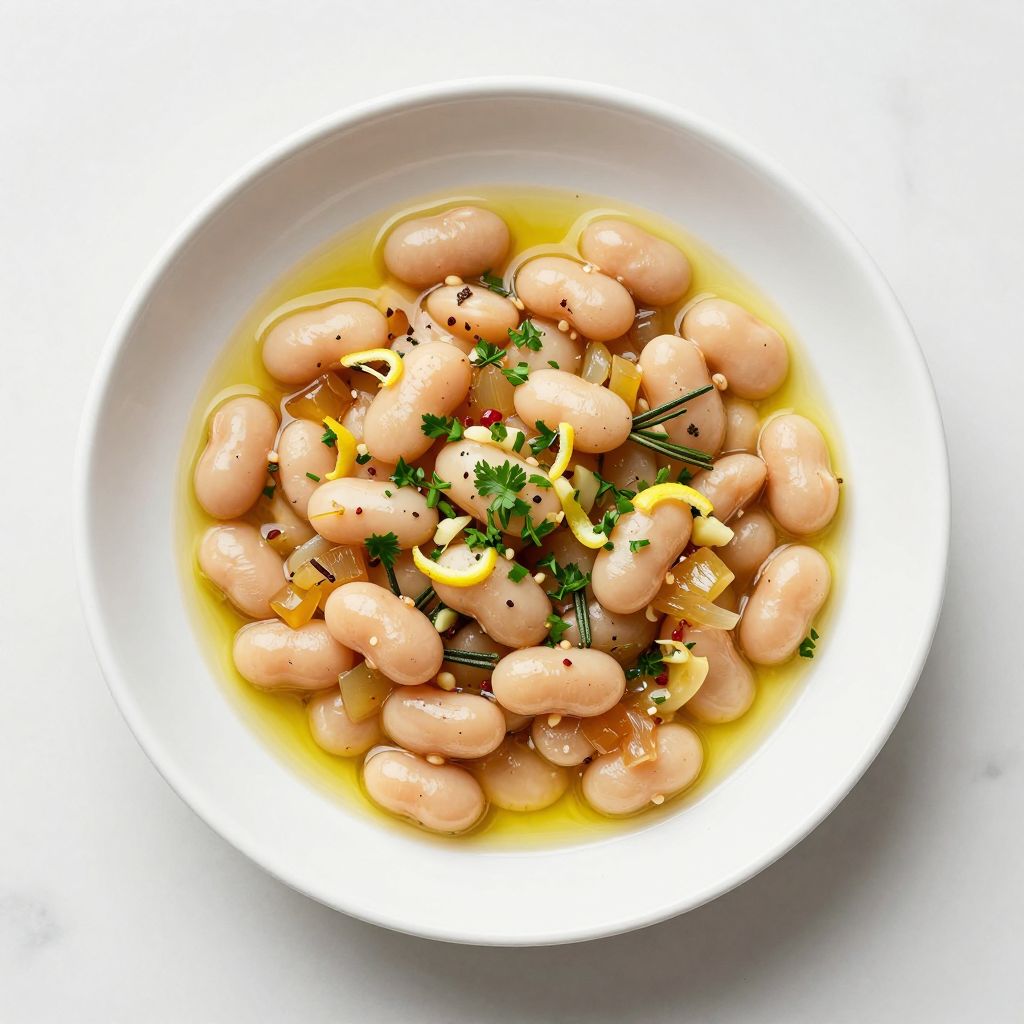
White Beans Recipe
Ingredients
Equipment
Method
- Dice the onion and mince the garlic.
- Heat olive oil in a large heavy-bottomed pot over medium heat for 1 minute until shimmering.
- Add diced onion and cook, stirring occasionally, for 4–5 minutes until translucent.
- Stir in minced garlic, dried thyme, dried rosemary, and red pepper flakes; cook for 1 minute until fragrant.
- Pour in vegetable broth, scraping up any bits from the bottom of the pot.
- Add the drained and rinsed white beans; stir to combine.
- Increase heat to medium-high and bring to a gentle simmer, then reduce heat to medium-low.
- Simmer uncovered for 20–25 minutes, stirring occasionally, until the beans are creamy and the liquid has thickened.
- Season with kosher salt and black pepper during the last 5 minutes of cooking.
- For a creamier texture, blend 1 cup of the beans with an immersion blender and stir back into the pot.
- Remove from heat, stir in chopped parsley and lemon zest if using, and serve hot.