Sunday Gravy is a slow-simmered tomato sauce that transforms simple ingredients into liquid gold over hours of gentle cooking. This Italian-American classic, spiked with tender meatballs and rich meats, creates the kind of aroma that fills your whole house and makes everyone ask what’s for dinner.
If you’ve ever wanted to master the art of a deeply flavored, restaurant-quality sauce that tastes even better the next day, this recipe delivers exactly that. Let’s walk through how to build this legendary dish from scratch.
Why You’ll Love This Recipe
Sunday Gravy rewards patience with bold, complex flavors that store-bought sauces simply cannot match. This is the kind of recipe that gets passed down through families because it works every single time.
- Low maintenance cooking that requires minimal hands-on time despite the long simmer.
- Freezes beautifully, so you can make a massive batch and enjoy it for weeks.
- Works as a sauce for pasta, a pizza topping, or a braising liquid for meats.
- Fills your kitchen with an incredible aroma that no candle can replicate.
- Tastes noticeably better on day two or three as flavors continue to deepen.
My Experience Making This Recipe
The first time I made Sunday Gravy, I followed my grandmother’s method of simmering everything for six hours while I watched football. The house smelled so good that my neighbors actually knocked on the door to ask what I was cooking.
I quickly learned that the secret isn’t fancy ingredients or complicated techniques. The magic comes from letting the sauce bubble away gently on the stovetop, stirring occasionally, while the acidity mellows out and the tomato flavor deepens into something almost sweet.
I now make a double batch every month and freeze half of it. Knowing I have homemade Sunday Gravy waiting in the freezer has genuinely changed how I approach weeknight dinners.
Recipe Overview
- Recipe Name: Sunday Gravy
- Servings: 10 to 12 servings
- Prep Time: 20 minutes
- Cook Time: 4 to 5 hours
- Total Time: 4 hours 20 minutes to 5 hours 20 minutes
- Course: Main sauce
- Cuisine: Italian-American
- Calories per Serving: 320
Equipment You Will Need
- Large heavy-bottomed pot (at least 6 quarts)
- Wooden spoon for stirring
- Sharp knife for chopping aromatics
- Large bowl for mixing meatballs
- Measuring spoons and cups
- Paper towels
- Optional: immersion blender for smoother sauce
Ingredients for Sunday Gravy
For the Sauce Base
- 3 tablespoons olive oil
- 1 medium onion, finely chopped
- 4 cloves garlic, minced
- Two 28-ounce cans whole peeled tomatoes
- One 6-ounce can tomato paste
- 1 teaspoon sugar
- 1 teaspoon salt
- 1/2 teaspoon black pepper
- 1 teaspoon dried oregano
- 1/2 teaspoon red pepper flakes
- 2 bay leaves
- 1/2 cup fresh basil, loosely packed (add near the end)
For the Meatballs
- 1 pound ground beef
- 1/2 pound ground pork
- 1/2 cup Italian breadcrumbs
- 1/4 cup grated Pecorino Romano cheese
- 2 eggs
- 3 cloves garlic, minced
- 1/4 cup fresh parsley, finely chopped
- 1/2 teaspoon salt
- 1/4 teaspoon black pepper
For Browning Meats
- 1 pound pork neck bones or pork shoulder chunks
- 1/2 pound beef chuck, cut into large chunks
- Salt and pepper for seasoning
- 2 tablespoons olive oil
Ingredient Notes and Substitutions
- Canned tomatoes: Whole peeled tomatoes retain better texture than crushed ones and break down naturally during the long simmer. You can substitute with crushed tomatoes if whole aren’t available, though you may need to add 15 minutes to the cooking time for flavors to marry properly.
- Tomato paste: This concentrated paste adds body and deepens the tomato flavor without making the sauce overly acidic. Sun-dried tomato paste works as a substitute if you want even more intense flavor, though use only 4 ounces.
- Pork and beef combo: Using both meats creates a more complex flavor profile than either one alone. You can use all beef if preferred, but the pork adds richness and a subtle sweetness that’s hard to replicate.
- Fresh basil: Added at the end, basil brightens the sauce without cooking away its delicate flavor. Dried basil can be added with the oregano, though you’ll need only 1/2 teaspoon and won’t get the same fresh lift.
- Pecorino Romano cheese: This salty, sharp cheese binds the meatballs while adding depth. Parmesan works in a pinch, though it’s milder and less assertive.
How to Make Sunday Gravy
Step 1: Prepare and Brown the Beef and Pork
Pat the beef chuck and pork neck bones dry with paper towels, then season generously with salt and pepper on all sides. Heat 2 tablespoons of olive oil in your large pot over medium-high heat until the oil shimmers, then carefully add the meat pieces and let them sit undisturbed for 3 to 4 minutes to develop a golden crust.
The browning step creates deep, savory flavors through something called the Maillard reaction, which takes place when meat proteins hit high heat. Work in batches if needed to avoid overcrowding the pot, which would cause the meat to steam rather than brown.
Step 2: Build Your Flavor Base with Aromatics
Once the meat is browned on all sides, remove it to a clean plate and reduce heat to medium. Add the chopped onion to the pot and cook for 4 to 5 minutes, stirring occasionally, until it softens and becomes fragrant.
Add the minced garlic and cook for another 30 seconds, just until you smell it bloom in the pot. Don’t let garlic cook too long or it will become bitter, which would sabotage your entire sauce.
Step 3: Add Tomato Paste and Toast It
Stir in the tomato paste and cook it with the onion and garlic for 2 minutes, stirring constantly. This toasting step concentrates the tomato flavor and removes the slightly metallic taste that raw paste can have.
Step 4: Add the Canned Tomatoes and Seasonings
Pour in both cans of whole peeled tomatoes along with their juice, then add the sugar, salt, pepper, oregano, red pepper flakes, and bay leaves. The sugar balances the acidity of the tomatoes without making the sauce sweet; it simply mellows everything into harmony.
Stir everything together and return the browned meat to the pot, making sure it gets nestled among the tomatoes. The meat will continue cooking gently in the bubbling sauce and will eventually become so tender it falls apart.
Step 5: Make the Meatball Mixture
While the sauce comes to a gentle simmer, combine the ground beef, ground pork, breadcrumbs, grated cheese, eggs, minced garlic, and fresh parsley in a large bowl. Add 1/2 teaspoon of salt and 1/4 teaspoon of black pepper, then mix everything together gently with your hands until just combined.
Don’t overwork the mixture or your meatballs will become dense and tough. You’re looking for everything to be evenly distributed but still loose and tender.
Step 6: Shape and Brown the Meatballs
Using a small cookie scoop or your hands, form the mixture into balls about the size of a walnut, roughly 1.5 inches in diameter. Heat the remaining 2 tablespoons of olive oil in a large skillet over medium-high heat, then brown the meatballs in batches, about 3 minutes per side, until they develop a golden crust.
The meatballs don’t need to cook through completely at this point; they’ll finish cooking in the sauce. Browning them first gives them a flavorful exterior and helps them hold together during the long simmer.
Step 7: Add Meatballs to the Sauce and Simmer Low
Once the sauce is bubbling gently and the browned meat is in the pot, carefully add the browned meatballs, distributing them evenly throughout the sauce. Reduce the heat to low so that the sauce barely bubbles, just a few lazy bubbles breaking the surface every few seconds.
Cover the pot partially with a lid, leaving it slightly ajar so steam can escape. Partial coverage prevents the sauce from reducing too quickly while still allowing some evaporation to concentrate flavors.
Step 8: Let Time Do the Work
Simmer the sauce on low heat for 4 to 5 hours, stirring occasionally to ensure nothing sticks to the bottom. The longer the sauce cooks, the deeper the flavor becomes and the more the acidity mellows into sweetness.
After about 2 hours, you’ll notice the whole tomatoes have broken down completely and the meatballs and meat chunks are incredibly tender. Taste the sauce at the 4-hour mark; if the flavor still feels sharp or acidic, give it another hour.
Step 9: Finish with Fresh Basil
About 5 minutes before serving, stir in the fresh basil and taste for seasoning. Add more salt or a pinch of sugar if needed, though you’ll rarely need adjustments if you’ve followed the recipe.
At this point, you can use an immersion blender to make the sauce smoother if you prefer, though the rustic texture with visible tomato pieces is equally delicious and traditional.
Pro Tip: Make this sauce a day or two ahead and reheat it gently before serving; the flavors deepen and meld as the sauce sits in the refrigerator, creating an even more delicious result.
Tips for the Best Sunday Gravy
- Use a heavy-bottomed pot to distribute heat evenly and prevent hot spots that could scorch the sauce. A thin pot leads to uneven cooking and burnt flavors on the bottom.
- Resist the urge to turn up the heat to speed things along; low and slow is what transforms this into something special. High heat will make the sauce taste sharp and bitter.
- Stir the sauce every 30 minutes or so, especially in the first two hours, to ensure even cooking and to prevent sticking. After the tomatoes break down, you can stir less frequently.
- Taste the sauce multiple times during cooking and adjust seasoning as you go. The flavors shift and develop as the sauce simmers, so what seemed right at the beginning might need tweaking at the end.
- Save some of the meatballs and meat chunks to serve alongside your pasta rather than stirring everything back into the sauce. This makes for a more impressive presentation.
- Use San Marzano tomatoes if your budget allows; they have fewer seeds and a naturally sweeter flavor than other varieties, which translates into a superior final product.
Common Mistakes to Avoid
- Adding the meatballs too early before the sauce is established will cause them to break apart and cloud the sauce. Let the sauce simmer for at least 30 minutes on its own before adding meatballs.
- Skipping the browning step on the meat and meatballs might save time, but you lose tremendous depth of flavor that makes Sunday Gravy worth the effort. Those browned, caramelized surfaces are where the real magic happens.
- Overcrowding the browning pan prevents proper crust formation and steams the meat instead. Work in batches and give the meat space to make contact with the hot surface.
- Adding the basil too early causes it to lose its fresh flavor and turn dark and bitter. Always add fresh herbs in the final moments before serving.
- Cooking the sauce at too high a temperature will cause it to taste sharp and acidic no matter how long it simmers. Keep the heat low enough that you see only occasional lazy bubbles.
Serving Suggestions
Sunday Gravy shines served over fresh egg pasta, particularly pappardelle or rigatoni, which catch and hold the thick, meaty sauce. You can also serve it over creamy polenta, mashed potatoes, or crusty bread for soaking up every last drop.
- Spoon over thick egg noodles or fresh pappardelle with grated Pecorino Romano and fresh parsley on top.
- Layer with ricotta and mozzarella for a classic lasagna that will astound your dinner guests.
- Serve alongside creamy polenta, letting the sauce pool around it for an elegant presentation.
- Spread on thick slices of toasted crusty bread as an appetizer or light lunch.
- Use as a braising liquid for short ribs or beef chuck the following day, creating an entirely different dish.
Variations to Try
- Seafood Version: Skip the beef and pork, and instead add browned shrimp, scallops, and clams in the final 20 minutes of cooking. This creates a lighter, briny version that’s perfect for seafood-loving households.
- Extra Spicy: Increase the red pepper flakes to 1 full teaspoon and add a pinch of cayenne for heat that builds as you eat. This works especially well if you’re serving it to people who enjoy bold, fiery flavors.
- Fennel and Sausage Version: Replace half of the meatballs with browned Italian sausage links and add 1 teaspoon of crushed fennel seeds to the sauce. The anise flavor pairs beautifully with the tomato and creates an entirely different character.
- Lighter Version: Use ground turkey and chicken in the meatballs and skip browning large meat chunks to reduce the fat content. You’ll still get good flavor, though it won’t be quite as rich.
- Wine-Enriched Version: Add 1 cup of dry red wine after the tomato paste step and let it simmer for 5 minutes before adding tomatoes. The wine adds complexity and a subtle depth that pairs beautifully with pasta.
Dietary Adaptations
- Gluten-Free: Use certified gluten-free breadcrumbs in the meatballs and ensure your tomato paste comes from a gluten-free source. The rest of the recipe is naturally gluten-free, making it an easy adaptation.
- Dairy-Free: Omit the cheese from the meatballs and replace it with nutritional yeast or simply leave it out entirely. The sauce itself contains no dairy and remains delicious without any substitutions needed.
- Vegan: Replace the ground meat with cooked lentils, mushrooms, and walnuts pulsed together to create a texture similar to ground meat. Bind this mixture with a flax egg instead of regular eggs for a completely plant-based version.
- Low-Carb or Keto: Serve the sauce over spiralized zucchini noodles or cauliflower rice instead of pasta, and use ground pork and beef as directed. The sauce itself is naturally very low in carbohydrates.
Storage and Reheating
Refrigerator
Cool the sauce completely before transferring it to airtight containers, then store it in the refrigerator for up to 5 days. The flavor actually improves over the first two days as the seasonings continue to marry.
- Store in glass or plastic containers with tight-fitting lids to prevent odors from spreading.
- Refrigerate uncovered until cool, then cover to prevent moisture loss.
Freezer
Sunday Gravy freezes beautifully for up to 3 months, making it perfect for batch cooking. Freeze it in individual portions or in larger containers depending on your needs.
- Use freezer bags laid flat to save space, or freeze in containers you can easily thaw.
- Label with the date so you remember when you made it.
- Leave a bit of headspace in containers to account for expansion as the sauce freezes.
Reheating
Thaw frozen sauce in the refrigerator overnight, then reheat gently on the stovetop over low heat with a splash of water if needed. Never microwave Sunday Gravy, as the uneven heat can create hot spots that scald the sauce.
- Heat in a covered pot on low to medium-low, stirring occasionally, for 15 to 20 minutes until warmed through.
- Add a splash of water or pasta water if the sauce has thickened too much during storage.
Nutrition Information
| Nutrient | Amount |
|---|---|
| Calories | 320 |
| Total Fat | 18g |
| Saturated Fat | 6g |
| Carbohydrates | 14g |
| Fiber | 2g |
| Protein | 20g |
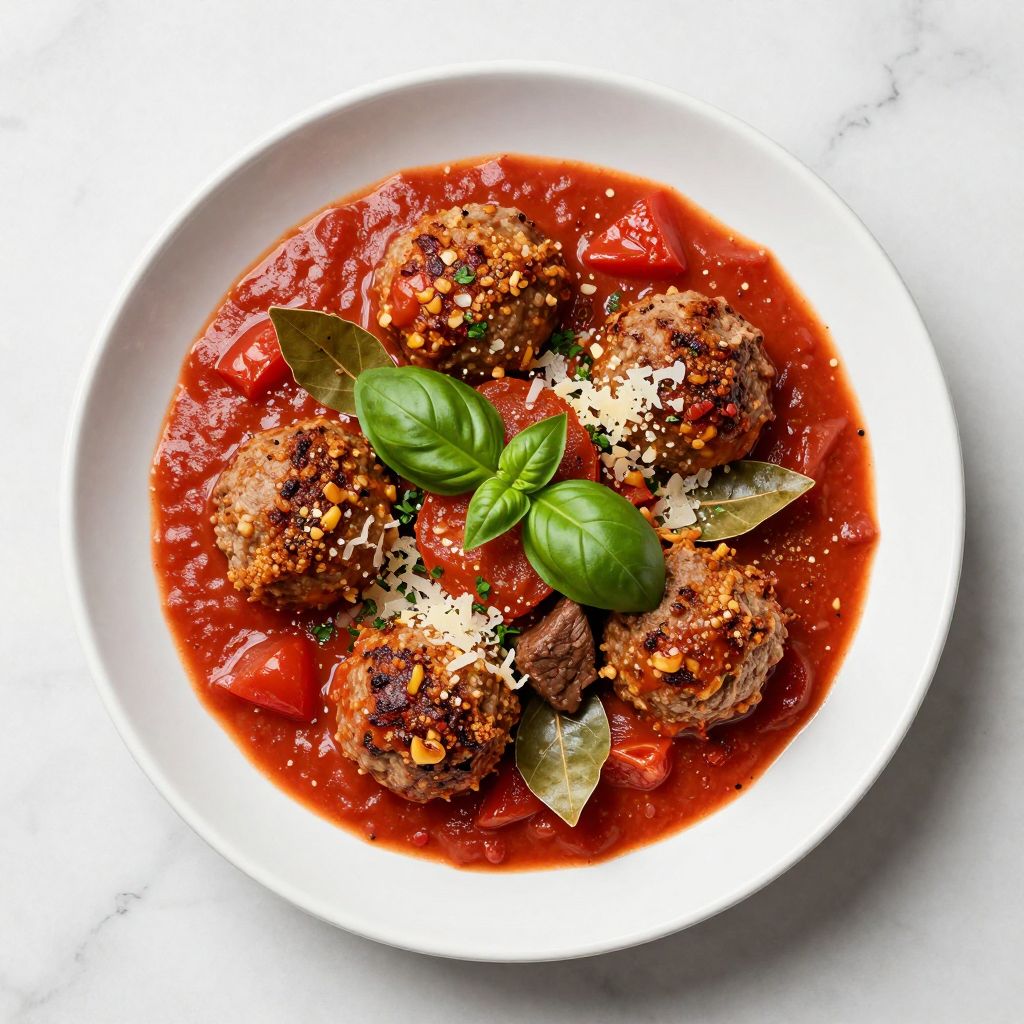
Sunday Gravy
Ingredients
Equipment
Method
- Pat pork and beef chunks dry with paper towels, then season generously with salt and pepper.
- Heat 2 tablespoons olive oil in a large heavy-bottomed pot over medium-high heat (about 375°F/190°C). Brown pork and beef on all sides, 3–4 minutes per side; transfer to a plate.
- Reduce heat to medium. Add 3 tablespoons olive oil (or enough to coat the pot) and the chopped onion; cook 4–5 minutes until translucent.
- Add minced garlic; cook 30 seconds until fragrant.
- Stir in tomato paste and cook 2 minutes, stirring constantly, to caramelize.
- Pour in whole peeled tomatoes with their juice, breaking them up with the spoon. Add sugar, salt, black pepper, oregano, red pepper flakes, and bay leaves. Return browned meats and any collected juices to the pot. Bring to a gentle simmer.
- While sauce heats, combine ground beef, ground pork, breadcrumbs, Pecorino Romano, eggs, minced garlic, parsley, 1/2 teaspoon salt, and 1/4 teaspoon pepper in a bowl. Mix gently until just combined.
- Form mixture into 1.5-inch meatballs (about walnut size).
- Heat 2 tablespoons olive oil in a large skillet over medium-high heat. Brown meatballs in batches, about 3 minutes per side; they do not need to cook through.
- Add browned meatballs to the simmering sauce. Reduce heat to low; the sauce should barely bubble. Partially cover and cook 4–5 hours, stirring every 30 minutes to prevent sticking.
- Five minutes before serving, stir in fresh basil. Taste and adjust seasoning with additional salt, pepper, or a pinch of sugar if necessary.