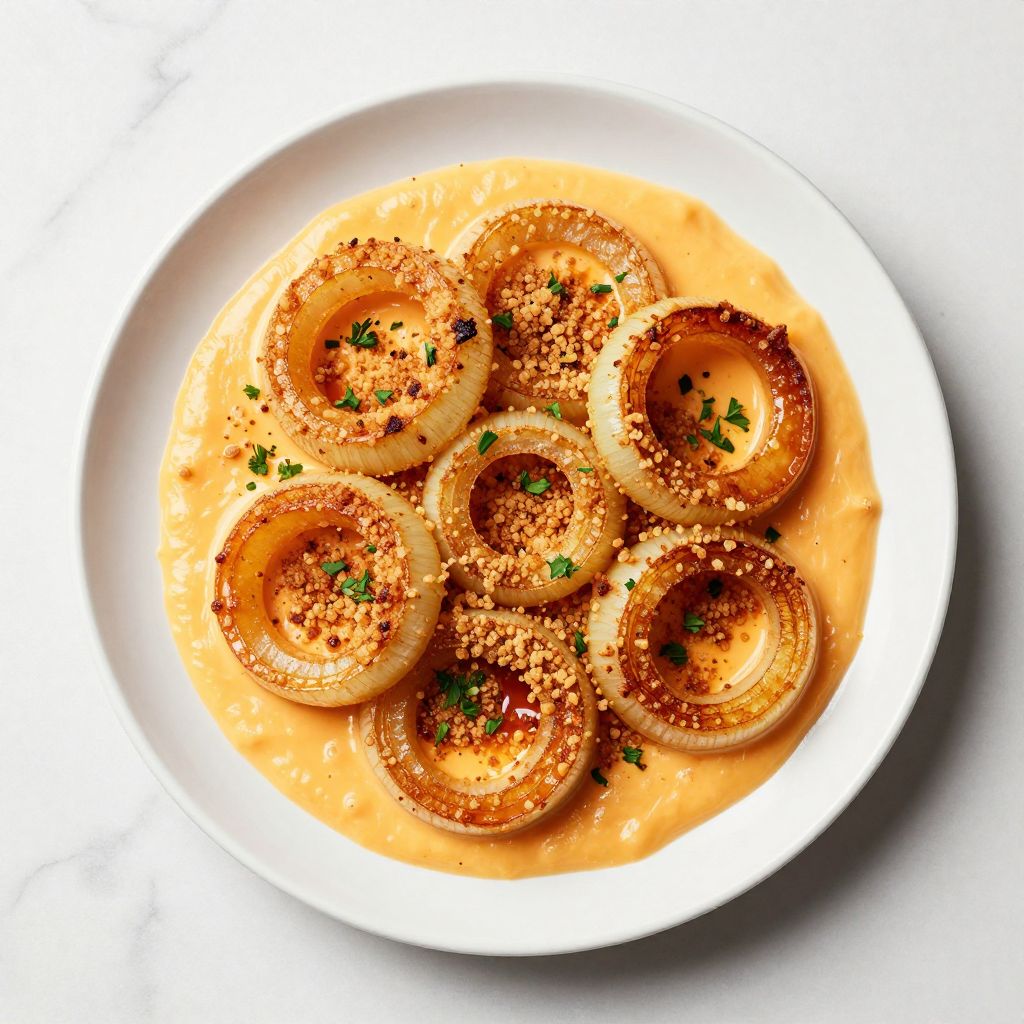
Tennessee onions are a Southern classic that transforms simple yellow onions into a creamy, cheesy, addictive side dish that steals the show at any dinner table. These caramelized onions get smothered in a rich sauce, topped with crispy breadcrumbs, and baked until golden and bubbly.
If you’ve never made this dish, you’re missing out on one of the most comforting, crowd-pleasing recipes in Southern cooking. Whether you’re serving them at a holiday gathering or a weeknight family dinner, Tennessee onions deliver serious flavor with minimal fuss.
Why You’ll Love This Recipe
Tennessee onions combine sweet caramelized layers with a creamy, savory center and a satisfying crunch on top. This dish works as a side for any protein and genuinely impresses guests without requiring fancy techniques.
- Caramelized onions develop deep, sweet flavors that contrast perfectly with the rich sauce.
- The creamy cheese sauce makes every bite feel indulgent and comforting.
- A crispy breadcrumb topping adds texture and visual appeal.
- This recipe makes ahead beautifully, reducing stress on busy cooking days.
- Pairs well with roasted meats, grilled chicken, or baked fish.
My Experience Making This Recipe
The first time I made Tennessee onions, I was skeptical that humble onions could become anything special. After forty minutes in the oven, the kitchen smelled incredible, and I pulled out a bubbling, golden dish that had my entire family asking for seconds.
What surprised me most was how the sweetness from the caramelized onions balanced the savory cheese and cream. The texture contrast between the soft onions and crunchy top made each forkful interesting.
I’ve since made this recipe dozens of times, and it never fails to earn compliments. Friends always ask for the recipe, and I love watching their faces when they realize it’s just onions, cheese, and a few pantry staples.
Recipe Overview
- Recipe Name: Tennessee Onions
- Servings: 6 to 8
- Prep Time: 20 minutes
- Cook Time: 70 minutes
- Total Time: 90 minutes
- Course: Side Dish
- Cuisine: American Southern
- Calories per Serving: 285
Equipment You Will Need
- Large skillet or Dutch oven for cooking onions
- 9-by-13-inch baking dish
- Cutting board and sharp knife
- Medium saucepan for making the sauce
- Wooden spoon for stirring
- Measuring cups and spoons
- Whisk for combining sauce ingredients
- Cheese grater or pre-shredded cheese
Ingredients for Tennessee Onions
- 6 large yellow onions, sliced into 1/4-inch rings
- 4 tablespoons butter
- 1 teaspoon salt
- 1/2 teaspoon black pepper
- 1 cup heavy cream
- 1 cup whole milk
- 2 cups sharp cheddar cheese, shredded
- 2 tablespoons all-purpose flour
- 1/2 teaspoon garlic powder
- 1/4 teaspoon cayenne pepper (optional, for a slight kick)
- 1 cup panko breadcrumbs
- 3 tablespoons melted butter for topping
- 1/4 cup fresh parsley, chopped (optional garnish)
Ingredient Notes and Substitutions
- Yellow onions: Their natural sweetness intensifies when caramelized, creating the dish’s signature flavor. Swap with Vidalia onions for even more sweetness, though they caramelize faster and require careful monitoring to avoid burning.
- Sharp cheddar cheese: Sharp cheddar adds tangy depth that mild cheese cannot match. Use Gruyere for a nuttier flavor profile, but expect a slightly different taste character.
- Heavy cream: Provides richness and smooth texture in the sauce. Substitute half-and-half for a lighter version, though the sauce will be less creamy and more prone to breaking.
- Panko breadcrumbs: Their larger size creates a crunchier topping than regular breadcrumbs. Use crushed crackers or regular breadcrumbs if needed, but expect a less satisfying texture.
- Butter: Carries flavor and helps achieve the golden-brown caramelization. Olive oil creates a different flavor profile and won’t brown as effectively, changing the overall taste.
How to Make Tennessee Onions
Step 1: Prepare the Onions
Slice your six large yellow onions into 1/4-inch rings, keeping the layers somewhat intact for a nicer presentation. Start from the root end and work toward the top to make slicing safer and easier.
Step 2: Caramelize the Onions
Melt 4 tablespoons of butter in a large skillet over medium heat, then add all the sliced onions with 1 teaspoon of salt and 1/2 teaspoon of black pepper. Stir the onions occasionally, cooking them for 40 to 50 minutes until they’re deeply golden and very soft with caramelized edges; this low and slow approach develops the sweet, complex flavors that make this dish special.
Step 3: Prepare the Baking Dish
While the onions caramelize, preheat your oven to 350 degrees Fahrenheit and lightly butter a 9-by-13-inch baking dish. Having everything ready prevents scrambling once the onions finish cooking.
Step 4: Make the Cheese Sauce
In a medium saucepan over medium heat, combine 1 cup of heavy cream and 1 cup of whole milk, heating until steaming but not boiling. In a small bowl, whisk together 2 tablespoons of flour, 1/2 teaspoon of garlic powder, and 1/4 teaspoon of cayenne pepper, then slowly whisk this mixture into the hot cream to prevent lumps and create a smooth thickening base.
Step 5: Add Cheese to the Sauce
Continue stirring over medium heat for about 2 minutes until the sauce thickens slightly, then reduce heat to low and stir in 2 cups of shredded sharp cheddar cheese until completely melted and smooth. The cheese should fully incorporate, creating a silky sauce without graininess.
Step 6: Combine Onions and Sauce
Transfer the caramelized onions to your prepared baking dish, then pour the warm cheese sauce evenly over them and gently fold together until the onions are well coated. Make sure the sauce reaches all areas of the dish for even cooking and flavor distribution.
Step 7: Make the Breadcrumb Topping
In a small bowl, mix 1 cup of panko breadcrumbs with 3 tablespoons of melted butter and a pinch of salt, tossing until all the breadcrumbs are moistened and clumpy. This technique ensures the topping browns evenly instead of staying pale and soggy.
Step 8: Top and Bake
Spread the buttered breadcrumb mixture evenly over the onion and cheese mixture, then bake for 20 to 25 minutes until the top is golden brown and the sauce bubbles at the edges. The breadcrumb topping should be crispy and deeply browned for maximum texture contrast.
Pro Tip: Don’t rush the caramelization step; those 40 to 50 minutes transform onions from ordinary to sweet and complex, and this slow cooking is the secret to authentic Tennessee onions.
Tips for the Best Tennessee Onions
- Slice onions uniformly so they cook evenly and create a better visual presentation in the finished dish. Uneven slices can burn or remain undercooked depending on thickness.
- Stir the caramelizing onions every 10 minutes to ensure even browning on all sides and prevent scorching on the bottom of the pan. Patience here pays dividends in flavor development.
- Use freshly shredded cheese rather than pre-shredded whenever possible, as it melts smoother and creates a creamier sauce without the anti-caking agents found in packaged cheese.
- Don’t skip the thickening flour; it creates the right sauce consistency that clings to the onions instead of pooling at the bottom of the dish.
- For extra crispy breadcrumb topping, drizzle a small amount of melted butter directly over the breadcrumbs right before serving for added richness and crunch.
- Taste the sauce before baking and adjust seasoning with extra salt, pepper, or a dash of Worcestershire sauce if you prefer more depth.
Common Mistakes to Avoid
- Cooking onions too quickly on high heat produces uneven browning and bitter flavors instead of sweet caramelization; medium heat and patience are non-negotiable here.
- Skipping the thickening flour results in a watery sauce that pools at the bottom instead of coating the onions evenly throughout the dish.
- Using mild cheddar instead of sharp cheddar creates a bland, one-dimensional sauce that lacks the tangy depth the dish needs for proper flavor balance.
- Overbaking the breadcrumb topping turns it dark brown or even black, creating a burnt flavor that overpowers the delicate caramelized onions beneath.
- Not allowing caramelized onions to cool slightly before adding the hot cheese sauce can cause the bottom layer to cook unevenly and become mushy rather than tender.
Serving Suggestions
Tennessee onions shine as a side dish alongside classic Southern and American proteins, and their rich, savory nature complements both light and heavy mains beautifully. Serve them hot from the oven while the breadcrumb topping is still crispy for maximum textural contrast and flavor impact.
- Grilled ribeye steak with Tennessee onions and roasted asparagus creates a restaurant-quality dinner at home.
- Fried chicken with Tennessee onions and collard greens delivers authentic Southern comfort food.
- Baked salmon with lemon and Tennessee onions brings elegance to an otherwise simple fish preparation.
- Herb-roasted turkey breast with Tennessee onions and cranberry sauce makes a lighter holiday option.
- Tennessee onions work beautifully as a vegetarian main course paired with crusty bread and a simple green salad.
Variations to Try
- Caramelized Onion and Gruyere Version: Swap cheddar for Gruyere cheese to create a nuttier, more sophisticated flavor profile with deeper earthiness; this variation pairs especially well with beef dishes.
- Crispy Bacon and Onion Variation: Add 6 slices of cooked, crumbled bacon to the sauce before baking for smoky depth and a savory crunch that complements the sweetness of the onions.
- Herb-Infused Version: Stir 1 teaspoon of fresh thyme and 1/2 teaspoon of dried rosemary into the cheese sauce for subtle herbal notes that enhance the caramelized flavors without overwhelming them.
- Creamy Onion Soup Variation: Reduce the cheese to 1 cup and add 1/2 cup of beef broth to create a lighter, soup-like consistency that works beautifully in bread bowls or alongside crusty bread for dipping.
- Spicy Kick Version: Increase cayenne pepper to 1/2 teaspoon and add 1/4 teaspoon of smoked paprika for heat and complexity; serve with Mexican-inspired proteins or alongside cornbread.
Dietary Adaptations
- Gluten-Free: Replace all-purpose flour with cornstarch or a gluten-free flour blend in equal amounts, and use certified gluten-free breadcrumbs for the topping; the texture and flavor remain virtually identical.
- Dairy-Free: Swap butter for olive oil, use unsweetened oat milk combined with coconut cream for the cream and milk, and substitute dairy-free cheddar cheese; the result will be lighter but less rich than the original.
- Vegan: Follow the dairy-free adaptations above and ensure your breadcrumbs contain no animal products; nutritional yeast mixed into the sauce adds savory depth that mimics cheese complexity.
- Low-Carb/Keto: Use almond flour mixed with Parmesan cheese for the topping instead of breadcrumbs, and the rest of the recipe remains unchanged; this dramatically reduces carbs while adding nutty flavor.
Storage and Reheating
Refrigerator
Store cooled Tennessee onions in an airtight container for up to 4 days, though the breadcrumb topping will soften slightly as it absorbs moisture from the sauce. The onions themselves maintain their flavor beautifully, making this an excellent make-ahead option.
- Cover tightly to prevent the dish from absorbing other flavors from your refrigerator.
- Don’t remove the breadcrumb topping before storing; it protects the onions underneath.
Freezer
Freeze unbaked Tennessee onions in a covered baking dish for up to 2 months, making this an excellent option for advance meal planning. Thaw overnight in the refrigerator before baking as directed.
- Add the breadcrumb topping just before baking rather than before freezing for the crispiest results.
- Frozen dishes may require an extra 5 to 10 minutes of baking time, so watch carefully.
Reheating
Reheat refrigerated Tennessee onions covered in a 350-degree oven for 15 to 20 minutes until warmed through, then uncover and broil for 2 to 3 minutes to re-crisp the topping. Microwave reheating softens the breadcrumbs, so the oven method is strongly recommended.
- If the topping browns too quickly, tent with foil during most of the reheating time.
- Add fresh breadcrumbs mixed with melted butter on top before reheating for improved texture.
Nutrition Information
| Nutrient | Amount |
|---|---|
| Calories | 285 |
| Total Fat | 18g |
| Saturated Fat | 11g |
| Carbohydrates | 22g |
| Fiber | 2g |
| Sugar | 8g |
| Protein | 8g |
| Sodium | 520mg |
| Cholesterol | 52mg |
These values are estimates based on standard ingredient measurements and may vary depending on specific brands and preparation methods used. Individual nutritional needs vary, so consult a registered dietitian for personalized dietary guidance.
Frequently Asked Questions
Can I make Tennessee onions without the breadcrumb topping?
Yes, the dish tastes delicious without the topping, though you’ll lose the important textural contrast that makes it special. If you prefer a softer, creamy side dish without crunch, simply bake it covered with foil for 20 to 25 minutes until bubbly.
How far in advance can I prepare Tennessee onions?
You can caramelize the onions and make the cheese sauce up to 2 days ahead, storing them separately in the refrigerator. Combine and bake fresh on the day you plan to serve for the best breadcrumb texture, or assemble and freeze up to 2 months ahead.
Why are my onions watery instead of creamy?
Onions release liquid as they cook, and skipping the thickening flour prevents the sauce from setting properly. Make sure you whisk the flour into the cream before adding it to the dish, and don’t skip this step even if it seems unnecessary.
What’s the difference between Tennessee onions and French onion soup?
Tennessee onions are a baked side dish with a creamy cheese sauce and breadcrumb topping, while French onion soup is a broth-based soup with caramelized onions and melted cheese on top. Tennessee onions are thicker, creamier, and more substantial as a standalone side dish.
Can I use sweet onions like Vidalia for this recipe?
Absolutely, Vidalia onions work beautifully and will be even sweeter than yellow onions, though they caramelize faster and require careful watching around the 30 to 35 minute mark to prevent burning. Reduce cooking time slightly and stir more frequently when using sweet varieties.
Is there a way to make this recipe less rich?
Substitute half-and-half for heavy cream and reduce the cheese to 1.5 cups for a lighter version that’s still creamy and delicious. You could also add 1/2 cup of chicken or vegetable broth to the sauce for additional volume with fewer calories.
Final Thoughts
Tennessee onions represent everything wonderful about Southern cooking: simple ingredients transformed through patience and technique into something truly special. The combination of sweet caramelized layers, creamy cheese sauce, and crispy breadcrumb topping creates a side dish that genuinely outshines many mains.
Make this recipe soon, and don’t be surprised when it becomes a regular request.
Tennessee Onions
Ingredients
Equipment
Method
- Preheat the oven to 350°F (175°C) and lightly butter a 9-by-13-inch baking dish.
- Melt 4 tablespoons of butter in a large skillet over medium heat. Add the sliced onions, salt, and black pepper.
- Cook the onions, stirring every 10 minutes, for 40–50 minutes until deeply golden and caramelized.
- While the onions cook, heat the heavy cream and whole milk in a medium saucepan over medium heat until steaming but not boiling.
- Whisk together the flour, garlic powder, and cayenne pepper in a small bowl, then slowly whisk the mixture into the hot cream. Cook 2 minutes until slightly thickened.
- Reduce heat to low, add shredded cheddar, and stir until the cheese is fully melted and the sauce is smooth.
- Transfer the caramelized onions to the prepared baking dish and pour the cheese sauce over them, folding gently to coat.
- In a separate bowl, combine panko breadcrumbs with melted butter until evenly moistened, then sprinkle over the onion mixture.
- Bake for 20–25 minutes until the topping is golden brown and the sauce bubbles around the edges.
- Garnish with chopped parsley if desired, and serve hot.