Boiled cabbage recipe is a simple, wholesome side dish that transforms this humble vegetable into tender, flavorful comfort food in under 30 minutes.
Whether you’re looking for a budget-friendly addition to weeknight dinners or a traditional accompaniment to hearty mains, this straightforward method brings out the cabbage’s natural sweetness while keeping prep minimal.
Why You’ll Love This Recipe
Boiled cabbage delivers genuine comfort with zero fuss and maximum nutrition packed into every bite.
- Ready in under 20 minutes from start to finish
- Costs pennies per serving, making it ideal for feeding families
- Works perfectly as a side dish for pork, sausage, corned beef, or roasted chicken
- Naturally low in calories and high in fiber and vitamin C
- Freezes beautifully for meal prep and quick weeknight dinners
My Experience Making This Recipe
I first learned to make boiled cabbage from my grandmother, who treated it as the foundation of a proper dinner table. She insisted that salting the water properly and not overcooking it made all the difference between mushy disappointment and perfectly tender results.
The first time I nailed it, my family actually asked for seconds, which shocked me because I’d always assumed boiled cabbage was something you tolerated rather than enjoyed. Now I make it at least twice a month, especially when I want something nourishing that doesn’t demand my full attention in the kitchen.
What surprised me most was how the simple addition of butter at the end transforms the entire dish, turning basic boiled vegetables into something that tastes intentional and cared for.
Recipe Overview
- Recipe Name: Boiled Cabbage Recipe
- Servings: 4
- Prep Time: 5 minutes
- Cook Time: 15 minutes
- Total Time: 20 minutes
- Course: Side Dish
- Cuisine: American, European
- Calories per Serving: 95
Equipment You Will Need
- Large pot with a lid
- Sharp knife or cabbage cutter
- Cutting board
- Colander or strainer
- Wooden spoon for stirring
- Measuring spoons
- Serving spoon or tongs
Ingredients for Boiled Cabbage Recipe
- 1 medium head of cabbage, about 2 pounds, cored and cut into chunks or wedges
- 6 cups water
- 2 teaspoons salt
- 1/2 teaspoon black pepper
- 3 tablespoons butter
- 1/2 teaspoon garlic powder
- 1/4 teaspoon red pepper flakes (optional)
Ingredient Notes and Substitutions
- Cabbage: Green cabbage is traditional and mild, but red cabbage works equally well and adds visual interest; the cook time remains the same. Red cabbage may stain your pot slightly, which is harmless.
- Salt: Salt in the water brings out the cabbage’s natural flavor and seasons it from the inside out. You can reduce to 1.5 teaspoons if you prefer less sodium, though the flavor will be noticeably milder.
- Butter: Butter adds richness and helps the cabbage taste less watery; olive oil works as a substitute for a lighter dish, but the finished texture feels slightly different.
- Water: Vegetable or chicken broth can replace water for deeper flavor, though this adds calories and sodium.
How to Make Boiled Cabbage Recipe
Step 1: Prepare Your Cabbage
Remove the outer leaves from your cabbage and rinse the whole head under cold water to remove any dirt or debris. Cut the cabbage in half, then remove the tough core from each half by slicing at an angle with your knife, then cut each half into 2 to 3 inch chunks or wedges depending on your preference.
Step 2: Fill Your Pot with Water
Add 6 cups of water to your large pot and place it on high heat with the lid on. This speeds up boiling significantly; boiling water saves you roughly 5 minutes compared to starting with cold water.
Step 3: Bring Water to a Rolling Boil
Wait for the water to reach a full rolling boil, which should take about 5 to 7 minutes depending on your stove. You’ll know it’s ready when you see large, vigorous bubbles breaking constantly across the surface.
Step 4: Add Salt to the Water
Once the water reaches a rolling boil, add the 2 teaspoons of salt and stir well to dissolve it completely. Salting the water now ensures the cabbage absorbs flavor throughout cooking rather than only tasting seasoned on the outside.
Step 5: Add the Cabbage
Carefully place all your cabbage chunks into the boiling salted water and give them a gentle stir to submerge them. The water temperature will drop initially, so don’t panic; it will return to boiling within a minute or two.
Step 6: Maintain a Gentle Boil
Return the heat to medium-high to maintain a steady, gentle boil rather than a rolling boil that splashes water everywhere. Gentle boiling cooks the cabbage evenly and helps it stay tender without falling apart into mushy pieces.
Step 7: Monitor the Cooking Time
Allow the cabbage to boil for 10 to 15 minutes, depending on how large you cut your pieces and your preferred tenderness. Begin testing at the 10 minute mark by piercing a piece with a fork; it should feel tender but still hold its shape when lifted.
Step 8: Drain the Cabbage
Once tender, carefully pour the cabbage into a colander to drain away all the cooking water. You can also use a slotted spoon to transfer the cabbage to a serving bowl if you prefer, leaving the water behind in the pot.
Step 9: Season and Finish
Return the drained cabbage to the pot or transfer it to a serving bowl and add the butter, black pepper, and garlic powder. Toss gently with a wooden spoon until the butter melts and coats all the pieces evenly, which takes about 1 to 2 minutes.
Step 10: Taste and Adjust
Taste a piece and adjust seasonings if needed by adding a pinch more salt, pepper, or garlic powder. If you like heat, sprinkle red pepper flakes over the top and toss once more before serving.
Pro Tip: Don’t overcrowd your pot or use too little water; cabbage needs room to move freely so it cooks evenly and stays tender rather than steaming into mushiness.
Tips for the Best Boiled Cabbage Recipe
- Cut cabbage into uniform pieces so everything cooks at the same rate and finishes tender at the same time. Uneven pieces lead to some being mushy while others remain crunchy.
- Start testing for doneness at 10 minutes rather than waiting the full 15; you can always cook longer, but you can’t reverse overcooked cabbage.
- Use fresh cabbage that feels heavy and compact; light or soft cabbage has been sitting too long and cooks faster, sometimes unevenly.
- Don’t skip the salt in the water; it seasons the cabbage thoroughly and brings out its natural sweetness far better than salting after cooking.
- Finish with butter right before serving while the cabbage is still hot so the butter melts properly and distributes evenly throughout the dish.
- If you’re feeding a crowd, you can boil cabbage a few hours ahead and reheat gently in a skillet with butter just before serving without sacrificing quality.
Common Mistakes to Avoid
- Using cold water instead of boiling water for cooking causes uneven cooking and can result in some pieces remaining tough while others turn mushy.
- Skipping the salt leads to bland cabbage that tastes watery rather than flavorful, even if you season heavily afterward.
- Cutting pieces too large means the outside turns to mush before the inside becomes tender enough to eat comfortably.
- Boiling at too high a heat causes the pot to overflow and the cabbage to break apart into unappetizing small pieces that lose their texture.
- Not draining thoroughly leaves excess water in the finished dish, which dilutes the butter and makes the cabbage taste watery and sad.
Serving Suggestions
Boiled cabbage pairs beautifully with hearty proteins and comfort food sides, turning simple weeknight dinners into satisfying meals. Serve it hot alongside your favorite main course for best results.
- Corned beef and cabbage for a traditional Irish-American dinner that feels homey and complete
- Roasted chicken and potatoes for a classic Sunday dinner combination
- Sausages and mustard for a casual, crowd-pleasing meal that requires minimal effort
- Pork chops and applesauce for a pairing that balances sweet and savory flavors
- Ham or bacon with beans and cornbread for a southern-style spread
Variations to Try
- Creamy Boiled Cabbage: Replace the butter with a mixture of butter and sour cream added after cooking, then fold in gently for a richer, tangier dish that tastes indulgent.
- Bacon Cabbage: Cook crumbled bacon separately, then toss it with the drained cabbage along with the butter and some reserved bacon grease for deep, savory flavor that transforms the entire dish.
- Vinegar Cabbage: Add 2 tablespoons of apple cider vinegar or white vinegar to the butter at the finish for bright acidity that cuts through the richness beautifully.
- Caraway Seed Cabbage: Sprinkle 1 teaspoon of caraway seeds over the finished cabbage for a classic Eastern European twist that adds warmth and complexity to the flavor.
- Garlic and Herb Cabbage: Add minced fresh garlic, fresh parsley, and dill to the butter for a fresher, more herbaceous version that works especially well with lighter proteins.
Dietary Adaptations
- Gluten-Free: This recipe is naturally gluten-free as written; simply verify your butter and seasonings carry no hidden gluten additives.
- Dairy-Free: Replace butter with olive oil or coconut oil in equal amounts; the flavor will be lighter and less rich, but the cabbage remains tender and nutritious.
- Vegan: Use olive oil instead of butter and skip the salt that may contain animal products; nutritional yeast can add umami depth without dairy.
- Low-Carb and Keto: This recipe fits perfectly as is, containing only about 5 grams of carbohydrates per serving and healthy fats from butter.
Storage and Reheating
Refrigerator
Transfer cooled boiled cabbage to an airtight container and refrigerate for up to 4 days. The cabbage will soften slightly during storage but remains perfectly safe and tasty.
- Store in glass or plastic containers with tight-fitting lids
- Keep away from strong-smelling foods as cabbage absorbs odors
- Label with the date so you remember when you cooked it
Freezer
Boiled cabbage freezes well for up to 3 months when stored properly in freezer-safe containers. Thaw in the refrigerator overnight before reheating for best results.
- Use freezer bags or rigid containers to prevent freezer burn
- Leave a small amount of headspace in containers to allow for expansion
- Portion into individual servings for easy reheating on busy nights
Reheating
Reheat refrigerated or thawed cabbage gently in a skillet over medium heat with a splash of water or broth for about 5 minutes until warmed through. You can also microwave in a covered container for 2 to 3 minutes, stirring halfway through, though the stovetop method preserves texture better.
- Add a little butter during reheating to restore richness
- Cover the pan to trap moisture and prevent drying
- Avoid high heat, which can scorch the cabbage edges
Nutrition Information
| Nutrient | Amount |
|---|---|
| Calories | 95 |
| Total Fat | 7g |
| Saturated Fat | 4g |
| Carbohydrates | 8g |
| Fiber | 2g |
| Sugar | 4g |
| Protein | 2g |
| Sodium | 485mg |
| Cholesterol | 19mg |
These values are approximate and based on standard ingredients; actual nutrition varies depending on cabbage size, butter brand, and specific water absorption during cooking.
Frequently Asked Questions
Can I use red cabbage instead of green cabbage?
Absolutely, red cabbage works beautifully and cooks in the same time frame. Red cabbage has a slightly earthier, more mineral flavor compared to green, and it will color the cooking water slightly, which is completely normal and harmless.
How do I know when the cabbage is done cooking?
Pierce a piece with a fork; it should feel tender enough to cut easily but still hold its shape when lifted from the water. If it feels hard or crunchy inside, cook for another 2 to 3 minutes and test again.
Can I make this recipe ahead of time?
Yes, boil the cabbage up to 2 days ahead and store it in the refrigerator, then reheat gently in a skillet with a bit of butter just before serving. Reheating takes only 5 minutes and tastes nearly as fresh as the original.
What if my cabbage tastes too watery or bland?
This typically means insufficient salt in the cooking water or too much water draining back into the finished dish. Add extra butter and taste-test with a pinch of salt or garlic powder to boost flavor significantly.
Can I cook cabbage in vegetable broth instead of water?
Yes, vegetable or chicken broth replaces water perfectly and adds noticeable depth; reduce the added salt to 1 teaspoon to avoid over-salting the finished dish.
Is boiled cabbage healthy?
Absolutely, cabbage is packed with vitamin C, fiber, and compounds with anti-inflammatory properties, making it one of the healthiest side dishes you can serve. The butter adds richness and helps absorb fat-soluble vitamins from the cabbage.
Final Thoughts
Boiled cabbage recipe proves that the simplest dishes often bring the most satisfaction when executed with care and proper technique. This humble side dish has fed families for generations and continues to deserve a regular spot on modern dinner tables.
Try this recipe this week and discover how tender, flavorful cabbage transforms alongside your favorite proteins and comfort foods. You’ll quickly understand why my grandmother treated it as a non-negotiable part of any proper meal.
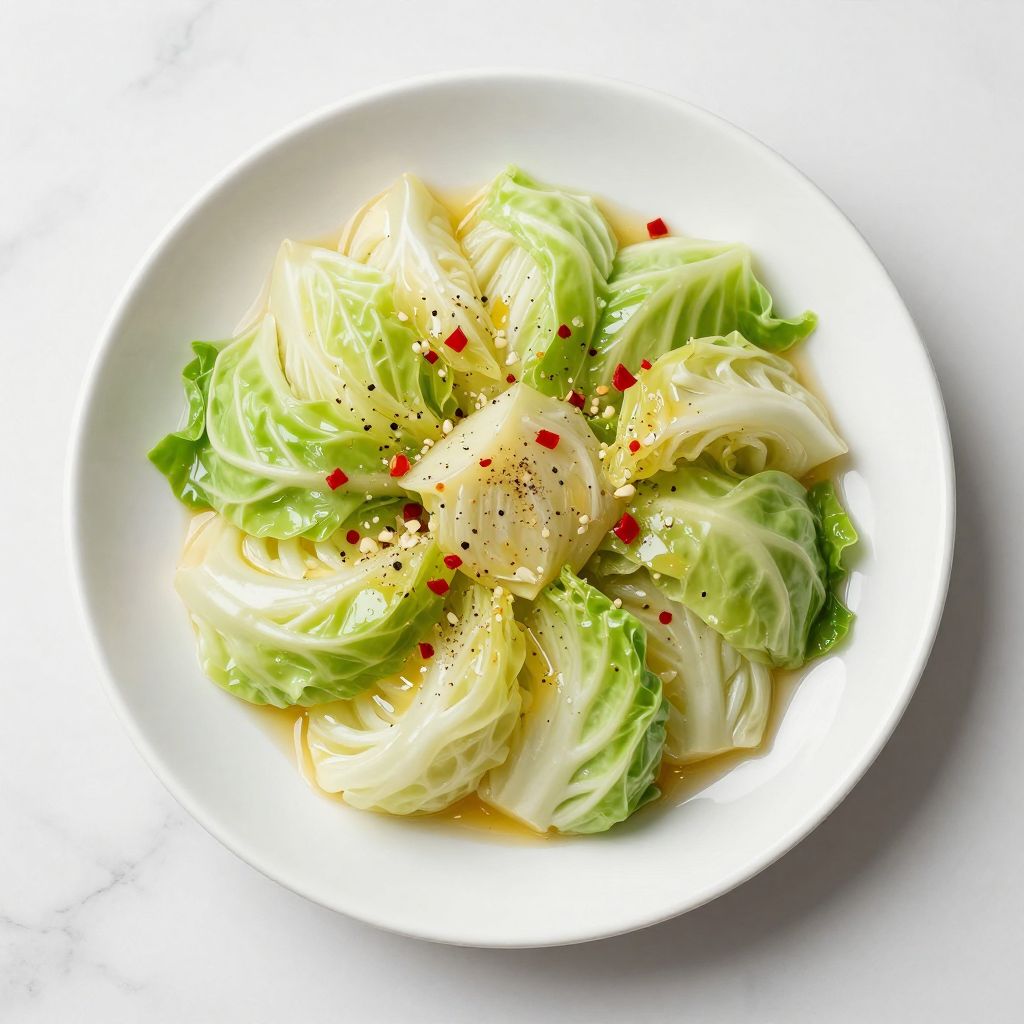
Boiled Cabbage
Ingredients
Equipment
Method
- Remove and discard any wilted outer leaves from the cabbage, rinse under cold water, then cut out the core and slice the cabbage into 2–3-inch chunks or wedges. (Prep time: 5 minutes)
- Bring 6 cups of water to a rolling boil in a large pot over high heat, covered to speed up the process.
- Stir in 2 teaspoons of salt until fully dissolved, then carefully add the cabbage pieces, ensuring they are submerged.
- Reduce heat slightly to maintain a gentle boil and cook for 10–15 minutes, or until a fork pierces the thickest part of a wedge easily without the cabbage falling apart.
- Drain the cooked cabbage in a colander, shaking off excess water.
- Return the drained cabbage to the pot, add 3 tablespoons butter, 1/2 teaspoon black pepper, 1/2 teaspoon garlic powder, and red pepper flakes if using. Toss gently over low heat for 1–2 minutes until the butter melts and coats all pieces.
- Taste and adjust seasoning with additional salt or pepper if desired, then serve hot.