A perfectly seared T-bone steak is one of the simplest yet most impressive meals you can put on the table. This cut combines tender filet mignon on one side and a robust strip steak on the other, separated by a T-shaped bone that adds incredible flavor. With just salt, pepper, and high heat, you can create a restaurant-quality dinner in your own kitchen in about 20 minutes.
Learning to cook a T-bone steak properly transforms your weeknight dinner routine and gives you a skill that impresses every time. Let’s walk through exactly how to get that perfect crust while keeping the inside juicy and medium-rare.
Why You’ll Love This Recipe
T-bone steaks deliver maximum flavor with minimal fuss, and once you nail the technique, you’ll make them regularly.
- Two different cuts in one steak means you get two flavor and texture experiences on every plate
- Ready in under 20 minutes from fridge to plate
- Requires just five basic ingredients: steak, salt, pepper, butter, and garlic
- Impressive enough for date night but simple enough for a casual weeknight
- Teaches you a foundational cooking skill that works for any thick-cut steak
My Experience Making This Recipe
The first time I properly cooked a T-bone steak at home, I couldn’t believe how much better it was than my usual pan-seared routine. I’d been flipping it constantly and cooking it at medium heat, which meant it took forever and never developed that beautiful brown crust.
When I switched to a screaming-hot cast iron skillet and left the steak alone for a few minutes, everything changed. The exterior turned deep golden-brown while the inside stayed perfectly pink and juicy.
My family actually paused mid-conversation to compliment the meal, which rarely happens at my dinner table. That moment taught me that simple ingredients cooked with proper technique will always beat fancy recipes executed poorly.
Recipe Overview
- Recipe Name: T-Bone Steak
- Servings: 2
- Prep Time: 10 minutes
- Cook Time: 12 minutes
- Total Time: 22 minutes
- Course: Main Dish
- Cuisine: American
- Calories per Serving: 580
Equipment You Will Need
- Cast iron skillet (12-inch preferred)
- Meat thermometer (instant-read)
- Tongs (long-handled)
- Paper towels
- Cutting board
- Knife for slicing
- Small bowl for garlic and butter
Ingredients for T-Bone Steak
- One T-bone steak, 1.5 inches thick (about 1.5 to 2 pounds)
- Kosher salt, to taste
- Freshly cracked black pepper, to taste
- 3 tablespoons unsalted butter
- 4 cloves garlic, smashed
- 2 sprigs fresh rosemary (optional but recommended)
Ingredient Notes and Substitutions
- T-bone steak: This cut combines two premium steaks separated by bone, which adds marrow-rich flavor during cooking. If unavailable, a porterhouse (which is similar but larger) works just as well, though you may need to adjust cooking time slightly.
- Kosher salt: It dissolves evenly across the meat and seasons more effectively than table salt. Sea salt is a fine substitute with a 1:1 ratio.
- Butter: Adds richness and helps transfer heat during the basting stage. Ghee works beautifully if you prefer a nuttier flavor.
- Garlic: Infuses the butter with aromatic depth and prevents the steak from tasting one-note. Thyme or oregano can replace it if garlic isn’t your thing, though you’ll lose some pungency.
- Rosemary: Contributes a piney, woodsy note that complements beef perfectly. Thyme or oregano are solid alternatives.
How to Make T-Bone Steak
Step 1: Remove the Steak From the Fridge
Take your T-bone steak out of the refrigerator 30 to 40 minutes before cooking. Bringing it to room temperature allows the meat to cook more evenly throughout, preventing a cold center paired with an overcooked exterior.
Step 2: Pat the Steak Completely Dry
Use paper towels to remove all surface moisture from both sides and the edges of the steak. Moisture creates steam in the skillet, which prevents the crust from forming, so this step is non-negotiable if you want that golden-brown sear.
Step 3: Season Generously With Salt and Pepper
Coat both sides and the edges with kosher salt and freshly cracked pepper, using about one-quarter teaspoon of salt per side. Season just before cooking rather than earlier, as salt draws out moisture if left sitting too long.
Step 4: Heat Your Cast Iron Skillet Until It’s Smoking
Place your cast iron skillet over medium-high to high heat and let it heat for 2 to 3 minutes until it’s extremely hot. You want the skillet hot enough that a drop of water immediately sizzles and evaporates, which signals the surface is ready for a proper sear.
Step 5: Sear the Steak on the First Side
Carefully place the steak in the hot skillet and resist the urge to move it for 3 to 4 minutes. This uninterrupted contact time allows the Maillard reaction to occur, which creates that delicious caramelized crust and develops complex flavors.
Step 6: Flip and Sear the Second Side
Using long-handled tongs, flip the steak once and cook for another 3 to 4 minutes on the opposite side. The bone side may need slightly less time since it has less surface area, so watch for a similar level of browning.
Step 7: Baste With Butter, Garlic, and Rosemary
Add the butter, smashed garlic cloves, and rosemary sprigs to the skillet around the steak. Tilt the skillet slightly and use a spoon to continuously baste the steak with the foaming butter for the remaining 2 to 3 minutes, which adds flavor and helps cook the meat through gently.
Step 8: Check the Temperature and Remove From Heat
Insert your meat thermometer into the thickest part of the filet side without touching bone, aiming for 125 to 130 degrees Fahrenheit for medium-rare. Transfer the steak to a cutting board and let it rest for 5 minutes, which allows the juices to redistribute and keeps the meat tender and juicy when you cut into it.
Pro Tip: Always use a meat thermometer instead of guessing by feel or appearance. The difference between medium-rare and overcooked is just a few degrees, and a thermometer removes all doubt.
Tips for the Best T-Bone Steak
- Buy a steak that’s at least 1.25 inches thick, ideally 1.5 inches or more. Thinner steaks overcook before they develop a proper crust, leaving you disappointed.
- Don’t skip the resting period after cooking. Those five minutes allow muscle fibers to relax and reabsorb juices, preventing them from running all over your plate the moment you cut in.
- Use cast iron for superior heat retention and crust development. Regular stainless steel pans cool down slightly when you add the cold steak, losing precious searing power.
- Invest in a good quality meat thermometer and learn how to use it properly. Digital instant-read thermometers cost under fifteen dollars and eliminate the guesswork completely.
- Season aggressively right before cooking rather than too far in advance. This ensures the salt flavors the meat without drawing out excessive moisture beforehand.
- Don’t forget to season the edges of the steak, not just the flat sides. The edges contribute significantly to the overall flavor profile.
Common Mistakes to Avoid
- Cooking from a cold steak: A refrigerator-temperature steak will have a cold center by the time the exterior browns properly. Always bring it to room temperature first.
- Moving the steak too often: Constantly flipping and prodding prevents crust formation and extends cooking time unnecessarily. Let it sit undisturbed during searing.
- Using low or medium heat: The pan must be genuinely hot to create the Maillard reaction that gives you that restaurant-quality crust and deep flavor.
- Forgetting to rest the meat: Cutting into a steak immediately after cooking causes all the juices to escape onto the plate instead of staying in the meat.
- Overcooking past medium-rare: T-bone steaks are most forgiving and juicy at medium-rare to medium. Beyond that, the meat becomes increasingly dry and tough.
Serving Suggestions
A perfectly cooked T-bone steak deserves simple, quality sides that don’t overshadow its natural flavor. Here are some pairings that let the steak shine while adding balance to the plate.
- Roasted garlic mashed potatoes with fresh herbs and butter
- Creamed spinach or sauteed spinach with garlic
- Grilled asparagus with lemon and parmesan
- Loaded baked potato with sour cream, chives, and bacon
- Crispy fries with garlic aioli for dipping
Variations to Try
- Cajun T-bone: Add cayenne, paprika, garlic powder, and oregano to the salt and pepper seasoning for a bold, spicy take. This adds heat and complexity without changing the cooking method.
- Coffee-crusted steak: Mix one tablespoon of finely ground coffee with your salt and pepper before cooking. The coffee adds subtle depth and slight bitterness that complements beef beautifully.
- Asian-inspired marinade: Combine soy sauce, ginger, garlic, and sesame oil, then marinate the steak for 30 minutes before cooking. Serve with wasabi or sriracha for an entirely different flavor direction.
- Blue cheese butter: Mix crumbled blue cheese into softened butter and top the steak right after removing it from the skillet. The cheese melts into a luxurious sauce that adds tangy richness.
- Chimichurri topping: Finish the rested steak with fresh parsley, garlic, red wine vinegar, and olive oil blended into a bright sauce. This adds acidity and herbaceous freshness that cuts through the richness.
Dietary Adaptations
- Gluten-free: This recipe is naturally gluten-free as written, requiring no substitutions or modifications whatsoever.
- Dairy-free: Replace the butter with high-heat oil like avocado oil for basting, which sacrifices some richness but keeps the steak juicy and allows the beef flavor to shine through more prominently.
- Low-carb or keto: T-bone steak is perfect for low-carb diets with zero carbohydrates, making it ideal for keto without any modifications needed.
- Vegan or vegetarian: This recipe cannot be adapted for plant-based diets since it centers entirely on a beef steak. Consider making grilled portobello mushrooms or cauliflower steaks instead.
Storage and Reheating
Refrigerator
Store leftover cooked steak in an airtight container for up to three days. Slice it thinner than you’d normally cut if you plan to reheat, as this helps it warm through more evenly without drying out further.
- Cool the steak to room temperature before refrigerating to prevent condensation
- Store separately from any sauces or butter to prevent sogginess
Freezer
Freeze cooked T-bone steak in an airtight container or vacuum-sealed bag for up to two months. Wrap it tightly to prevent freezer burn, which degrades texture and flavor over time.
- Label the container with the date so you remember when you froze it
- Thaw overnight in the refrigerator before reheating
Reheating
Reheat sliced steak gently in a low oven or on the stovetop with a little butter to restore juiciness. Microwaving is not recommended as it tends to toughen the meat unevenly.
- Warm in a 275-degree oven for 8 to 10 minutes until just heated through
- Pan-sear briefly over medium heat with a touch of butter for a quick reheat
Nutrition Information
| Nutrient | Amount |
|---|---|
| Calories | 580 |
| Total Fat | 42g |
| Saturated Fat | 18g |
| Carbohydrates | 0g |
| Fiber | 0g |
| Sugar | 0g |
| Protein | 65g |
| Sodium | 520mg |
| Cholesterol | 148mg |
These values are estimates based on a 1.5-pound T-bone steak cooked with three tablespoons of butter and divided into two servings. Actual nutrition will vary depending on the exact weight of your steak and the amount of butter absorbed.
Frequently Asked Questions
How do I know if my steak is done without cutting into it?
Use an instant-read meat thermometer inserted into the center of the meat without touching bone. Aim for 125 to 130 degrees Fahrenheit for medium-rare, 130 to 135 for medium, or 135 to 140 for medium-well.
Can I cook a T-bone steak on the grill instead of in a skillet?
Absolutely. Preheat your grill to high heat and sear the steak for 3 to 4 minutes per side, then move it to a cooler zone to finish cooking gently while monitoring temperature. The technique remains the same, just with direct flame instead of a hot pan.
What’s the difference between a T-bone and a porterhouse steak?
A porterhouse is essentially a larger T-bone with a thicker filet portion and must be at least 1.25 inches thick by definition. Both cook using the same method, though a porterhouse may need slightly longer cooking time.
Can I marinate a T-bone steak before cooking?
You can, but it’s not necessary since the meat is already tender and flavorful. If you do marinate, keep it to 30 minutes maximum to avoid breaking down the meat texture, and pat the steak extra-dry afterward before searing.
Why is my crust not forming properly even when the pan is hot?
The most common reason is that the steak wasn’t dry enough before cooking, as moisture creates steam that prevents browning. Make sure you thoroughly pat it dry with paper towels, and double-check that your pan is genuinely smoking hot before adding the meat.
Should I season the steak before or after cooking?
Season just before cooking, not more than a few minutes in advance. If you salt too early, the salt draws moisture out of the meat to the surface, which then turns to steam and prevents crust formation.
Final Thoughts
Cooking a perfect T-bone steak is a fundamental kitchen skill that makes you feel like a professional chef every single time. The technique is straightforward, the ingredient list is short, and the results are always impressive.
Grab a quality steak, heat your pan until it’s smoking, and trust the process. Once you make this dish a few times, it becomes second nature, and you’ll find yourself cooking T-bone steaks regularly for weeknight dinners, date nights, and celebrations. Your friends and family will start requesting it specifically.
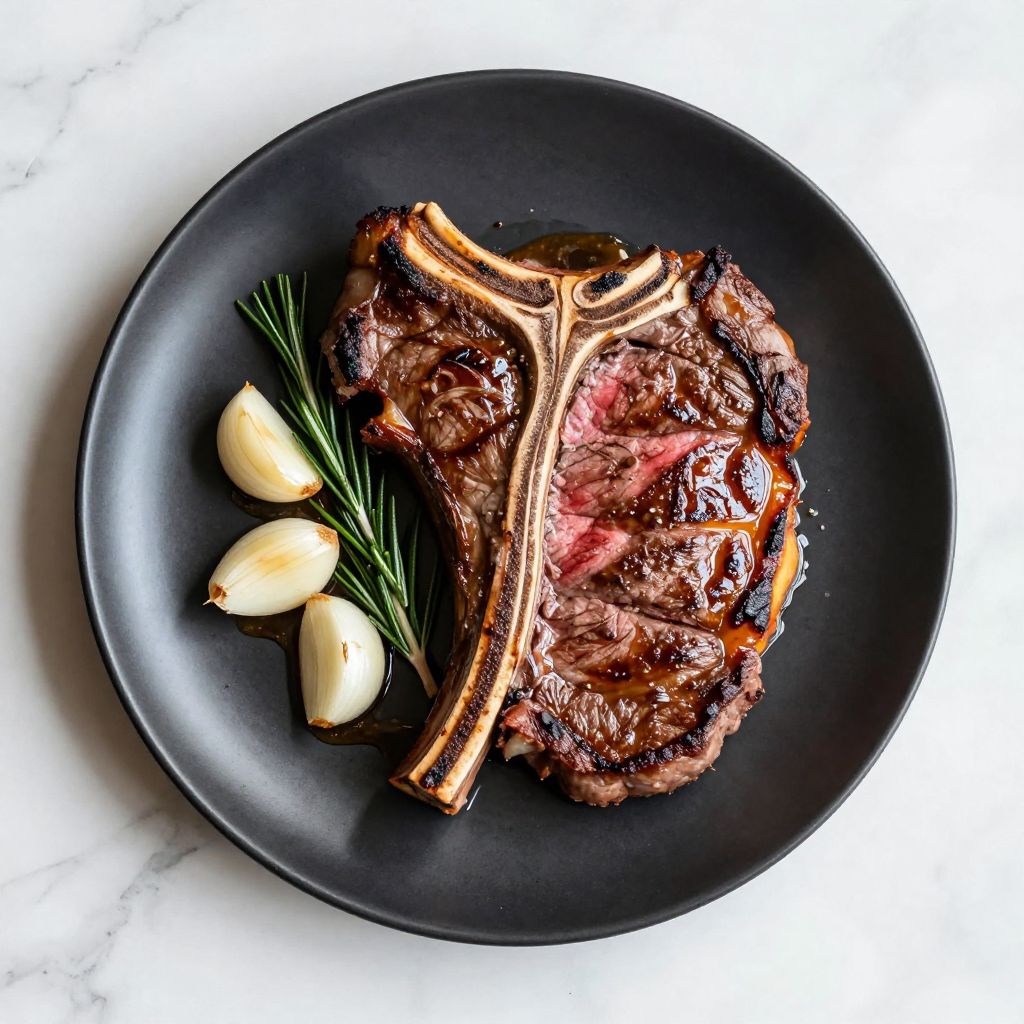
Perfect Pan-Seared T-Bone Steak
Ingredients
Equipment
Method
- Remove the steak from the refrigerator 30 minutes before cooking to come to room temperature for even doneness.
- Pat the steak completely dry with paper towels, then season all sides generously with kosher salt and freshly cracked black pepper just before cooking.
- Place a 12-inch cast iron skillet over high heat for about 3 minutes, until the surface is smoking hot (a drop of water should instantly sizzle and evaporate).
- Carefully lay the steak in the dry skillet and sear without moving for 3–4 minutes, forming a deep brown crust.
- Flip with tongs and sear the second side for another 3–4 minutes, adjusting heat only if the pan begins to smoke excessively.
- Add butter, smashed garlic, and rosemary to the skillet. Tilt the pan slightly and baste the steak continuously with the foaming butter for 2–3 minutes.
- Insert an instant-read thermometer into the thickest part of the filet side; remove the steak at 125–130 °F (52–54 °C) for medium-rare.
- Transfer the steak to a cutting board and let it rest for 5 minutes before slicing against the grain and serving.