Saag is a silky, vibrant Indian spinach curry that brings authentic restaurant flavor straight to your kitchen. This creamy, nutrient-packed dish combines fresh spinach with aromatic spices and a touch of cream, making it the perfect companion to rice, naan, or paneer.
Whether you are craving a comforting weeknight dinner or want to impress guests with something genuinely delicious, saag delivers on both fronts. Let me walk you through creating this beloved classic with techniques that will have everyone asking for your recipe.
Why You’ll Love This Recipe
Saag hits all the marks for a dish that feels indulgent yet nourishes your body with leafy greens. It comes together faster than you might expect, and the depth of flavor proves that simple ingredients handled well beat complicated shortcuts every single time.
- Naturally rich in iron and vitamins from fresh spinach and minimal processing.
- Aromatic spices like cumin and ginger build layers of warmth without heat overload.
- Creamy texture from yogurt and cream makes it genuinely craveable.
- Works perfectly alongside paneer, meat curries, rice, or naan.
- Leftovers taste even better the next day as flavors marry overnight.
My Experience Making This Recipe
The first time I made saag at home, I was amazed by how the frozen spinach broke down into this silky base without any gritty texture. I had expected complexity, but the magic really comes from patient cooking and allowing the spices to bloom properly in hot oil.
My family devoured it in silence, which is the highest compliment any cook can receive. I started batch cooking this recipe on Sundays because it freezes beautifully and becomes my secret weapon for quick, impressive dinners all week long.
The aroma alone converts skeptics into fans, and I have watched people who claim they do not like spinach ask for seconds. That conversion moment happens every single time, and it never gets old.
Recipe Overview
- Recipe Name: Saag
- Servings: 4
- Prep Time: 15 minutes
- Cook Time: 25 minutes
- Total Time: 40 minutes
- Course: Main Dish
- Cuisine: Indian
- Calories per Serving: 185
Equipment You Will Need
- Large heavy-bottomed pot or Dutch oven
- Cutting board and sharp knife
- Measuring spoons and cups
- Wooden spoon or silicone spatula
- Immersion blender or regular blender
- Fine mesh strainer
- Small bowl for tempering spices
Ingredients for Saag
For the Base
- 2 tablespoons ghee or neutral oil
- 1 large onion, finely diced
- 3 cloves garlic, minced
- 1 tablespoon fresh ginger, grated
- 1 green chili, finely chopped (optional, for heat)
- 1 teaspoon cumin seeds
- 1/2 teaspoon coriander seeds
- 1/4 teaspoon fenugreek seeds
For the Spinach
- 1 pound fresh spinach, roughly chopped, or 10 ounces frozen spinach, thawed
- 1/2 cup plain yogurt
- 1/4 cup heavy cream
- 1/2 teaspoon ground turmeric
- 1 teaspoon salt, adjusted to taste
- 1/2 teaspoon garam masala
- 1/4 teaspoon black pepper
- 1/2 cup water or vegetable broth
Ingredient Notes and Substitutions
- Ghee: Ghee adds a rich, nutty depth that regular butter cannot match. If unavailable, use clarified butter or a neutral oil like sunflower oil, though the dish will taste slightly lighter.
- Fresh Spinach: Fresh spinach delivers superior texture and flavor but frozen works beautifully and actually concentrates the spinach taste. Use frozen if fresh is not available, and you will lose nothing in translation.
- Yogurt: Plain yogurt provides tanginess and helps balance richness. Greek yogurt works but use slightly more water to thin it, or substitute with cashew cream for a dairy-free option.
- Heavy Cream: Cream creates the signature silky mouthfeel that makes saag crave-worthy. Coconut cream or cashew cream work as plant-based swaps with nearly identical results.
- Cumin Seeds: Cumin seeds add a warm, slightly nutty foundation that anchors all other spices. If you only have ground cumin, use half the amount and skip the tempering step, adding it directly to the onions instead.
How to Make Saag
Step 1: Heat the Ghee and Toast the Seeds
Pour ghee into a large pot over medium heat and wait until it shimmers, roughly 1 minute. Add cumin seeds, coriander seeds, and fenugreek seeds, stirring constantly for about 30 seconds until fragrant, which releases their essential oils and prevents bitterness.
Step 2: Cook the Aromatics
Add the diced onion and cook for 4 to 5 minutes, stirring occasionally, until the onion turns golden and soft. This sweetening process builds a flavorful foundation that balances the earthy spinach.
Step 3: Add Garlic, Ginger, and Chili
Stir in the minced garlic, grated ginger, and chopped green chili if using, cooking for another minute until the raw aroma fades. You should smell a warm, slightly spicy fragrance, which signals that the aromatics are properly infused into the oil.
Step 4: Bloom the Spice Powder
Add turmeric and stir constantly for about 20 seconds, coating everything in the bright yellow powder. This brief bloom prevents the turmeric from tasting raw and helps it distribute evenly throughout the curry.
Step 5: Add the Spinach
Pour in the chopped spinach and stir until it wilts, roughly 2 to 3 minutes if using fresh or 1 minute if using frozen that is already thawed. The spinach will shrink dramatically, leaving behind a concentrated, vibrant green base.
Step 6: Incorporate Water and Simmer
Add the water or vegetable broth and bring the mixture to a gentle simmer, then reduce heat to low and cook uncovered for 8 minutes. This simmering time allows the spinach to break down completely and meld with the spices, creating a cohesive sauce.
Step 7: Blend the Mixture
Remove the pot from heat and use an immersion blender to puree the contents until smooth and creamy, about 1 to 2 minutes. If using a regular blender, carefully transfer the hot mixture in batches, blend, and pour back into the pot.
Step 8: Finish with Cream and Yogurt
Stir in the yogurt and heavy cream until fully incorporated, then add garam masala, black pepper, and additional salt to taste. Simmer over low heat for 2 minutes without boiling, which would curdle the dairy, then taste and adjust seasoning one final time.
Pro Tip: Never boil saag after adding yogurt and cream, and always temper whole spices in hot fat before adding other ingredients to unlock their full aromatic potential.
Tips for the Best Saag
- Use an immersion blender rather than a traditional blender when possible, since it keeps the mixture warm and requires less cleanup. The smooth texture matters far more than tiny air bubbles, so blend until completely silky.
- Squeeze excess moisture from thawed frozen spinach using paper towels or a clean kitchen towel before adding to the pot. This prevents a watery, thin curry and concentrates the spinach flavor.
- Taste the saag multiple times during cooking and adjust salt gradually, since salt brings out both the earthy spinach notes and the warming spices. Add salt in small pinches rather than all at once.
- Cook the onions until they turn light golden, not just translucent, since this develops deeper flavor through caramelization. Rushing this step results in a raw, sharp onion taste that never fully cooks away.
- Keep cream and yogurt at room temperature before stirring them in, which minimizes the shock to the hot curry and reduces the chance of curdling. Let them sit on the counter for 10 minutes while you work on other components.
- Make saag a day ahead, refrigerate it, and reheat gently before serving, as the flavors marry and deepen overnight. Saag tastes noticeably better the next day, making it an ideal make-ahead curry.
Common Mistakes to Avoid
- Boiling after adding dairy: High heat causes yogurt and cream to curdle and separate, resulting in a broken, grainy sauce that looks unappetizing. Keep the heat low during the finishing steps.
- Skipping the seed tempering: Adding dry spices directly to onions prevents them from releasing their essential oils, leaving your saag tasting flat and one-dimensional. Always bloom whole spices in hot fat first.
- Undercooked onions: Raw or barely softened onions create sharp, harsh notes that never integrate into the sauce. Dedicate full attention to caramelizing onions until they turn golden.
- Over-blending: Blending too long incorporates excessive air, creating an oddly fluffy texture instead of the signature silky consistency. Blend just until smooth, roughly 1 to 2 minutes maximum.
- Using unsqueezed frozen spinach: Extra water dilutes the curry, making it taste watery and weak rather than concentrated and rich. Squeeze thawed spinach thoroughly before adding it to the pot.
Serving Suggestions
Saag shines alongside warm rice, naan, or roti, which soak up the creamy sauce beautifully. Pair it with a simple yogurt raita and fresh lime wedges to brighten each spoonful.
- Serve over basmati rice with a dollop of ghee stirred through the rice.
- Accompany with warm naan bread for scooping up every last bit of sauce.
- Pair with paneer tikka or tandoori chicken for added protein and smokiness.
- Top with a spoonful of plain yogurt and a sprinkle of toasted cumin seeds for texture contrast.
- Serve alongside cucumber raita and pickled onions to add brightness and acid to cut the richness.
Variations to Try
- Saag Paneer: Cube fresh paneer cheese and gently fold it in at the end, letting it warm through without melting into the sauce. The paneer adds protein and a delicate, creamy texture that transforms saag into a complete vegetarian meal.
- Spiced Saag with Tomato: Stir in 1/2 cup pureed tomato after the spinach simmers and before blending for subtle acidity and deeper color. Tomato cuts through the richness and adds a faint sweetness that balances earthy spinach.
- Saag with Mustard Greens: Replace half the spinach with mustard greens for a sharper, more complex flavor profile. Mustard greens add peppery notes and create a curry that feels more assertive and grown-up.
- Creamy Saag with Coconut: Use coconut cream instead of dairy cream and omit yogurt, adding an extra tablespoon of oil for richness. Coconut brings a tropical sweetness that complements the spices beautifully.
- Saag with Feta: Crumble tangy feta cheese over each serving instead of stirring it in, allowing diners to add their preferred amount. Feta adds salty complexity and bright dairy flavor without melting into the sauce.
Dietary Adaptations
- Gluten-Free: Saag is naturally gluten-free as written, making it ideal for anyone with celiac disease or gluten sensitivity. Serve alongside certified gluten-free rice or bread to keep the entire meal safe.
- Dairy-Free: Substitute yogurt with cashew cream and heavy cream with coconut milk or additional cashew cream, using the same quantities. The curry loses none of its richness, though the flavor shifts slightly toward coconut undertones.
- Vegan: Use olive oil instead of ghee and replace yogurt with cashew cream and heavy cream with coconut milk or plant-based heavy cream. Add paneer substitute or white beans for protein if desired.
- Low-Carb and Keto: Saag works perfectly for low-carb diets since spinach contains minimal carbs and cream adds satisfying fat. Serve it with cauliflower rice or alongside a protein like paneer instead of grain-based sides.
Storage and Reheating
Refrigerator
Store saag in an airtight container and keep it refrigerated for up to 4 days. The flavors intensify as it sits, making day-two servings noticeably better than day-one.
- Cool the curry to room temperature before sealing and refrigerating.
- Stir well before reheating, as the cream may separate slightly when cold.
Freezer
Saag freezes beautifully for up to 2 months, making it an excellent make-ahead option. Freeze in single-serving containers or ice cube trays for grab-and-go portions.
- Leave 1 inch of headspace at the top of containers for expansion.
- Thaw overnight in the refrigerator rather than at room temperature.
Reheating
Reheat saag gently over low heat on the stovetop, stirring frequently and adding a splash of water or cream if needed. Never use high heat after freezing, which can cause the cream to break.
- Microwave individual portions at 50 percent power in 2-minute increments, stirring between sessions.
- Taste and adjust salt after reheating, as some flavors mellow during storage.
Nutrition Information
| Nutrient | Amount |
|---|---|
| Calories | 185 |
| Total Fat | 14g |
| Saturated Fat | 8g |
| Carbohydrates | 9g |
| Fiber | 3g |
| Sugar | 2g |
| Protein | 7g |
| Sodium | 520mg |
| Cholesterol | 32mg |
These values are estimates based on standard ingredient quantities and may vary depending on specific brands and preparation methods. Nutritional data should not be used as a substitute for professional medical or dietary advice.
Frequently Asked Questions
Can I use only fresh spinach instead of frozen?
Absolutely, fresh spinach works beautifully and delivers slightly more delicate flavor. You will need about 1.5 pounds of fresh spinach since it shrinks dramatically when cooked, reducing to roughly the volume of frozen spinach.
How do I make saag ahead of time?
Make saag fully up to 2 days before serving, then refrigerate in an airtight container until ready to reheat. You can also freeze saag for up to 2 months and thaw overnight before reheating gently over low heat.
What happens if my saag tastes too bitter?
Bitterness usually comes from overcooked spices or burnt ghee, which cannot be fixed in an already-finished curry. Next time, toast seeds briefly until fragrant rather than dark, and add spice powders for just 20 seconds before other ingredients.
Can I make saag without cream?
Yes, saag tastes good without cream, though it becomes lighter and less indulgent. Increase yogurt to 3/4 cup for added creaminess, or use full-fat coconut milk as a substitute that adds richness without dairy.
How do I fix curdled saag?
If dairy curdles after cooking, strain the sauce through fine mesh to separate curds from liquid, then blend the curds back in with a splash of fresh cream or yogurt. Prevention works better than fixing, so always keep heat low during the dairy step.
Can I make saag spicier?
Absolutely, increase the green chili to 2 or 3 whole chilis, or add 1/4 teaspoon of cayenne pepper along with the turmeric. Add heat gradually and taste as you go, since spice builds quickly.
Final Thoughts
Saag feels like restaurant cooking but requires nothing more than basic kitchen skills and a willingness to let flavors develop at their own pace. Every time you make it, you will find small ways to adjust the spices and texture to match your exact preferences.
This curry delivers serious satisfaction on busy weeknights while impressing guests at dinner parties, making it one of the most valuable recipes to master. Make it this week and taste why saag has earned its place as an Indian kitchen staple.
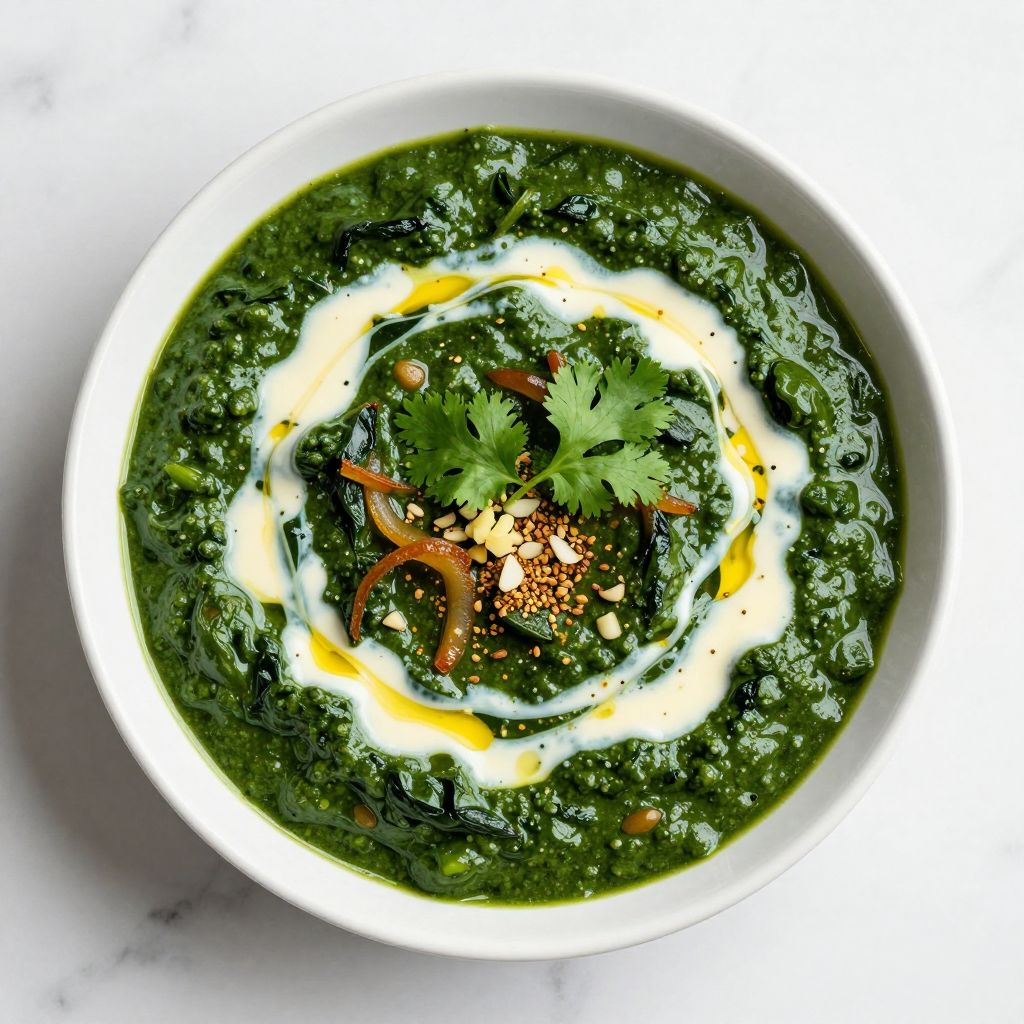
Saag
Ingredients
Equipment
Method
- Heat the ghee or oil in a large heavy-bottomed pot over medium heat until it shimmers, about 1 minute.
- Add cumin seeds, coriander seeds, and fenugreek seeds; stir constantly for 30 seconds until fragrant.
- Stir in the diced onion and cook for 4–5 minutes, stirring occasionally, until golden and soft.
- Add minced garlic, grated ginger, and chopped green chili; cook for 1 minute until the raw aroma fades.
- Sprinkle in ground turmeric and stir for 20 seconds to bloom the spice.
- Add the spinach and cook, stirring, until wilted—2–3 minutes for fresh spinach or about 1 minute for thawed frozen spinach.
- Pour in water or vegetable broth, bring to a gentle simmer, reduce heat to low, and cook uncovered for 8 minutes.
- Remove from heat and blend with an immersion blender until smooth and silky, 1–2 minutes.
- Return the pot to low heat, stir in yogurt and heavy cream, then add garam masala, black pepper, and additional salt to taste. Simmer gently for 2 minutes without boiling.
- Serve hot with rice or naan, garnished with a drizzle of cream if desired.