Frangipane is a luxurious almond-based cream that transforms pastries, tarts, and desserts into something genuinely special. This silky filling pairs almonds, butter, sugar, and eggs into a sophisticated element that bakes up with a tender crumb and rich flavor you simply cannot achieve with store-bought alternatives.
Whether you’re filling a classic French galette, topping a pear tart, or layering it into pastry shells, homemade frangipane delivers elegance without the fuss. Let me walk you through making this versatile cream that will have everyone asking for your secret.
Why You’ll Love This Recipe
Frangipane is one of those components that feels fancy but requires only basic pantry staples and minimal technique. Once you master it, you’ll find endless uses for this almond cream.
- Rich almond flavor that tastes restaurant-quality but comes together in minutes
- Works beautifully with fruit, chocolate, or pastry alone for countless applications
- Makes enough to fill one large tart, multiple tartlets, or galettes with room to spare
- Stays fresh in the fridge for up to five days, so you can prep ahead
- Naturally gluten-free and adaptable to most dietary restrictions with simple swaps
My Experience Making This Recipe
I first made frangipane for a dinner party where I wanted to impress without spending hours in the kitchen. The filling came together so quickly that I actually questioned whether I was doing it right, but the moment it emerged golden from the oven, I knew I had struck gold.
The texture that develops when frangipane bakes is what keeps me coming back: it’s neither cake nor custard, but something uniquely tender and almost custard-like with an assertive almond presence. My guests that night barely let the tart cool before cutting into it, which tells you everything you need to know about how people respond to this filling.
I’ve since made variations with different spirits, adjusted sweetness levels, and even experimented with hazelnut versions. Every iteration has worked beautifully, and the technique remains unchanged, which is why I love teaching this recipe to home bakers who want to expand their repertoire without stress.
Recipe Overview
- Recipe Name: Frangipane
- Servings: Makes about 1.5 cups (enough for one 9-inch tart or 2 to 3 tartlets)
- Prep Time: 10 minutes
- Cook Time: Not applicable (used as a filling in other recipes)
- Total Time: 10 minutes
- Course: Dessert component/filling
- Cuisine: French
- Calories per Serving: 120 calories per 2-tablespoon serving
Equipment You Will Need
- Stand mixer or hand mixer
- Measuring cups and spoons
- Mixing bowls
- Rubber spatula
- Food processor (optional, for grinding almonds)
- Whisk
- Tart pan or pastry dish for assembly
Ingredients for Frangipane
- Unsalted butter: 1/2 cup (115 grams), softened to room temperature
- Granulated sugar: 1/2 cup (100 grams)
- Ground almonds: 1 cup (100 grams), finely ground or almond flour
- Large eggs: 2 whole eggs
- All-purpose flour: 2 tablespoons
- Almond extract: 1/2 teaspoon
- Salt: 1/4 teaspoon
Ingredient Notes and Substitutions
- Unsalted butter provides clean flavor without competing with the almonds; use room-temperature butter for the smoothest incorporation. Salted butter works in a pinch, but reduce added salt slightly since butter already contains sodium.
- Ground almonds or almond flour create the signature texture and taste that defines frangipane. Finely ground blanched almonds work best, but natural almond flour with skin produces a nuttier, slightly coarser result.
- All-purpose flour adds just enough structure so the filling holds together when baked. You can substitute with cornstarch (use 1 tablespoon) or omit entirely if your almonds are very finely ground, though texture will be slightly softer.
- Almond extract intensifies the almond flavor without adding moisture. Vanilla extract works as a neutral substitute but loses that characteristic almond punch.
- Eggs act as a binder and add moisture, creating that signature creamy texture when baked. Room-temperature eggs mix more smoothly into the butter mixture.
How to Make Frangipane
Step 1: Cream the Butter and Sugar
Add softened butter and sugar to your mixing bowl and beat on medium speed for 2 to 3 minutes until the mixture becomes pale, fluffy, and light in color. This aeration step incorporates air into the butter, which helps the frangipane bake up tender and prevents a dense, heavy filling.
Step 2: Add the Eggs One at a Time
Crack the first egg into the butter mixture and beat on medium speed for about 1 minute until fully incorporated and the mixture looks smooth. Add the second egg and beat again for 1 minute, scraping down the bowl with a rubber spatula as needed to ensure everything combines evenly.
Step 3: Mix in the Almond Flour
Reduce the mixer speed to low and gradually add the ground almonds, mixing for about 1 to 2 minutes until no dry streaks of almond remain. Almond flour can clump if you dump it all at once, so a gradual addition ensures an even, smooth paste.
Step 4: Combine the Dry Ingredients
With the mixer still on low, add the all-purpose flour, almond extract, and salt and mix for about 30 to 45 seconds until just combined. Overmixing at this point won’t harm the frangipane, but it’s unnecessary once everything is incorporated.
Step 5: Taste and Adjust
Take a tiny spoonful on your finger and taste it (yes, raw eggs are a food safety risk here, so use pasteurized eggs if you’re concerned, though the frangipane will be baked when used). The filling should taste rich and distinctly almond-forward with a balance of sweetness that feels sophisticated but not cloying.
Step 6: Transfer to a Storage Container
Spoon the frangipane into a glass jar or airtight container if you’re not using it immediately. Smooth the top with a spatula and cover tightly to prevent the surface from drying out or absorbing odors from the fridge.
Step 7: Chill Before Use
Refrigerate the frangipane for at least 30 minutes, or up to 5 days, before spreading it into pastry shells or onto galette dough. Chilled frangipane spreads more easily and holds its shape better during baking.
Step 8: Use Your Frangipane
Spread or pipe the chilled frangipane into your prepared tart shells, onto pastry squares, or onto galette dough. Top with fruit if desired, or bake plain; frangipane typically bakes at 375 to 400 degrees Fahrenheit for 20 to 30 minutes depending on the vessel and overall recipe, until the filling is puffed and golden.
Pro Tip: Room-temperature ingredients, especially butter and eggs, incorporate far more smoothly than cold ones, resulting in a silkier, more uniform frangipane with no grainy texture.
Tips for the Best Frangipane
- Use finely ground almond flour rather than chunky almond meal for a smoother, more refined texture that bakes up tender and cake-like.
- Measure your ingredients by weight if possible, especially the almond flour, since it compacts differently depending on how it’s been stored or handled.
- Don’t skip the creaming step; those few minutes of beating butter and sugar together are what make frangipane light and fluffy rather than dense and heavy.
- Add a tablespoon of rum, Amaretto, or brandy to deepen the flavor and add subtle complexity without making the filling taste boozy.
- Spread frangipane slightly thinner at the edges of your tart shell so it bakes evenly; thicker centers can remain slightly underbaked while edges over-brown.
- Pair frangipane with fruits that bake well, like pears, apples, plums, or berries; avoid very watery fruits like fresh raspberries unless your recipe accounts for extra moisture.
Common Mistakes to Avoid
- Using cold butter straight from the fridge results in lumpy, poorly mixed frangipane that doesn’t incorporate eggs smoothly. Always soften butter to room temperature first.
- Overmixing after adding almond flour can break down the almonds further and create a paste-like consistency that’s overly dense. Stop mixing as soon as you see no dry streaks.
- Substituting roasted or blanched almonds with raw almonds changes the flavor profile and can introduce moisture that throws off the ratio. Stick with blanched ground almonds or quality almond flour.
- Baking frangipane at too low a temperature results in a soggy, underbaked filling that never sets properly. Most tarts and galettes require 375 to 400 degrees Fahrenheit.
- Skipping the chilling step before use causes the frangipane to spread unevenly and can result in some areas baking faster than others, creating an uneven crumb.
Serving Suggestions
Frangipane is never served on its own but rather as the backbone of pastries, tarts, and galettes. Here are some classic and creative ways to showcase this elegant filling.
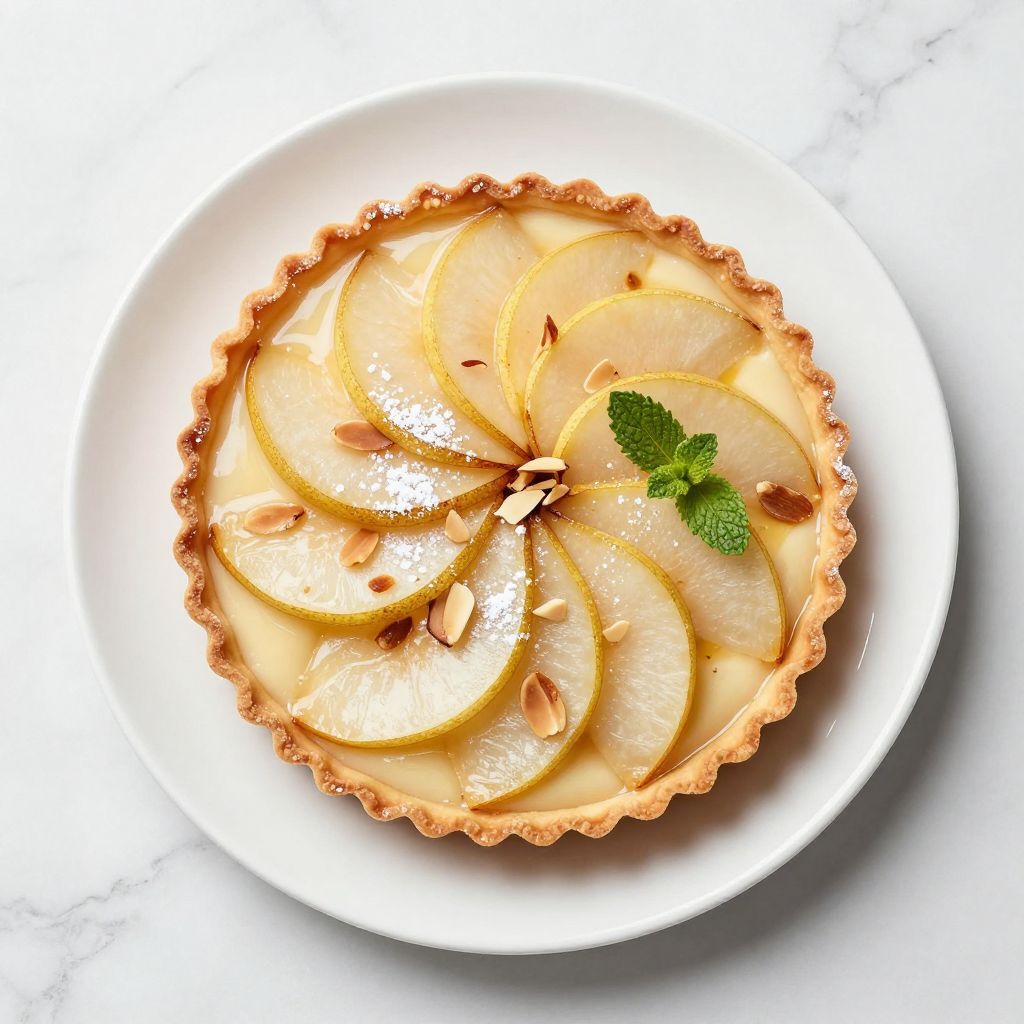
- Classic Pear and Almond Tart: Spread frangipane in a blind-baked tart shell, arrange thin pear slices on top in a spiral, and bake until golden.
- Galette des Rois: Layer frangipane on circles of puff pastry, fold, egg wash, and bake for a showstopping French pastry that impresses any crowd.
- Rustic Apple Galette: Spread frangipane on pastry dough, top with apple slices, fold edges, and bake for a casual yet refined dessert.
- Almond Tarts with Berries: Fill tartlet shells with frangipane, top with raspberries or blackberries before baking, and finish with a dusting of powdered sugar.
- Chocolate and Almond Combination: Layer frangipane over a thin chocolate ganache in a tart shell, top with fruit, and bake for a sophisticated chocolate-almond pairing.
Variations to Try
- Hazelnut Frangipane: Substitute hazelnut flour for almond flour and use hazelnut extract instead of almond extract for a deeper, earthier flavor that pairs beautifully with chocolate.
- Pistachio Frangipane: Use finely ground pistachios in place of almonds and add a tiny pinch of cardamom for an exotic twist that works wonderfully with white chocolate or berries.
- Spiced Frangipane: Add 1/4 teaspoon ground cinnamon and a pinch of nutmeg to the basic recipe for warmth and depth that complements apple, pear, and stone fruits.
- Liqueur-Infused Frangipane: Replace the almond extract with 1 tablespoon of Amaretto, Frangelico, or rum to add subtle boozy complexity without changing the structure.
- Brown Butter Frangipane: Brown your butter before creaming to introduce nutty, toasted notes that intensify the almond flavor and add sophistication to any application.
Dietary Adaptations
- Gluten-free: Replace all-purpose flour with cornstarch or a gluten-free flour blend (use cornstarch for the best texture); the filling remains naturally almost gluten-free since almonds dominate.
- Dairy-free: Substitute unsalted butter with coconut oil or dairy-free butter in a 1:1 ratio; the texture will be slightly less creamy but still delicious and bake up well.
- Vegan: Replace each egg with 3 tablespoons of aquafaba (chickpea liquid) and use vegan butter; the texture becomes slightly less custardy but remains tender and flavorful.
- Low-carb or keto: Use allulose or erythritol in place of sugar (reduce quantity by 20 percent since these sweeteners are more concentrated); the filling bakes beautifully with no significant texture change.
Storage and Reheating
Refrigerator
Store frangipane in an airtight container or covered bowl in the coldest part of your refrigerator. It keeps well for up to 5 days.
- Before use, let it sit at room temperature for 15 to 20 minutes to soften slightly and become spreadable.
- Check for any separation or discoloration, which rarely happens but signals the filling should be discarded.
Freezer
Frangipane freezes beautifully for up to 3 months in an airtight container or freezer bag. Transfer to the refrigerator to thaw overnight before use.
- Frozen frangipane thaws to the exact same texture as fresh, with no loss of quality.
- You can also freeze it already spread in a tart shell; thaw before baking, or bake directly from frozen, adding 5 to 10 minutes to the baking time.
Reheating
Frangipane itself doesn’t require reheating, but pastries filled with it can be warmed gently. Wrap in foil and warm at 300 degrees Fahrenheit for 10 to 15 minutes to refresh the pastry without drying it out.
- Room-temperature frangipane-filled pastries taste wonderful and require no reheating at all.
- Avoid microwaving pastries with frangipane, as it can make the filling tough and the pastry rubbery.
Nutrition Information
| Nutrient | Amount |
|---|---|
| Calories | 120 |
| Total Fat | 9 grams |
| Saturated Fat | 4 grams |
| Carbohydrates | 8 grams |
| Fiber | 1.5 grams |
| Sugar | 6 grams |
| Protein | 4 grams |
| Sodium | 65 milligrams |
| Cholesterol | 35 milligrams |
Nutrition values are approximate and based on a 2-tablespoon serving size. Actual values vary depending on specific ingredient brands and preparation methods. Frangipane is typically used in small amounts within larger pastry applications, so per-serving nutrition of the finished dessert will differ.
Frequently Asked Questions
Can I make frangipane without eggs?
Yes, replace each egg with 3 tablespoons of aquafaba (the liquid from canned chickpeas) for a vegan version that bakes just as well. The texture becomes slightly less custardy but remains tender and delicious.
How far in advance can I make frangipane?
Frangipane keeps in the refrigerator for up to 5 days and freezes beautifully for 3 months. You can prepare it several days before assembling your tart, which makes it an ideal make-ahead component for entertaining.
What’s the difference between frangipane and almond paste?
Almond paste is made from ground almonds and sugar ground into a thick, dense paste, while frangipane is a lighter cream made with butter, sugar, eggs, and ground almonds. Frangipane bakes up tender and custardy, while almond paste remains dense and chewy.
Why does my frangipane look grainy or separated?
This happens when butter is too cold or when you overmix after adding almonds. Use room-temperature butter and stop mixing as soon as the almond flour is incorporated with no dry streaks visible.
Can I substitute almond flour with blanched almonds I grind myself?
Absolutely; blanched raw almonds ground in a food processor work perfectly and sometimes produce an even finer texture than commercial almond flour. Process until very fine and powdery, scraping down the bowl as needed.
How do I know when frangipane has baked enough in my tart?
Frangipane should be puffed, golden brown on top, and set around the edges while still retaining a very slight jiggle in the center. This usually takes 20 to 30 minutes at 375 to 400 degrees Fahrenheit depending on tart size.
Final Thoughts
Frangipane is your ticket to creating restaurant-quality pastries and tarts that taste far more complicated than they actually are. Once you master this single, elegant recipe, you’ll reach for it countless times, from simple galettes to sophisticated fruit tarts.
The beauty of frangipane lies in its versatility and how little technique it demands while delivering results that impress every single time. Make a batch this week and experience for yourself why this French classic has remained a baker’s secret weapon for generations.
Frangipane
Ingredients
Equipment
Method
- In a mixing bowl, cream the softened butter and granulated sugar on medium speed for 2–3 minutes until pale and fluffy.
- Add the eggs one at a time, beating for about 1 minute after each addition and scraping down the bowl as needed.
- Reduce mixer speed to low and gradually add the ground almonds, mixing for 1–2 minutes until fully incorporated.
- Mix in the all-purpose flour, almond extract, and salt on low speed for 30–45 seconds, just until combined.
- Transfer the frangipane to an airtight container, smooth the top, and refrigerate for at least 30 minutes before using, or store up to 5 days.