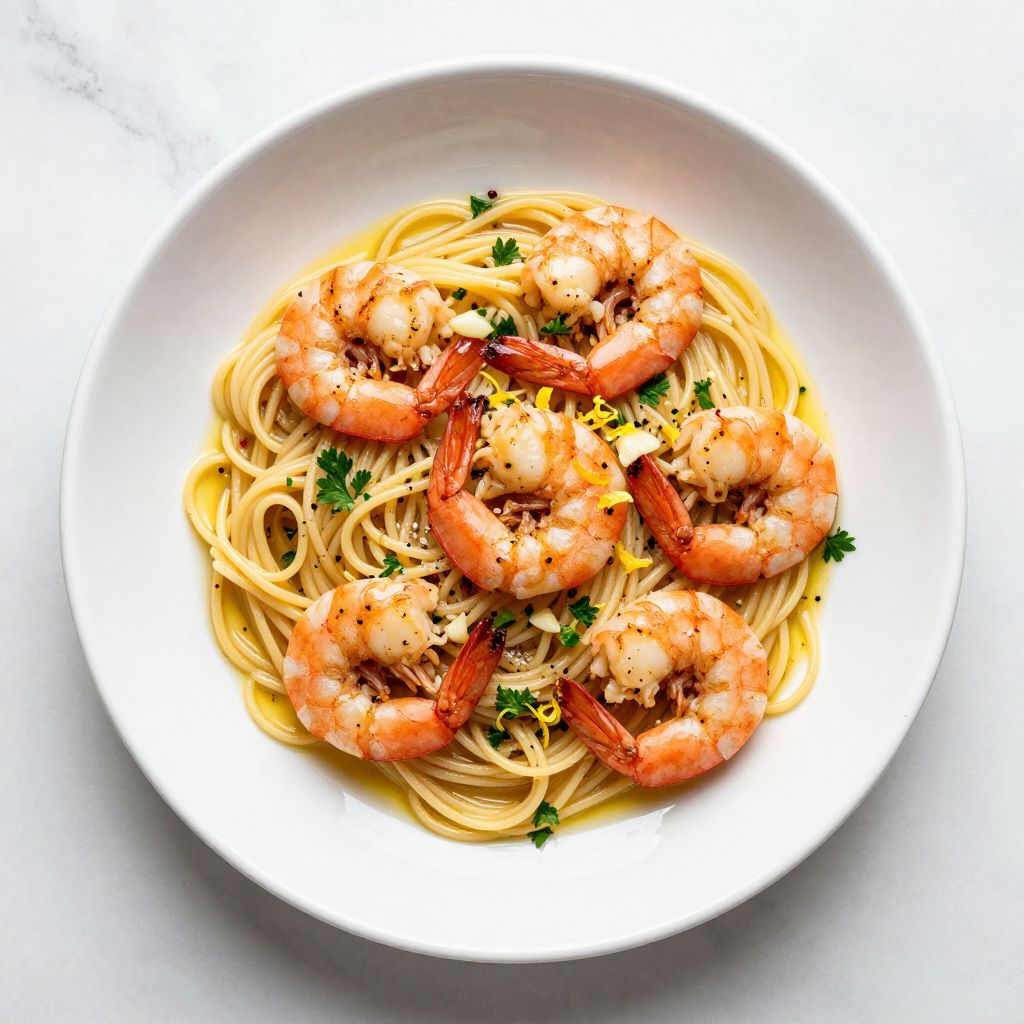
Shrimp scampi recipe without wine delivers all the garlicky, buttery goodness of the classic Italian dish without a drop of alcohol. This simple yet impressive pasta pairs tender shrimp with a silky sauce that coats every strand perfectly.
You’ll have dinner on the table in under 30 minutes, making it ideal for weeknight cooking or impressing guests. Let me show you how to nail this restaurant-quality dish at home.
Why You’ll Love This Recipe
This recipe strips away the wine but keeps all the flavor you crave from a traditional scampi.
- Ready in 25 minutes from start to finish
- Uses simple pantry staples: shrimp, garlic, butter, lemon, and pasta
- No wine means no fussing with alcohol or worrying about having a bottle on hand
- Naturally gluten-free when made with gluten-free pasta
- Tastes like you spent hours in the kitchen when it took mere minutes
My Experience Making This Recipe
The first time I made shrimp scampi without wine, I was skeptical that omitting the wine would leave the sauce flat. I quickly realized that fresh lemon juice, good quality butter, and plenty of garlic create more than enough complexity and brightness.
My family devoured it so fast I barely had time to twirl my own fork. The shrimp stayed tender because I kept the heat moderate and didn’t overcook them, and the butter-garlic base clung to the pasta like it was made for each other.
Now this is my go-to when I want something elegant but don’t want to spend an hour cooking. Everyone asks for the recipe, and I love telling them how ridiculously easy it is.
Recipe Overview
- Recipe Name: Shrimp Scampi Without Wine
- Servings: 4
- Prep Time: 10 minutes
- Cook Time: 15 minutes
- Total Time: 25 minutes
- Course: Main Dish
- Cuisine: Italian
- Calories per Serving: 420
Equipment You Will Need
- Large pot for boiling pasta
- Colander for draining pasta
- Large skillet or saucepan
- Wooden spoon for stirring
- Microplane zester or box grater for lemon zest
- Citrus juicer or hand juicer
- Measuring spoons and cups
- Sharp knife for mincing garlic
Ingredients for Shrimp Scampi Without Wine
- 1 pound large shrimp, peeled and deveined
- 12 ounces linguine or spaghetti
- 6 tablespoons butter, divided
- 8 cloves garlic, minced
- 1/4 teaspoon red pepper flakes
- 1/2 cup chicken or vegetable broth
- Juice of 2 lemons (about 1/4 cup)
- Zest of 1 lemon
- 1/4 cup fresh parsley, chopped
- Salt and black pepper to taste
- 1/2 teaspoon garlic powder
- 2 tablespoons olive oil
Ingredient Notes and Substitutions
- Large shrimp: These cook evenly and stay tender when you watch them carefully. You can use medium shrimp but reduce cooking time by a minute or two to prevent overcooking.
- Linguine or spaghetti: These flat or thin noodles hold the sauce beautifully. Swap for fettuccine or angel hair pasta if you prefer.
- Butter: Real butter creates the rich, silky sauce that defines scampi. Olive oil alone will work but won’t have the same luxurious mouthfeel.
- Garlic: Fresh minced garlic is non-negotiable for scampi’s signature flavor. Jarred minced garlic loses its punch quickly, so avoid it here.
- Lemon juice: Fresh squeezed lemon juice brightens the entire dish. Bottled juice tastes flat and plastic in comparison.
- Chicken broth: This adds body to the sauce without wine. Vegetable broth works equally well for a lighter option.
How to Make Shrimp Scampi Without Wine
Step 1: Start the Pasta Water
Fill your large pot with about 4 quarts of water and bring it to a boil. Salt the water generously so it tastes like the sea, because this is where your pasta absorbs its base flavor.
Step 2: Prepare the Shrimp
Pat your shrimp dry with paper towels and set them on a plate. Dry shrimp will brown better in the pan instead of steaming, giving you a better texture and flavor.
Step 3: Cook the Pasta
Once water reaches a rolling boil, add your pasta and cook according to package directions, usually 9 to 12 minutes. Reserve one cup of pasta water before draining, then set the drained pasta aside in a large bowl.
Step 4: Build the Garlic Base
Heat 2 tablespoons of butter and the olive oil in your large skillet over medium heat. Add the minced garlic and red pepper flakes, stirring constantly for about 1 minute until the kitchen smells incredible.
Step 5: Cook the Shrimp
Add the shrimp to the pan and cook for 2 minutes without moving them, letting them develop a light golden color on one side. Flip the shrimp and cook for another 1 to 2 minutes until the other side turns pink and the shrimp feel firm when poked.
Step 6: Create the Sauce
Pour in the chicken broth and lemon juice, then add the remaining 4 tablespoons of butter in chunks. Let the butter melt slowly while stirring gently, creating a silky, cohesive sauce.
Step 7: Combine Everything
Add your cooked pasta to the skillet with the shrimp and sauce, then toss gently to coat every noodle. If the sauce looks too thick, add a splash of reserved pasta water until you reach a consistency that clings to the pasta without pooling.
Step 8: Finish and Season
Remove the pan from heat and stir in the fresh parsley, lemon zest, garlic powder, and a pinch of salt and black pepper. Taste and adjust seasoning as needed, remembering that the dish should taste bright and buttery with a gentle kick of heat.
Pro Tip: Don’t overcook the shrimp or they’ll turn rubbery and chewy, so remove them from heat the moment they turn pink all the way through.
Tips for the Best Shrimp Scampi Without Wine
- Use fresh shrimp if possible, or make sure frozen shrimp are fully thawed and patted dry before cooking. Wet shrimp won’t brown properly.
- Mince your garlic by hand instead of using a food processor, which creates a paste that can burn more easily in the pan.
- Keep the heat at medium rather than high so the butter and garlic cook gently without browning too fast.
- Squeeze your lemon juice fresh just before cooking, as bottled juice oxidizes and tastes acidic rather than bright and fresh.
- Don’t skip the pasta water because its starch helps emulsify the sauce and creates a creamy finish without cream.
- Serve immediately while the dish is hot and the shrimp are at their most tender.
Common Mistakes to Avoid
- Overcooking the shrimp turns them into rubber bullets that nobody wants to eat. Pull them off the heat the moment they’re opaque all the way through.
- Using pre-minced garlic from a jar creates a musty flavor and misses the aromatic punch fresh garlic provides.
- Cooking on high heat burns the garlic and creates bitter, acrid flavors that ruin the entire dish.
- Skipping the lemon juice leaves the sauce flat and one-dimensional, losing the brightness that scampi is famous for.
- Using bottled lemon juice instead of fresh lemon juice adds an artificial tang that doesn’t balance the richness of the butter.
Serving Suggestions
This dish shines on its own, but a few simple additions take it from dinner to restaurant-quality meal. Serve with crusty bread to soak up every drop of sauce, or alongside a crisp green salad for balance.
- Crusty garlic bread for soaking up the buttery sauce
- Simple arugula salad with olive oil and lemon dressing
- Steamed or roasted asparagus spears on the side
- Crispy garlic bread rubbed with fresh garlic and parsley
- A glass of crisp white wine like Pinot Grigio or Sauvignon Blanc
Variations to Try
- Shrimp Scampi with Spinach: Stir in 2 cups of fresh spinach just before serving, letting it wilt into the hot sauce for added color and nutrients.
- Spicy Shrimp Scampi: Double the red pepper flakes and add a pinch of cayenne pepper for heat that builds as you eat.
- Creamy Shrimp Scampi: Stir in 1/4 cup of heavy cream or mascarpone after cooking the shrimp for a richer, silkier sauce.
- Shrimp Scampi with Tomatoes: Add 1 cup of diced cherry tomatoes when you pour in the broth, letting them burst and add sweetness to balance the acidity.
- White Wine Shrimp Scampi: If you want to go traditional, swap half the broth for a crisp white wine, adding depth and complexity to the sauce.
Dietary Adaptations
- Gluten-free: Use gluten-free pasta made from rice, corn, or chickpea flour, which holds the sauce just as well as regular pasta.
- Dairy-free: Replace butter with olive oil or coconut oil, though the sauce will be lighter and less silky than the traditional version.
- Vegan: Swap shrimp for hearts of palm or diced firm tofu, use vegan butter, and skip the lemon zest topping for a plant-based version.
- Low-carb or keto: Replace pasta with zucchini noodles, cauliflower rice, or spaghetti squash to keep carbs minimal while maintaining the buttery sauce.
Storage and Reheating
Refrigerator
Store leftovers in an airtight container for up to 2 days. The pasta will absorb the sauce, so it gets denser as it sits.
- Let the dish cool completely before sealing to avoid condensation
- Keep the container on a shelf rather than the door where temperature fluctuates
Freezer
This dish doesn’t freeze well because the shrimp becomes tough when thawed. It’s best enjoyed fresh or refrigerated within 2 days.
- If you must freeze, do so in an airtight container for up to 1 month
- Thaw overnight in the refrigerator before reheating
Reheating
Reheat gently on the stovetop to bring everything back to the right texture. Add a splash of broth or pasta water to loosen the sauce.
- Heat over medium-low for 3 to 5 minutes, stirring occasionally
- Avoid the microwave, which can make the shrimp rubbery and the pasta mushy
Nutrition Information
| Nutrient | Amount |
|---|---|
| Calories | 420 |
| Total Fat | 18g |
| Saturated Fat | 9g |
| Carbohydrates | 42g |
| Fiber | 2g |
| Sugar | 1g |
| Protein | 22g |
| Sodium | 580mg |
| Cholesterol | 185mg |
These values are estimates based on standard ingredient measurements and serving sizes. Individual nutrition will vary depending on specific brands and portion control.
Frequently Asked Questions
Can I make this recipe ahead of time?
You can prep all your ingredients 4 hours ahead and store them in the refrigerator. Cook the shrimp and pasta just before serving to keep everything at its best texture and flavor.
What size shrimp should I buy?
Large shrimp (16 to 20 per pound) cook evenly and stay tender. Jumbo shrimp work too but may need an extra minute of cooking time.
Can I use frozen shrimp?
Frozen shrimp work great as long as you thaw them completely and pat them dry before cooking. Wet shrimp won’t brown properly in the pan.
What can I use instead of lemon juice?
Fresh lime juice creates a different but equally delicious flavor profile. White vinegar works in a pinch but tastes sharper and more acidic than lemon.
How do I know when the shrimp are done cooking?
Shrimp turn from translucent gray to opaque pink when cooked through, and they’ll curl slightly in an S-shape. Overcooked shrimp are white and firm to the point of toughness.
Can I add vegetables to this dish?
Spinach, cherry tomatoes, mushrooms, and zucchini all work beautifully. Add them with the garlic to allow them to soften before you add the shrimp.
Final Thoughts
Shrimp scampi without wine proves that you don’t need alcohol to create a stunning, restaurant-worthy pasta. The combination of fresh lemon, good butter, and quality shrimp carries all the flavor you could want.
Make this tonight and see why it’s become a permanent fixture in my kitchen rotation. You’ll have an impressive dinner on the table in under 30 minutes, and everyone will think you spent hours cooking.
Shrimp Scampi Without Wine
Ingredients
Equipment
Method
- Bring a large pot of salted water (about 4 quarts) to a boil over high heat.
- Pat the shrimp dry with paper towels and season lightly with salt and black pepper; set aside.
- Add the pasta to the boiling water and cook until al dente according to package directions, 9–12 minutes. Reserve 1 cup of pasta water, then drain.
- Meanwhile, melt 2 tablespoons of the butter with the olive oil in a large skillet over medium heat.
- Add the minced garlic and red pepper flakes; sauté for 1 minute until fragrant, stirring constantly.
- Add the shrimp in a single layer and cook for 2 minutes without moving. Flip and cook for another 1–2 minutes until the shrimp are opaque and pink.
- Stir in the broth and lemon juice, bring to a gentle simmer for 1 minute, then add the remaining 4 tablespoons butter, stirring until melted and the sauce is emulsified.
- Add the drained pasta to the skillet and toss to coat, adding reserved pasta water a splash at a time until the sauce clings to the noodles.
- Remove from heat; stir in lemon zest, parsley, and garlic powder. Taste and adjust with salt and black pepper as needed.
- Serve immediately while hot, garnished with additional parsley if desired.