Pozole verde is a vibrant Mexican stew that combines hominy, pork, and a bright green sauce made from tomatillos, peppers, and cilantro. This comforting dish delivers authentic flavor with relatively simple ingredients and straightforward cooking techniques.
If you’ve never made pozole at home, you’re missing out on one of Mexico’s most beloved comfort foods. The combination of tender pork, tender hominy, and that zingy tomatillo sauce creates something truly special that tastes nothing like what you’d expect from reading the ingredient list.
Why You’ll Love This Recipe
This recipe delivers restaurant-quality results in your own kitchen without requiring specialized skills or hard-to-find ingredients.
- Feeds a crowd with minimal effort and cost per serving
- Naturally gluten-free and loaded with protein from the pork
- Comes together in under two hours of mostly hands-off cooking time
- Customizable with toppings so each person builds their perfect bowl
- Tastes even better the next day as flavors continue to develop
My Experience Making This Recipe
I first made pozole verde during a cold winter evening when I craved something warm and deeply satisfying. The aroma alone while the broth simmered had my whole family hovering in the kitchen asking when dinner would be ready.
What surprised me most was how the bright tomatillo sauce transformed the simple pork broth into something complex and layered. The first time I served it with all the traditional toppings, my guests piled their bowls high and went back for seconds without hesitation.
Now I make this recipe regularly, and I’ve learned that the key to success is giving the pork enough time to become completely tender. There’s something deeply satisfying about serving a bowl of pozole verde that tastes authentic and makes people feel cared for.
Recipe Overview
- Recipe Name: Pozole Verde
- Servings: 6 to 8
- Prep Time: 20 minutes
- Cook Time: 90 minutes
- Total Time: 110 minutes
- Course: Main Dish
- Cuisine: Mexican
- Calories per Serving: 320
Equipment You Will Need
- Large heavy-bottomed pot or Dutch oven
- Blender or food processor
- Wooden spoon for stirring
- Sharp chef’s knife and cutting board
- Measuring cups and spoons
- Slotted spoon
- Ladle for serving
- Tasting spoon
Ingredients for Pozole Verde
For the Pozole
- 2 pounds pork shoulder, cut into 1-inch cubes
- 1 large onion, halved
- 6 garlic cloves, peeled and left whole
- 2 teaspoons sea salt, plus more for adjustment
- 1 teaspoon black pepper
- 8 cups chicken broth
- 2 cans hominy (29 ounces each), drained and rinsed
- 2 dried guajillo peppers
- 2 dried ancho peppers
- 1 pound fresh tomatillos, husked and rinsed
- 4 fresh serrano peppers, roughly chopped
- 1 fresh jalapeño, roughly chopped
- 1 bunch fresh cilantro (about 1 cup packed)
- 3 garlic cloves, roughly chopped for the sauce
- 1 teaspoon ground cumin
- Salt and pepper to taste
For Serving
- Shredded cabbage
- Sliced radishes
- Lime wedges
- Tostadas or tortilla chips
- Diced onion
- Fresh cilantro
- Jalapeño slices
- Avocado slices
- Mexican oregano
Ingredient Notes and Substitutions
- Pork shoulder: This cut contains enough fat to stay moist and flavorful during long cooking. You can substitute beef chuck or chicken thighs, though cook times will differ.
- Hominy: These large kernels of treated corn give pozole its signature texture and substance. Canned hominy saves time; dried requires soaking overnight and longer cooking.
- Dried peppers: Guajillo and ancho peppers contribute depth and mild heat without overwhelming spice. You can use a mix of dried New Mexico peppers or increase the proportion of either type based on your heat preference.
- Fresh tomatillos: These green fruits provide the bright, tangy base for the sauce. If unavailable, substitute canned tomatillos in their own juices, using about 1.5 pounds worth.
- Fresh cilantro: This herb defines the fresh, herbal character of green pozole. Parsley offers a milder substitute but changes the authentic flavor profile noticeably.
How to Make Pozole Verde
Step 1: Prepare and Cook the Pork
Cut your pork shoulder into 1-inch cubes, removing any excessive fat but leaving some marbling for flavor. Place the cubed pork into your large pot and cover with the chicken broth, then add the halved onion, whole garlic cloves, salt, and black pepper.
Bring the mixture to a boil over high heat, then immediately reduce to a low simmer. The low heat prevents the meat from toughening and allows it to become tender over 60 to 70 minutes of gentle cooking.
Step 2: Remove Stems and Seeds from Dried Peppers
While the pork cooks, prepare your dried peppers by breaking them in half and brushing out the seeds and white membrane. These seeds carry heat and bitterness, so removing them gives you control over the final spice level.
Work carefully over a bowl or trash can to contain the small seeds. You can leave a few seeds if you prefer more heat, but most people find the milder version more versatile for a crowd.
Step 3: Toast the Dried Peppers
Place your cleaned dried peppers in a dry skillet over medium heat for 30 to 45 seconds per side, pressing them gently against the hot surface. This toasting step releases their oils and deepens their flavor significantly, transforming them from flat and papery to rich and complex.
Watch carefully to avoid scorching, which creates a burnt taste. You’ll smell a pleasant roasted aroma when they’re ready.
Step 4: Soak the Dried Peppers
Transfer your toasted peppers to a bowl and pour 1.5 cups of hot water over them. Let them soak for 10 to 15 minutes until they soften completely and become pliable.
This soaking rehydrates them and allows them to break down smoothly when blended. The soaking liquid becomes part of your sauce, so don’t discard it.
Step 5: Roast the Tomatillos and Fresh Peppers
Place your fresh tomatillos and fresh peppers on a baking sheet and broil them 4 to 5 inches from the heat for 8 to 10 minutes, stirring halfway through. You want them blistered and softened with some charring on the surface.
This roasting caramelizes their natural sugars and adds a subtle smokiness that balances the acidity of the tomatillos. Cool them slightly before blending.
Step 6: Blend the Sauce
Pour the soaked dried peppers and their soaking liquid into your blender, then add the roasted tomatillos, fresh peppers, cilantro, and chopped garlic. Blend on high speed until completely smooth, about 1 to 2 minutes.
A completely smooth sauce ensures even flavor distribution and a silky texture. If your blender struggles, work in two batches rather than forcing it.
Step 7: Strain the Sauce
Pour your blended sauce through a fine-mesh strainer into a bowl, pressing it through with the back of a spoon. This step removes any tough pepper skin or fibrous bits that didn’t break down completely, creating a refined texture.
This takes a few minutes but makes a noticeable difference in the final result. Discard whatever remains in the strainer.
Step 8: Combine Everything
By now your pork should be fall-apart tender after simmering for about 60 to 70 minutes. Remove it from the broth using a slotted spoon, then strain the cooking broth through a fine-mesh strainer to remove the onion and garlic solids and discard them.
Return the strained broth and tender pork to the pot, then add your blended and strained green sauce and the drained hominy. Stir in the cumin and taste the broth, adjusting salt and pepper as needed.
Step 9: Simmer to Meld Flavors
Bring the pozole to a gentle simmer and cook for 10 to 15 minutes to allow the bright green sauce to blend into the broth and flavors to meld. This final simmering step ensures the sauce coats the hominy and pork evenly and tastes cohesive rather than like separate components.
Keep the heat low to avoid boiling, which can break down the hominy kernels and make them mushy.
Pro Tip: Make the green sauce up to two days ahead and store it in the refrigerator, then simply reheat and add it to the simmering broth when ready to serve. This allows you to spread out your work and have fresh pozole ready in minutes.
Tips for the Best Pozole Verde
- Don’t skip toasting the dried peppers, as this single step transforms their flavor from bland to deeply complex. It takes less than a minute and makes an enormous difference.
- Taste and adjust your salt throughout cooking, adding it in small pinches rather than all at once. You can always add more, but you can’t remove it.
- Serve pozole in large, shallow bowls so there’s plenty of room for toppings. Half the joy comes from customizing each bowl to your preference.
- Keep the hominy slightly firm rather than cooking it until it falls apart. It should hold its shape but be tender enough to break easily with a spoon.
- If your sauce seems too thick, thin it with chicken broth rather than water, which preserves the flavor. If it seems too thin, simmer it uncovered for a few minutes to reduce.
- Prepare all your toppings before serving so guests can build their bowls quickly while the pozole stays hot. This also makes cleanup easier.
Common Mistakes to Avoid
- Skipping the straining step for the green sauce results in a grainy texture that feels unpolished. Taking those two minutes transforms your pozole from homestyle to restaurant-quality.
- Cooking the pork at a rolling boil toughens it instead of tenderizing it, making it chewy and unpleasant. Low, gentle heat is non-negotiable for tender, flavorful pork.
- Not removing the pepper seeds before soaking creates excessive heat and bitterness that overwhelms the dish. Most home cooks prefer the milder result from cleaned peppers.
- Adding hominy too early allows it to break down and cloud the broth. Always add it near the end of cooking, just before the final simmer.
- Forgetting to rinse canned hominy leaves a starchy, unpleasant aftertaste. This quick step makes a noticeable improvement in the final taste.
Serving Suggestions
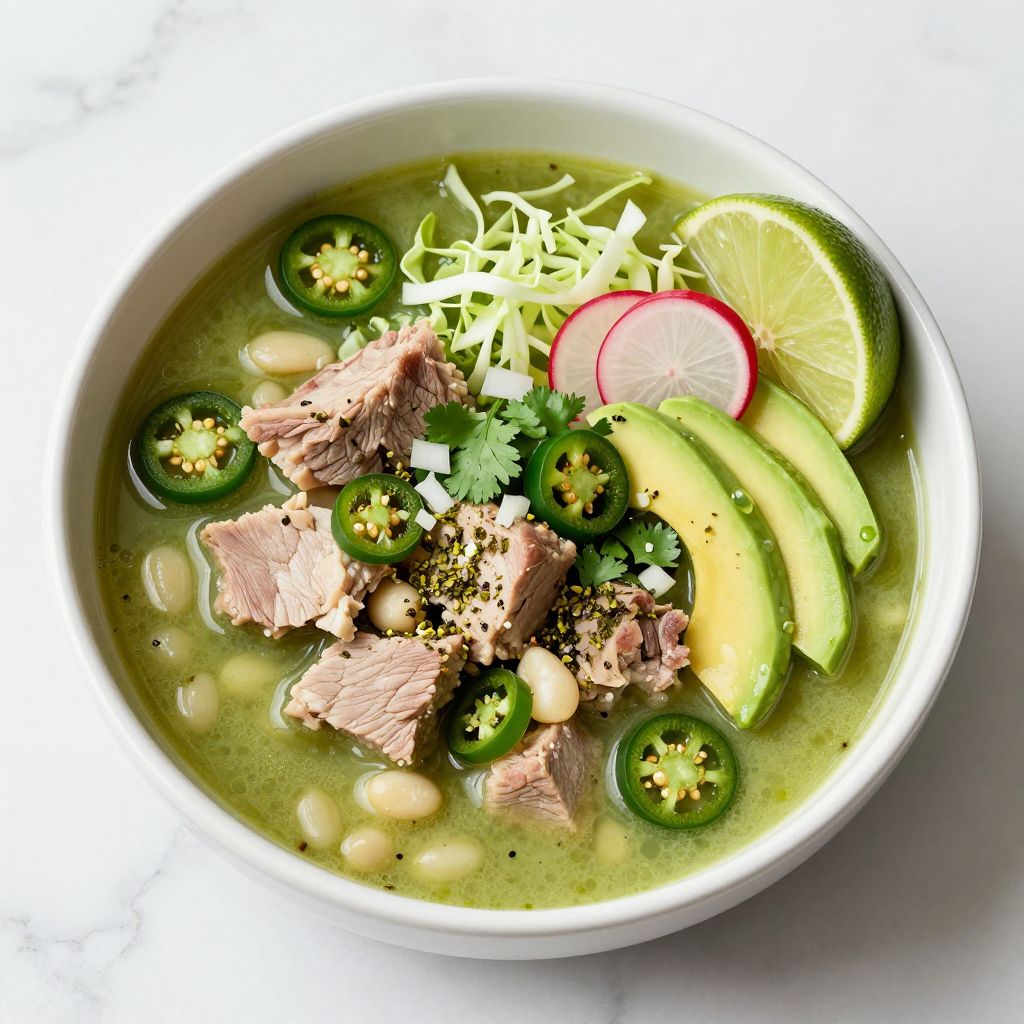
Pozole verde shines as the main event, so serve it in large bowls with plenty of crispy toppings and bright condiments. The contrast between the warm broth and cool, crunchy toppings makes each spoonful interesting.
- Tostadas on the side provide texture and let you scoop up pork and hominy with each bite
- Lime wedges squeezed into each bowl brighten the flavors and add acidity that balances the richness
- Shredded cabbage and sliced radishes add crunch and freshness that cuts through the hearty broth
- Avocado slices add creaminess and richness that complements the tangy sauce
- Mexican oregano sprinkled on top adds aromatic depth and authentic flavor
Variations to Try
- Pozole Rojo: Replace the green sauce with dried guajillo and ancho peppers blended with tomatoes and broth, creating a deep red color and earthier flavor. This version tastes heartier and slightly less bright than the green version.
- Vegetarian Pozole Verde: Substitute the pork with extra beans such as pinto or black beans, increasing the amount to 4 cups total. Cook them separately until tender, then add them when you would add the hominy.
- Seafood Pozole: Use shrimp or firm white fish instead of pork, adding them to the broth only in the final 5 minutes of cooking. This creates a lighter, more delicate version perfect for warmer months.
- Spicy Version: Leave some seeds in your dried peppers or add extra serrano peppers to the sauce. You can also add a pinch of cayenne pepper for additional heat.
- Pozole with Chicken: Use boneless, skinless chicken thighs instead of pork, reducing the simmering time to 40 to 45 minutes. This creates a lighter version that still delivers full flavor.
Dietary Adaptations
- Gluten-Free: This recipe is naturally gluten-free in its base form. Simply serve with gluten-free tostadas or tortilla chips if offering toppings.
- Dairy-Free: Pozole verde contains no dairy products, so it’s already dairy-free. Just confirm any store-bought broth you use is dairy-free if you’re avoiding all animal products.
- Vegan: Replace the pork with 4 cups of cooked white beans or chickpeas, and use vegetable broth instead of chicken broth. The cooking time reduces to about 30 minutes total since the beans are already cooked.
- Low-Carb and Keto: Use cauliflower rice or diced cauliflower instead of hominy to maintain the chunky texture while reducing carbs significantly. The broth becomes your primary component, and the vegetables provide structure.
Storage and Reheating
Refrigerator
Store pozole verde in an airtight container for up to 4 days in the refrigerator. The flavors continue to develop and often taste even better on day two or three.
- Let the pozole cool to room temperature before sealing to prevent condensation
- Store the green sauce separately if you’re preparing it ahead, as it keeps fresher that way
- Keep toppings in separate containers so they stay crisp and fresh
Freezer
Pozole freezes beautifully for up to 3 months when stored in freezer-safe containers. Leave a bit of headspace since the broth expands as it freezes.
- Freeze the green sauce separately from the broth and pork for maximum freshness
- Thaw overnight in the refrigerator rather than at room temperature to prevent bacterial growth
- Hominy can become slightly softer after freezing, so expect a minor texture change
Reheating
Reheat pozole on the stovetop over medium-low heat, stirring occasionally, until warmed through. This gentle method preserves the texture better than microwaving.
- Add a splash of broth if the pozole seems too thick after thawing
- Taste and adjust seasonings before serving, as salt can dissipate during storage
- Refresh the toppings with new ingredients for maximum crispness and flavor
Nutrition Information
| Nutrient | Amount |
|---|---|
| Calories | 320 |
| Total Fat | 12g |
| Saturated Fat | 4g |
| Carbohydrates | 28g |
| Fiber | 5g |
| Sugar | 4g |
| Protein | 28g |
| Sodium | 890mg |
| Cholesterol | 72mg |
These values represent one serving out of eight servings and exclude optional toppings. Actual values vary based on specific brands used and personal adjustments to seasoning.
Frequently Asked Questions
Can I make pozole verde without the dried peppers?
You can, but the sauce loses its depth and earthy complexity. Try adding a tablespoon of tomato paste and increasing the cilantro by half a bunch for a similar body, though it won’t taste quite the same.
How far ahead can I prepare this dish?
You can make the green sauce up to two days ahead and store it in the refrigerator. The flavors will continue developing, and the dish reheats beautifully when you’re ready to serve.
Pozole Verde
Ingredients
Equipment
Method
- Place pork shoulder, onion halves, whole garlic cloves, salt, pepper, and chicken broth in a large heavy-bottomed pot. Bring to a boil over high heat, then reduce to a gentle simmer and cook uncovered for 60–70 minutes, skimming foam as needed.
- Meanwhile, remove stems and seeds from dried guajillo and ancho peppers. Toast the cleaned peppers in a dry skillet over medium heat for 30–45 seconds per side until fragrant.
- Transfer toasted peppers to a bowl, cover with 1½ cups hot water, and soak for 10–15 minutes until softened.
- Place tomatillos, serrano peppers, and jalapeño on a baking sheet. Broil 4–5 inches from heat for 8–10 minutes, turning halfway, until blistered and charred in spots. Let cool slightly.
- Add soaked peppers with their liquid, roasted tomatillos and fresh peppers, cilantro, and chopped garlic to a blender. Blend on high until completely smooth, about 1–2 minutes.
- Strain the blended sauce through a fine-mesh strainer into a bowl, pressing with a spoon to extract as much liquid as possible; discard solids.
- When pork is fork-tender, remove it with a slotted spoon. Strain the cooking broth, discard onion and garlic solids, and return broth and pork to the pot.
- Stir in the green sauce, drained hominy, and ground cumin. Taste and adjust seasoning with salt and pepper.
- Simmer the pozole over low heat for 10–15 minutes to meld flavors. Keep heat gentle to prevent the hominy from breaking apart.
- Ladle hot pozole into bowls and serve with shredded cabbage, radishes, lime wedges, tostadas, diced onion, cilantro, jalapeño slices, avocado, and a pinch of Mexican oregano.