A turkey injection recipe transforms your bird from ordinary to extraordinary by infusing flavor deep into the meat where it truly matters. Injecting butter, broth, and spices directly into the turkey creates juicy, flavorful meat that stays moist through roasting.
This simple technique takes just minutes but delivers restaurant-quality results that will have your guests asking for your secret. Let me walk you through exactly how to do it.
Why You’ll Love This Recipe
Injecting your turkey beats relying on surface seasonings alone, and it cuts your cooking time slightly because the internal moisture helps the bird cook more evenly.
- Keeps white and dark meat equally moist throughout roasting
- Delivers bold flavor in every bite, not just on the skin
- Takes under 10 minutes of active prep time
- Works with any flavor profile you prefer, from classic herbs to bold spices
- Makes your turkey stand out without any complicated techniques
My Experience Making This Recipe
The first time I tried injecting a turkey, I was skeptical that poking holes would matter. But when I carved into that bird and bit into the meat, I understood instantly why chefs have sworn by this method for years.
My family actually noticed the difference without me saying a word. My aunt asked if I had somehow gotten a more expensive bird, which made me laugh because the injection liquid costs just a few dollars.
Now every Thanksgiving, I get asked how my turkey always stays so juicy. The answer? This injection combined with proper brining and cooking technique.
Recipe Overview
- Recipe Name: Turkey Injection Recipe
- Servings: Injection for one 12-16 pound turkey
- Prep Time: 10 minutes
- Cook Time: 0 minutes (prepare ahead of roasting)
- Total Time: 10 minutes plus resting time
- Course: Main Course
- Cuisine: American
- Calories per Serving: 45 (per 1 tablespoon injected)
Equipment You Will Need
- Injectable meat syringe (2-3 ounce capacity recommended)
- Small saucepan
- Whisk or spoon for stirring
- Meat thermometer for checking internal temperature
- Paper towels
- Shallow dish or bowl for the injection liquid
Ingredients for Turkey Injection Recipe
For the Basic Injection
- 1 cup low-sodium chicken broth
- 6 tablespoons unsalted butter
- 2 teaspoons kosher salt
- 1 teaspoon freshly ground black pepper
- 1 teaspoon garlic powder
- 1 teaspoon onion powder
- 1/2 teaspoon dried thyme
- 1/2 teaspoon dried sage
- 1/4 teaspoon cayenne pepper
Ingredient Notes and Substitutions
- Chicken broth: This forms the liquid base that carries all your flavors deep into the meat. You can swap it for turkey broth or vegetable broth if needed, though chicken broth has the best flavor match.
- Unsalted butter: Butter adds richness and helps flavors meld while keeping the meat tender. Replace it with vegetable oil or chicken fat for a dairy-free version, though you’ll lose some richness.
- Kosher salt: This dissolves properly into the liquid and seasons evenly. Table salt works but use 25 percent less since it’s more concentrated.
- Dried thyme and sage: These are classic turkey herbs that echo traditional stuffing flavors. Fresh herbs work too, but double the amount and strain before injecting.
- Cayenne pepper: This adds a subtle heat that enhances without overpowering. Skip it entirely if your family prefers no spice.
How to Make Turkey Injection Recipe
Step 1: Prepare Your Injection Liquid
Pour the chicken broth into a small saucepan and place it over medium heat. Heat the broth until it steams but doesn’t boil, which takes about 3-4 minutes.
Step 2: Add the Butter and Seasonings
Remove the saucepan from heat and add the butter, salt, pepper, garlic powder, onion powder, thyme, sage, and cayenne. Whisk everything together vigorously for about 30 seconds until the butter melts completely and all seasoning dissolves.
Step 3: Cool the Injection
Let the injection liquid cool for 5-7 minutes at room temperature before using it. This prevents the hot liquid from cooking the meat prematurely when injected.
Step 4: Strain if Using Fresh Herbs
If you used fresh herbs instead of dried, pour the mixture through a fine-mesh strainer into a shallow bowl. This prevents herb bits from clogging your syringe needle.
Step 5: Fill Your Injectable Syringe
Draw the cooled injection liquid into your syringe until it’s full. You’ll need to refill several times to inject the entire turkey, so keep the remaining liquid in a warm spot.
Step 6: Inject the Breast Meat
Insert the syringe needle into the thickest part of the breast meat at a slight downward angle, about 2 inches deep. Inject slowly while withdrawing the needle slightly, creating multiple injection points across each side of the breast.
Step 7: Inject the Thighs and Legs
Move to the inner thigh area where it meets the breast and inject 2-3 times per thigh, pushing the needle deep into the thickest meat. This area needs extra attention because dark meat benefits most from the added moisture.
Step 8: Inject the Wings
Insert the needle into the meat between the wing and the breast body, injecting on both sides. Don’t worry about over-injecting; the meat will absorb what it needs.
Step 9: Let the Turkey Rest Before Roasting
After injecting, let the turkey sit at room temperature for 30-45 minutes so the flavors distribute evenly throughout the meat. This resting period also helps the bird cook more evenly in the oven.
Pro Tip: Inject your turkey the night before roasting and refrigerate it uncovered, which allows the exterior to dry out slightly and produces crispier skin while the injection flavors deepen overnight.
Tips for the Best Turkey Injection Recipe
- Pat your turkey completely dry with paper towels before injecting; moisture on the surface makes it harder to control where the needle goes.
- Inject multiple shallow points rather than trying to push tons of liquid into one spot, which can cause the meat to tear or separate from the bone.
- Make your injection liquid the day before and refrigerate it, then warm it gently in the microwave just before using so the flavors have time to meld.
- Use a quality syringe with a sharp needle; dull needles make injection harder and can shred the meat fibers instead of gliding cleanly through.
- Keep the remaining injection liquid warm in a bowl set over hot water so it stays at the right temperature for each refill.
- Inject your turkey just 30-45 minutes before roasting rather than immediately; this timing prevents the liquid from seeping back out before the turkey enters the oven.
Common Mistakes to Avoid
- Injecting with liquid that’s too hot causes the meat to partially cook and toughen before roasting even begins.
- Using too little injection liquid means you miss the benefits of added moisture and flavor throughout the meat.
- Injecting too far in advance causes the liquid to seep back out, defeating the entire purpose of the injection method.
- Forgetting to inject the thighs and legs means your dark meat stays drier than your breast, creating uneven moisture levels.
- Clogging your syringe with herb particles wastes time and forces you to clear it between refills; always strain your liquid if using fresh herbs.
Serving Suggestions
Your injected turkey pairs beautifully with traditional sides that echo the herbs and richness of the injection itself. Serve thick slices of carved turkey alongside your favorite accompaniments.
- Herb-infused gravy made with the pan drippings
- Cornbread and sage stuffing
- Garlic mashed potatoes with butter and cream
- Roasted root vegetables with thyme and garlic
- Cranberry sauce with orange zest
Variations to Try
- Cajun Spice Version: Replace the dried thyme and sage with 1 teaspoon Cajun seasoning, 1/2 teaspoon smoked paprika, and 1/2 teaspoon hot sauce for a Southern-inspired bird with bold heat.
- Asian-Inspired Injection: Swap out the herbs and add 2 tablespoons soy sauce, 1 tablespoon honey, 1 teaspoon ginger powder, and 1/2 teaspoon sesame oil for a completely different flavor profile.
- Garlic and Herb Heavy Version: Increase the garlic powder to 2 teaspoons, add 1 teaspoon dried rosemary, and include 1/2 teaspoon of dried oregano for a more intensely herbaceous bird.
- Maple and Bourbon Version: Add 3 tablespoons pure maple syrup and 2 tablespoons bourbon whiskey to the broth, then reduce the salt to 1.5 teaspoons for a sweet and smoky autumn flavor.
- Citrus-Based Injection: Replace 1/4 cup of the broth with fresh lemon juice and add 1 tablespoon orange zest plus 1/2 teaspoon dried tarragon for brightness and sophistication.
Dietary Adaptations
- Gluten-Free: All ingredients in this recipe are naturally gluten-free, so no changes needed; just confirm your broth is certified gluten-free if that matters for your household.
- Dairy-Free: Replace the butter with an equal amount of refined coconut oil or avocado oil, which will cook into the meat and keep it moist without the dairy.
- Vegan or Vegetarian: Substitute vegetable broth for chicken broth and use vegan butter or coconut oil in place of dairy butter; the injection works just as well and keeps plant-based poultry moist.
- Low-Carb or Keto: This recipe is already very low-carb with only trace carbs; skip the honey or maple if making flavor variations, and it fits perfectly into a ketogenic meal plan.
Storage and Reheating
Refrigerator
Store any leftover injection liquid in an airtight container for up to 3 days. You can use it again for another turkey or chicken, though the flavor won’t be quite as vibrant as fresh.
- Keep in the coldest part of your refrigerator
- Don’t leave at room temperature for more than 2 hours
Freezer
Freeze extra injection liquid in ice cube trays for up to 3 months, then pop out the cubes and store them in a freezer bag. This lets you thaw just what you need for smaller birds or future cooking.
- Label the bag with the date and contents
- Thaw overnight in the refrigerator before use
Reheating
You don’t reheat the injection itself; instead, reheat your carved turkey by warming it gently in a low oven with the gravy spooned over it. This keeps the meat moist without drying it out.
- Warm at 275 degrees Fahrenheit for 20-30 minutes covered with foil
- Add a splash of broth to the pan for extra moisture
Nutrition Information
| Nutrient | Amount |
|---|---|
| Calories | 45 |
| Total Fat | 5g |
| Saturated Fat | 3g |
| Carbohydrates | 0g |
| Fiber | 0g |
| Sugar | 0g |
| Protein | 1g |
| Sodium | 580mg |
| Cholesterol | 12mg |
These values are calculated per tablespoon of injection liquid injected into the turkey; actual nutrition varies based on how much your turkey absorbs during roasting.
Frequently Asked Questions
Can I inject a frozen turkey?
No, your turkey must be completely thawed before injecting because the needle won’t penetrate frozen meat and the injection liquid can’t distribute properly. Always thaw your bird in the refrigerator for 24 hours per 4-5 pounds of weight.
How far in advance can I make the injection liquid?
You can prepare the injection liquid up to 2 days ahead and store it in an airtight container in the refrigerator. Warm it gently on the stove or in the microwave just before injecting so it flows smoothly through the syringe.
What if my syringe gets clogged?
Run warm water through the syringe to clear it, or fill it with just broth and squirt it out to flush away any herb bits. If you know fresh herbs will be a problem, strain your injection liquid through cheesecloth before filling the syringe.
Will injecting a brined turkey over-season it?
No, injecting a brined turkey works beautifully because the two methods season different parts of the bird; brining seasons through osmosis while injection adds direct flavor deep inside. Just reduce the salt in your injection by 1/2 teaspoon if using a strong brine.
How many times should I refill my syringe?
Plan to fill your syringe 8-12 times for a 12-16 pound turkey, creating multiple injection points throughout the breast, thighs, and legs. More injection points distribute the liquid more evenly than fewer points with larger injections.
Can I use hot broth straight from the stove?
You should cool the broth to at least warm but not hot, around 120-130 degrees Fahrenheit, because boiling hot liquid can partially cook the meat surface and create an unpleasant texture. Let it cool for 5-7 minutes before injecting.
Final Thoughts
This turkey injection recipe takes just 10 minutes but delivers the kind of juicy, flavorful results that make people think you’ve been cooking all day. Your guests won’t believe how tender and moist your turkey stays all the way through.
Stop relying on dry turkey as an accepted part of the holiday and try this simple technique this year. Once you taste the difference, you’ll wonder why you didn’t start injecting years ago.
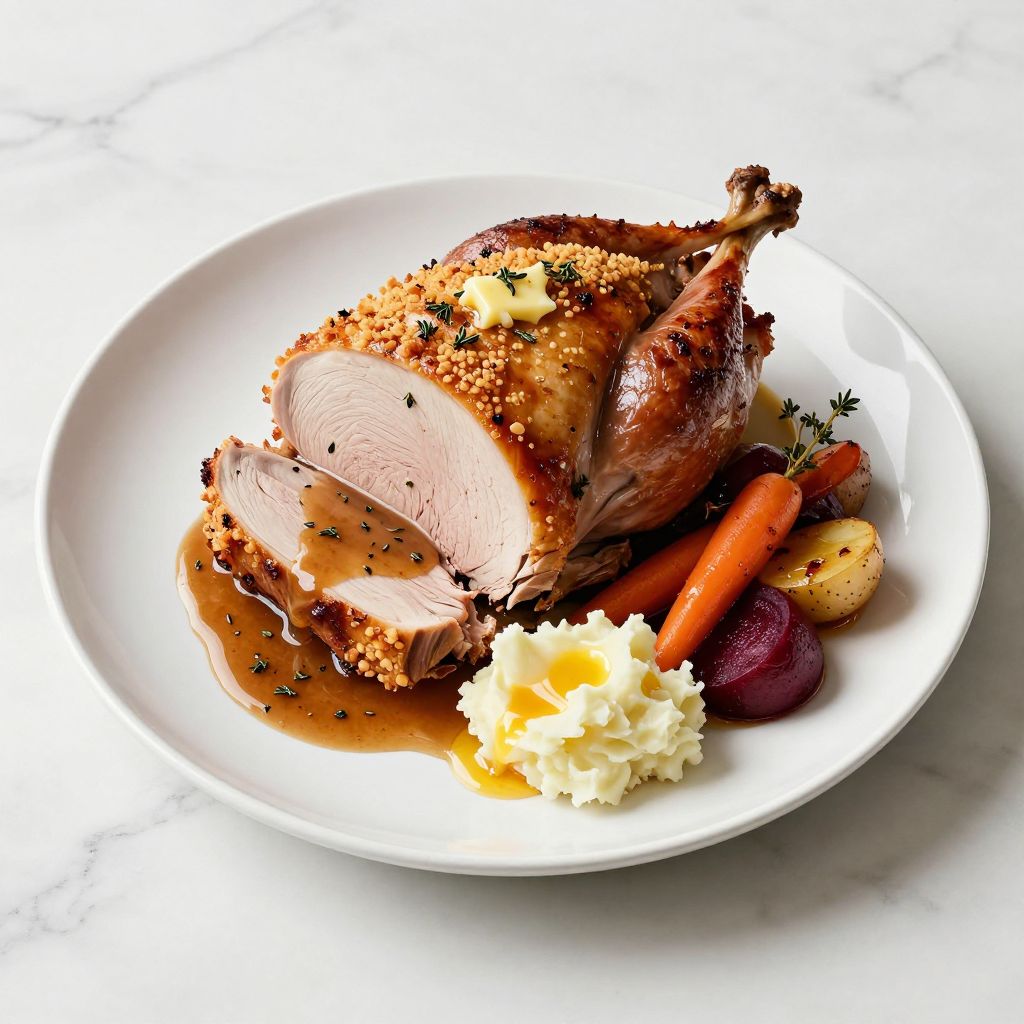
Turkey Injection Recipe
Ingredients
Equipment
Method
- Warm the chicken broth in a small saucepan over medium heat until steaming, about 3–4 minutes.
- Remove from heat and whisk in the butter, salt, black pepper, garlic powder, onion powder, thyme, sage, and cayenne until the butter is fully melted, about 30 seconds.
- Let the mixture cool for 5–7 minutes until warm but not hot (around 120–130°F) to avoid cooking the meat during injection.
- If using fresh herbs, strain the liquid through a fine-mesh strainer to prevent clogging the syringe.
- Fill the meat syringe with the warm injection liquid.
- Insert the needle 2 inches deep into the thickest part of each turkey breast and slowly depress the plunger while withdrawing, repeating every 1–2 inches across both breasts.
- Inject the thighs and legs 2–3 times each, focusing on the thickest portions of meat.
- Inject the wings where they meet the breast to ensure even flavor throughout the bird.
- Allow the turkey to rest at room temperature for 30–45 minutes before roasting, or refrigerate up to 24 hours for deeper flavor.