Top round roast is a lean, affordable cut that transforms into incredibly tender, flavorful meat when cooked low and slow. This recipe uses proven techniques to break down the muscle fibers and infuse rich savory flavors throughout the roast. Whether you’re feeding a crowd or meal prepping for the week, a perfectly cooked top round roast delivers restaurant-quality results at a fraction of the cost.
The magic happens when you sear the roast hard, then braise it in a fragrant liquid bath until it falls apart at the touch of a fork. Let me walk you through my tested method that guarantees moist, tender slices every single time.
Why You’ll Love This Recipe
This top round roast recipe checks every box for home cooks seeking impressive results without fussy techniques. The process is straightforward, the flavor is unforgettable, and cleanup is minimal.
- Budget-friendly cut that feeds many people for under twenty dollars
- Hands-on time is just fifteen minutes; the oven does the heavy lifting
- Naturally gluten-free and works for paleo and whole-food diets
- Fills your kitchen with an aroma that has everyone asking what’s for dinner
- Leftover slices make killer sandwiches and grain bowls all week long
My Experience Making This Recipe
I first made top round roast when I was broke and determined to impress my in-laws on a shoestring budget. I picked up a three-pound roast for twelve dollars, worried the whole time that this cut was beneath me.
Two and a half hours later, I pulled a mahogany-brown masterpiece from the oven and carved it into slices so tender they practically dissolved on the tongue. My father-in-law took one bite and asked if I’d learned to cook at culinary school.
That moment taught me that technique beats price tag every time. I’ve made this roast dozens of times since, and it never disappoints.
Recipe Overview
- Recipe Name: Top Round Roast
- Servings: 6 to 8
- Prep Time: 15 minutes
- Cook Time: 2 hours 30 minutes
- Total Time: 2 hours 45 minutes
- Course: Main Course
- Cuisine: American
- Calories per Serving: 245
Equipment You Will Need
- Cast iron skillet or heavy-bottomed stainless steel pan
- Dutch oven with a fitted lid
- Meat thermometer
- Sharp chef’s knife
- Cutting board
- Measuring spoons and cups
- Tongs
Ingredients for Top Round Roast
- 3 to 4 pound top round roast
- 2 tablespoons kosher salt
- 1 tablespoon freshly ground black pepper
- 2 tablespoons vegetable oil
- 2 large yellow onions, roughly chopped
- 6 cloves garlic, smashed
- 3 medium carrots, cut into two-inch chunks
- 3 medium potatoes, cut into two-inch chunks
- 3 cups beef broth
- 1 cup dry red wine (optional but recommended)
- 2 bay leaves
- 4 sprigs fresh thyme
- 2 sprigs fresh rosemary
Ingredient Notes and Substitutions
- Top round roast: This lean cut has minimal marbling, so low-and-slow cooking prevents drying out. If unavailable, chuck roast works beautifully but cook it 30 minutes less since it’s naturally more tender.
- Kosher salt: Its larger grains distribute evenly and don’t oversalt in pockets. Table salt works in a pinch, but use 25 percent less due to its finer grain.
- Red wine: The acidity and tannins tenderize the meat and add depth. Swap for extra beef broth if you prefer alcohol-free cooking; the roast still turns out fantastic.
- Fresh herbs: Dried thyme and rosemary work, using one teaspoon of each instead of the sprigs. Fresh herbs deliver superior flavor complexity here.
- Carrots and potatoes: Root vegetables absorb the braising liquid and soften perfectly. You can skip them or swap in parsnips and celery root for different flavors.
How to Make Top Round Roast
Step 1: Bring the Roast to Room Temperature
Remove your roast from the refrigerator one hour before cooking. A cold roast won’t brown evenly because the exterior cooks before the center reaches room temperature, which prolongs searing and creates an uneven crust.
Step 2: Season Generously
Pat the roast dry with paper towels, then coat all sides with kosher salt and black pepper. Moisture on the surface prevents browning, so drying is non-negotiable here.
Step 3: Sear the Roast
Heat vegetable oil in your cast iron skillet over medium-high heat until it shimmers and just barely smokes. Place the roast in the pan and sear each side for three to four minutes without moving it, developing a dark mahogany crust that locks in flavor and juices.
This crust matters tremendously because it creates fond, the flavorful brown bits that infuse your braising liquid. Work patiently here and resist the urge to flip constantly.
Step 4: Remove the Roast and Sauté Vegetables
Transfer the seared roast to a plate and pour off all but one tablespoon of fat from the skillet. Add the chopped onions and sauté for five minutes until softened and fragrant, stirring occasionally.
The onions absorb the fond and begin breaking down, which thickens your braising liquid naturally. This step builds the flavor foundation.
Step 5: Add Garlic and Herbs
Stir in the smashed garlic cloves and cook for one minute until you smell that unmistakable warm garlic aroma. Add the bay leaves, thyme, and rosemary sprigs, stirring to distribute them evenly through the vegetables.
Step 6: Deglaze the Pan
Pour in the red wine and scrape the bottom of the skillet with a wooden spoon to dissolve the fond and incorporate it into the liquid. Let the wine simmer for two minutes, reducing slightly and cooking off the harsh alcohol edge.
If you’re skipping wine, add one cup of the beef broth instead and skip this reduction step.
Step 7: Assemble in the Dutch Oven
Transfer the sauteed vegetables and wine to your Dutch oven. Nestle the seared roast on top of the vegetables, then pour in the remaining beef broth until it reaches halfway up the roast’s sides.
The liquid needs to partially submerge the roast, creating steam that braises it evenly. Too much liquid dilutes flavors; too little dries out the meat.
Step 8: Cover and Braise
Place the lid on your Dutch oven and transfer it to a preheated 325-degree Fahrenheit oven. Braise for two hours, then check the roast’s internal temperature with a meat thermometer inserted into the thickest part.
You’re aiming for 190 degrees Fahrenheit for fall-apart tenderness. If it hasn’t reached that temperature, return it to the oven and check every fifteen minutes.
Step 9: Add Root Vegetables and Continue Cooking
After the roast has braised for two hours, add the carrots and potatoes directly to the liquid around the roast. Replace the lid and return the Dutch oven to the oven for another forty-five minutes to one hour, until the vegetables are tender and the roast reaches 190 degrees Fahrenheit.
Step 10: Rest and Serve
Remove the Dutch oven from the oven and let the roast rest in the braising liquid for fifteen minutes. This resting period allows the muscle fibers to relax and reabsorb juices, ensuring moist slices.
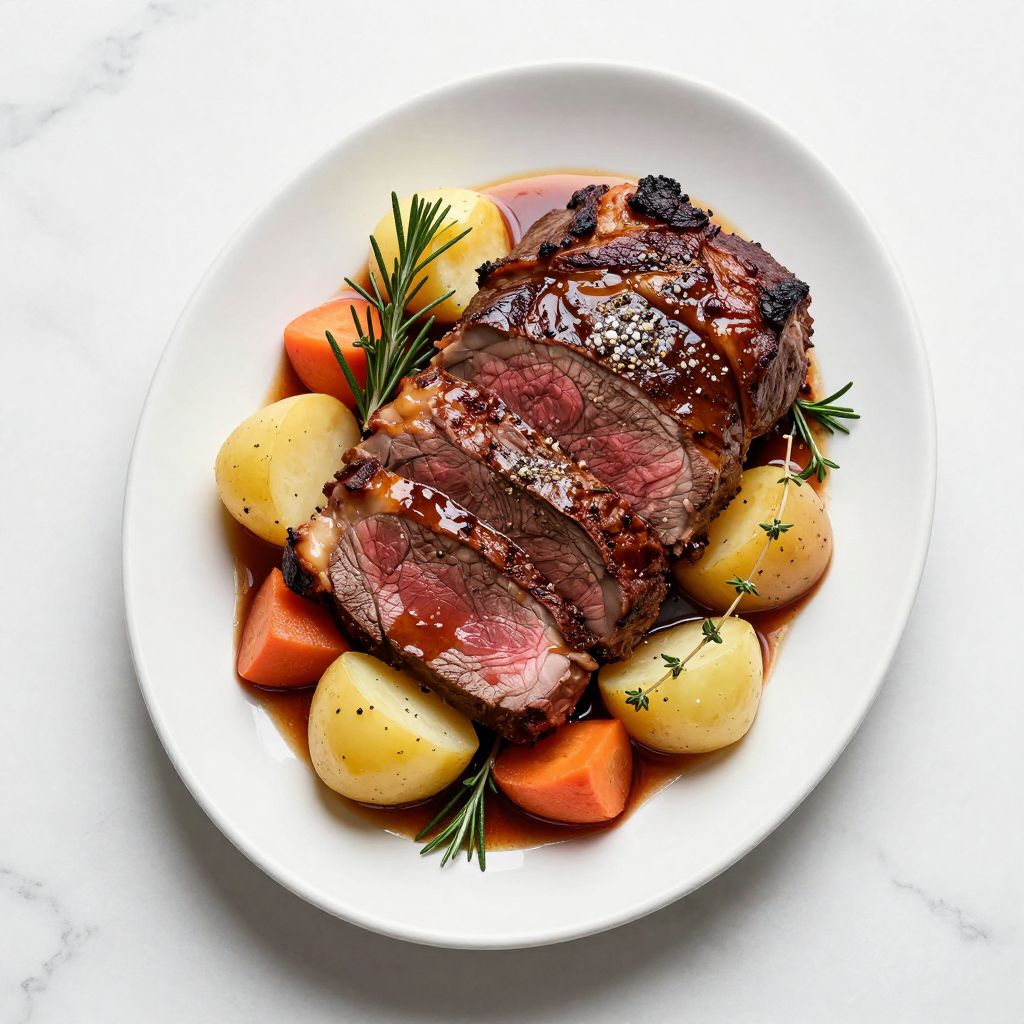
Transfer the roast to a cutting board and slice against the grain into half-inch-thick pieces. Serve with the braised vegetables and spoon the rich braising liquid over everything.
Pro Tip: Slice against the grain, which means cutting perpendicular to the direction the muscle fibers run, and your slices stay tender instead of becoming chewy.
Tips for the Best Top Round Roast
- Don’t skip the searing step, even though it takes ten minutes and dirties a pan. The crust flavor compounds into your braising liquid and cannot be replicated.
- Use a meat thermometer rather than guessing. Top round is lean, so overcooking by even fifteen minutes makes it tough and dry.
- Choose a Dutch oven with a snug-fitting lid that traps steam effectively. A loose lid allows evaporation and can dry out your roast.
- Resist opening the oven door repeatedly to peek. Every opening drops the temperature and extends cooking time unpredictably.
- Make this roast one day ahead and refrigerate it in the braising liquid. The flavors intensify, and the meat firms slightly for neater slicing.
- Skim any fat from the top of the braising liquid if you prefer a leaner sauce. This step is optional and purely about personal preference.
Common Mistakes to Avoid
- Cooking at too high a temperature causes the exterior to toughen while the interior stays tough. Stick to 325 degrees Fahrenheit for gentle, even cooking.
- Skipping the resting period means your slices weep liquid all over the cutting board instead of staying moist. Fifteen minutes makes a measurable difference.
- Using too little braising liquid results in some parts of the roast cooking in steam and others drying out. Aim for liquid that reaches halfway up the roast.
- Slicing with the grain instead of against it creates chewy, stringy pieces. Take five seconds to identify the grain direction before cutting.
- Crowding the Dutch oven with vegetables too early means they disintegrate into mush. Add root vegetables in the final forty-five minutes only.
Serving Suggestions
This top round roast shines alongside creamy sides that soak up its rich braising liquid. The tender meat and caramelized vegetables need minimal accompaniments to steal the show.
- Mashed potatoes or cauliflower mash to catch every drop of braising sauce
- Crusty bread for wiping plates clean after dinner
- Roasted Brussels sprouts tossed with garlic and bacon for a bitter-sweet contrast
- Simple green salad with vinaigrette to cut through the richness
- Egg noodles tossed with butter and parsley for comfort-food vibes
Variations to Try
- Asian-Inspired: Replace red wine with soy sauce and rice vinegar, swap thyme for star anise, and add fresh ginger and scallions. The result is a savory-umami explosion with Asian barbecue flavors.
- Mexican-Style: Use beef broth only, add cumin, chili powder, and smoked paprika to the searing step, then stir in diced tomatoes and black beans before braising. Serve with cilantro and lime wedges.
- Coffee-Rubbed: Mix two tablespoons of instant coffee powder with your salt and pepper before searing. The coffee deepens the savory notes and adds subtle bitterness that balances richness.
- Wine-Free: Replace wine with an equal amount of beef broth and add two tablespoons of balsamic vinegar for acidity. The roast turns out equally tender without alcohol.
- Slow Cooker Method: Sear the roast as directed, then place everything in a slow cooker on low for seven to eight hours. The hands-off approach delivers identical tenderness with zero oven space needed.
Dietary Adaptations
- Gluten-Free: This recipe is naturally gluten-free as written. Simply verify your beef broth is certified gluten-free if you have celiac disease.
- Dairy-Free: Top round roast contains no dairy, making it completely dairy-free without modifications.
- Vegan/Vegetarian: Substitute a large block of firm tofu or a heads-on cauliflower for the roast, sear it identically, and reduce braising time to forty-five minutes. The vegetables and sauce carry the dish.
- Low-Carb/Keto: Skip the potatoes and carrots, replacing them with celery, mushrooms, and zucchini chunks added in the final thirty minutes. The roast itself is pure protein and fits perfectly into keto macros.
Storage and Reheating
Refrigerator
Store sliced roast in an airtight container submerged in braising liquid for up to four days. The liquid prevents oxidation and keeps every slice moist and flavorful.
- Keep the container on the coldest shelf, away from the door
- Freeze leftover braising liquid separately if you won’t use it within two days
Freezer
Freeze sliced roast in a freezer bag or container with braising liquid for up to three months. The liquid prevents freezer burn and maintains texture.
- Flatten the freezer bag for compact storage
- Label with the date so you track storage time
- Thaw overnight in the refrigerator before reheating
Reheating
Reheat in a covered skillet over medium-low heat for ten to fifteen minutes, stirring occasionally until warmed through. This gentle method prevents tough, rubbery meat.
- Add a splash of beef broth if the liquid has reduced significantly during storage
- Never use the microwave, which dries out lean meat ruthlessly
- Alternatively, reheat slices in a 300-degree Fahrenheit oven covered with foil for fifteen minutes
Nutrition Information
| Nutrient | Amount |
|---|---|
| Calories | 245 |
| Total Fat | 8 grams |
| Saturated Fat | 3 grams |
| Carbohydrates | 12 grams |
| Fiber | 2 grams |
| Sugar | 4 grams |
| Protein | 35 grams |
| Sodium | 580 milligrams |
| Cholesterol | 85 milligrams |
These values are approximate and based on a serving size of six ounces of roast with vegetables and braising liquid. Actual nutrition varies based on specific brands and preparation methods.
Frequently Asked Questions
Can I cook this top round roast on the stovetop the entire time?
Yes, but cover the Dutch oven and cook on the lowest burner setting for three to three and a half hours, checking liquid levels every thirty minutes. The oven provides more even, predictable heat, which is why I prefer it.
How do I know when the roast is truly done?
The meat should reach an internal temperature of 190 degrees Fahrenheit and a fork should pull apart the meat fibers easily. If it’s still tough at 190 degrees, braise another fifteen minutes and check again.
Can I make this recipe ahead of time?
Absolutely, and I recommend it. Cook the roast completely, cool it in the braising liquid, then refrigerate overnight. The flavors deepen, and you can simply reheat before serving.
What if my roast is still tough after two and a half hours?
Top round roasts vary in grain structure and density, so some need an extra thirty minutes to two hours at 325 degrees Fahrenheit. Keep checking with a meat thermometer; reaching 190 degrees Fahrenheit is your true indicator of doneness, not clock time.
Can I use a different cut of beef for this recipe?
Chuck roast, brisket flat, and rump roast all work beautifully with this method. Chuck cooks faster (about two hours total), while brisket needs similar timing to top round and rewards low-and-slow treatment.
What should I do with leftover braising liquid?
Strain it through a fine-mesh sieve and use it as beef stock for soups, gravies, and sauces for up to five days refrigerated or three months frozen. The liquid is liquid gold in your kitchen.
Final Thoughts
Making a perfect top round roast is not about expensive ingredients or complicated techniques. It’s about respecting the cut, giving it time and heat, and trusting the process to transform an affordable piece of meat into something truly special.
Pull this roast from the oven tonight, and prepare to hear genuine excitement from everyone at the table. You’ve got this.
Top Round Roast
Ingredients
Equipment
Method
- Remove the roast from the refrigerator 60 minutes before cooking to come to room temperature.
- Preheat the oven to 325°F (165°C).
- Pat the roast dry and season all over with kosher salt and black pepper.
- Heat vegetable oil in a cast iron skillet over medium-high heat until shimmering, then sear the roast for 3–4 minutes per side until a deep brown crust forms.
- Transfer the seared roast to a plate, leaving about 1 tablespoon of fat in the skillet.
- Add onions to the skillet and sauté for 5 minutes, scraping up browned bits.
- Stir in smashed garlic, bay leaves, thyme, and rosemary; cook 1 minute until fragrant.
- Pour in red wine, scraping the pan to deglaze, and simmer 2 minutes to reduce slightly.
- Transfer the onion mixture to a Dutch oven. Nestle the roast on top and add beef broth until the liquid comes halfway up the sides of the meat.
- Cover and braise in the preheated oven for 2 hours, or until the internal temperature reaches about 180°F.
- Add carrots and potatoes around the roast, re-cover, and continue braising 45–60 minutes, until the vegetables are tender and the roast registers 190°F and is fork-tender.
- Remove the Dutch oven from the oven, let the roast rest in the liquid for 15 minutes, then slice against the grain and serve with vegetables and spoonfuls of braising liquid.